Trump and Netanyahu Announce Bold 20-Point Gaza Peace Plan — But Hamas Remains Unconvinced
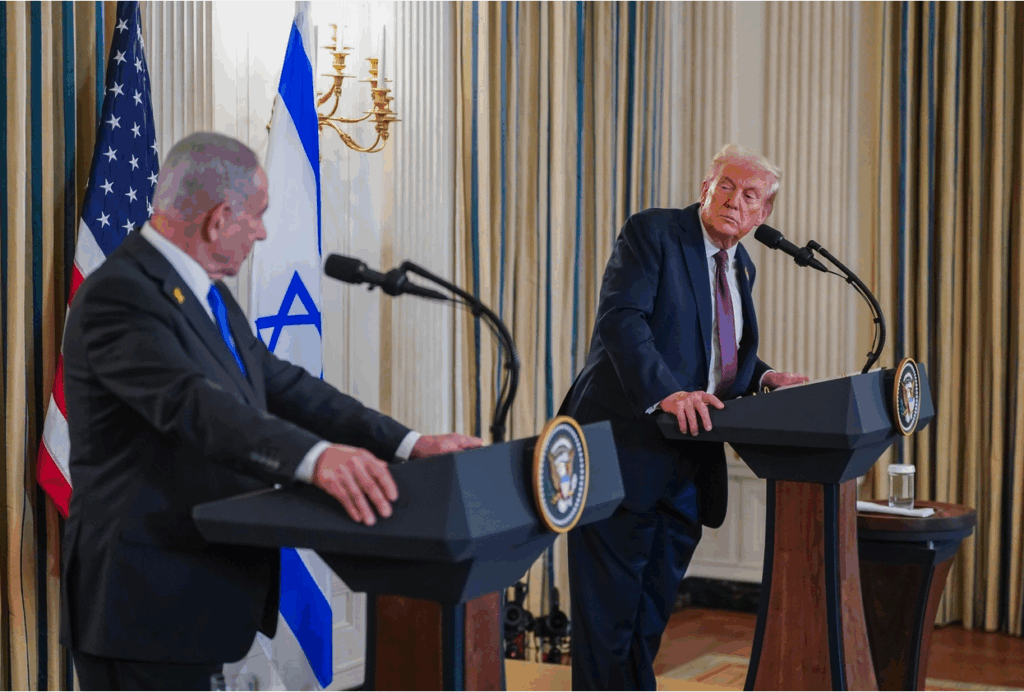
Washington / Jerusalem, 29 September 2025 — In a dramatic and potentially game-changing turn, former U.S. President Donald Trump and Israeli Prime Minister Benjamin Netanyahu publicly endorsed a new 20-point peace proposal for Gaza, aiming to end the long and bloody war between Israel and Hamas. Their joint announcement at the White House cast the plan as a historic opportunity for lasting peace—but it also drew immediate backlash, skepticism, and the caveat that Hamas has not yet accepted it.
The plan, heavy on demands and vision, proposes a sweeping transformation of Gaza’s governance, demilitarization of Hamas, a transitional international administration, the return of hostages, and extensive reconstruction. Netanyahu, standing alongside Trump, pledged Israel’s backing—and warned that if Hamas rejects the proposal, Israel would finish the mission on its own terms.
The stakes could not be higher: Gaza lies in ruins, the humanitarian crisis deepens daily, and the war’s human cost is staggering. Whether this new plan can survive the test of implementation—and whether Hamas will have any incentive or ability to sign on—remains the looming question.
What Trump & Netanyahu Announced
The 20-Point Framework
The White House unveiled the contours of a 20-point plan intended to bring immediate ceasefire, restore security, and rebuild Gaza under a new regime. Key elements include:
- Immediate ceasefire, conditional upon mutual acceptance by the parties.
- Release of all hostages, both living and deceased, within a prescribed timeframe (some media sources cite 72 hours).
- Disarmament and demilitarization of Hamas, eliminating its military infrastructure.
- Removal of Hamas’s political control over Gaza, effectively sidelining it from any governance role.
- Transitional governance: Gaza would be managed by a technocratic Palestinian committee overseen by a new international body, dubbed the “Board of Peace,” chaired by Trump himself (with Tony Blair among members).
- International stabilization force (ISF) deployed to maintain security during the transition.
- Reconstruction and development funding on a massive scale, with infrastructure, housing, public services, and economic revival prioritized.
- No annexation of Gaza by Israel, according to the proposal, and Israeli withdrawal from densely populated areas.
- A trilateral coordination mechanism between the U.S., Israel, and Qatar to monitor progress, liaise diplomatic pressures, and mediate grievances.
- Conditional path to Palestinian statehood, anchored in future negotiations and regional cooperation.
The plan positions itself as more than a ceasefire—it envisages a full reset of Gaza’s political, military, and societal structure, with heavy international oversight and investment.
Political Support & Warnings
Netanyahu publicly voiced full support for the plan at the White House press event, telling reporters it aligned with Israel’s war aims. He said it would help “bring back all our hostages, dismantle Hamas’ military, end its political rule, and prevent Gaza from threatening Israel again.” However, he added with a stern caveat: if Hamas refuses or undermines the process, Israel would carry on “the easy way or the hard way.”
Trump framed the moment in grand terms. He described the announcement as “potentially one of the great days ever in civilization” and said the plan could mark a turning point in the Middle East. He said the U.S. would provide full backing to Israel to enforce the plan if Hamas fails to comply.
Trump insisted he did not demand to be chair of the Board of Peace, but accepted the role, calling it “important” and necessary. He pledged to convene global support and insisted that Arab and Muslim countries be part of the solution.
Why This Plan Matters—and Why It Faces Enormous Hurdles
A Fresh Attempt at Peace Amid Catastrophe
The war in Gaza, triggered by Hamas’s October 2023 attack, has led to overwhelming destruction, tens of thousands of Palestinian casualties, mass displacement, and crises of food, shelter, and healthcare. Repeated ceasefires have faltered and efforts at negotiation have often ended in recrimination. Against that backdrop, a bold new plan—even one with heavy conditions—carries the possibility of breakthrough.
It matters because it attempts to address multiple layers of the conflict: security (disarmament), governance (removal of Hamas role), humanitarian (hostage return, reconstruction), and long-term political structure. If implemented, the plan could reshape Gaza’s future and influence the broader Israeli-Palestinian peace question.
Risks & Barriers
But the obstacles are daunting:
- Hamas Resistance: Hamas has not accepted the proposal and is unlikely to disarm or relinquish political control willingly. It may reject the plan outright or seek to subvert it.
- Legitimacy & Ownership: The transitional international administration runs the risk of being seen as foreign imposition, undercutting local legitimacy and fueling resistance.
- Sovereignty & Palestinian Authority (PA) Role: The plan sidelines both Hamas and, initially, the PA. Many Palestinians and regional actors may view it as a bypass of Palestinian self-determination.
- Implementation Risks: Even if signed, implementing ceasefire, ensuring security, overseeing reconstruction, and maintaining services in a war-shattered environment is an enormous logistical challenge.
- Funding & Commitment: Rallying and sustaining large international funding for rebuilding, with oversight and accountability, amid global donor fatigue, is no small task.
- Regional Politics & Diplomacy: Arab and Muslim states, regional rivals, and external powers will scrutinize or resist aspects of the plan—especially issues of displacement, sovereignty, and international governance.
- Enforcement: If Hamas rejects the deal, Netanyahu has vowed unilateral action. But international pushback could complicate enforcement, especially if civilian harm increases.
Reactions & Fallout: Local, Regional, Global
Within Israel
Supporters of Netanyahu see the plan as a way to justify Israel’s military efforts and to transform victory into lasting security. Some critics, however, warn that the plan’s ambitious governance overhaul might overpromise and underdeliver, exposing Israel to diplomatic backlash if the transition fails.
Among Palestinians & Hamas
Hamas’s position is central. Until the group that controls Gaza signals willingness to negotiate, the plan remains a blueprint without a party to implement it. Palestinian leadership not aligned with Hamas is also wary, seeing sidelining of the PA as weakening Palestinian national institutions.
Many Palestinians will view proposals for external governance or limits on sovereignty with deep suspicion, especially amid the backdrop of displacement, war losses, and lack of trust.
Regional & Arab States
Several nations in the Middle East and Muslim world have thus far responded cautiously. Some have welcomed the intent to end the war and rebuild Gaza; others condemned parts of the plan seen as undermining Palestinian agency or displacing people.
Qatar’s role is critical: it is often mediator in Israel–Hamas negotiations and hosts Hamas political offices. The plan’s trialogue with Qatar is thus strategic—but also delicate.
Global Powers & International Organizations
Reactions from Washington’s traditional allies, the UN, the EU, and human rights organizations are mixed. Some laud the inclusiveness and vision; others warn about risks of legitimacy, sovereignty, and humanitarian missteps. Observers note that none of the prior grand peace plans have succeeded without buy-in from all parties, especially the Palestinian side.
United Nations and international humanitarian agencies will watch how the plan treats civilian protection, reconstruction, and the rights of displaced Gazans.
What Trump & Netanyahu Hope to Gain
From Trump’s perspective, proposing and leading such a plan revives his influence on the world stage and positions him as a major diplomatic actor in the Middle East. It aligns with his past efforts to shape peace in the region.
For Netanyahu, the plan offers a face-saving exit from purely military modes of conflict. It allows Israel to argue it is pursuing peace, even while retaining strong security prerogatives. The international oversight and reconstruction funding could ease Israel’s isolation and cost burdens of war.
If the plan is accepted and partly implemented, both leaders could claim a major diplomatic win—a new balance of security, rebuilding, and governance.
What Happens Next?
- Hamas Response: The clock starts ticking on whether Hamas accepts the 20-point plan or counters with its own terms.
- Negotiation Phase: If Hamas engages, negotiating transitions, timelines, and safeguards will likely drag on.
- Partial Implementation: Areas of Gaza not under full Hamas control might be transitioned first under the plan’s supervision.
- Staging International Support: Donors, Arab states, Israel, and the U.S. will coordinate funding, security guarantees, and diplomatic backing.
- Monitoring & Verification: Independent monitors and the ISF body will judge compliance—especially around demilitarization and cessation of conflict.
- Fallback Scenarios: If Hamas rejects or derails the plan, Netanyahu’s vow to “finish the job” looms as a dark alternative.
The Larger Significance
This announcement is more than a new ceasefire initiative—it is a vision for Gaza’s future, for regional stability, for balancing power, and for how external actors engage in deeply contested territories. It could influence how future conflicts are mediated, how reconstruction is financed, and how local populations envision their political futures.
Even if the plan fails, it may shape the terms of future proposals. It forces conversation about governance, security, reconstruction, and the rights of Palestinians in Gaza. It flags the continuing tension between external intervention and local legitimacy—a core dilemma in peacebuilding.
For millions of Gazans, though, the question remains: will this plan bring them peace, dignity, and a more certain future—or new disillusionment?