New risk-based quake rules aim to save owners $8.2b while targeting real danger
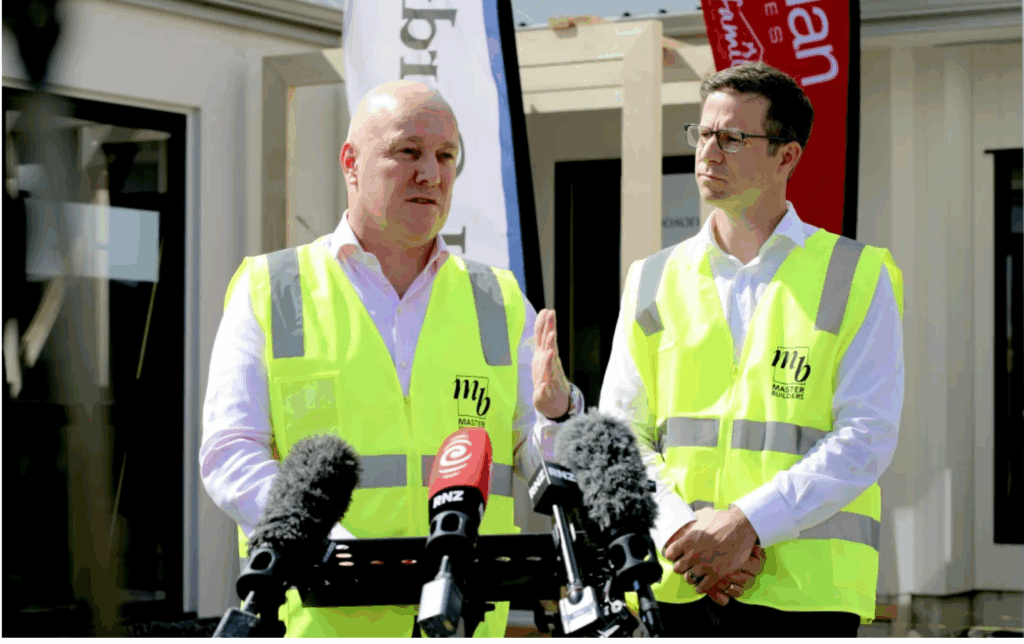
The Government has unveiled a major overhaul of New Zealand’s earthquake-strengthening regime, saying a new “risk-based” system will concentrate on buildings that pose the greatest threat to life and property — and save building owners an estimated $8.2 billion in remediation and demolition costs.
Building and Construction Minister Chris Penk described the change as a move away from an overly broad and inconsistent measure — the New Building Standard (NBS) percentage — which he said had become a blunt tool that too often left whole buildings penalised for a single weak part. Under the reforms, replacement standards called the Earthquake Prone Building system will target specific construction types and vulnerabilities, such as unreinforced masonry with unsecured façades and walls that face public areas or overhang neighbours.
What’s changing — simply
Until now, engineers assessed older buildings by comparing their expected seismic performance to that of a new building and expressed the result as a percentage — the NBS score. Buildings below a set percentage were placed on earthquake-prone registers and required to be strengthened or demolished within prescribed timeframes. Critics argued the metric could treat a small, fixable weakness as grounds to classify an entire building as earthquake-prone. The new system abandons the NBS percentage in favour of a targeted approach: certain building types and clearly dangerous features will be automatically captured, while others will only be assessed where they genuinely create a collapse risk.
Concrete buildings three storeys and higher will be singled out for assessment using a new targeted retrofitting methodology aimed at the failure modes most likely to cause collapse, while unreinforced masonry buildings with unsecured parapets, façades or walls facing public spaces will be deemed earthquake-prone without further assessment. At the other end of the scale, smaller buildings (for example under three storeys and in towns with populations below 10,000) may be exempt from full strengthening obligations provided their façade risks are addressed.
Why the Government says this is better
Ministers argue the new rules strike a fairer balance between safety and affordability. Penk and other officials say the previous approach had encouraged owners to leave buildings vacant because the cost of full remediation could run from hundreds of thousands into the millions — creating derelict sites that themselves present a public safety risk. By narrowing the focus to buildings and parts of buildings that present the highest risk to people in public spaces, the Government says scarce funds and regulatory effort will be better directed.
Officials also say priority status will be removed from some public-service buildings (such as hospitals and fire stations), with remediation deadlines extended to allow agencies more time to plan and carry out seismic work across their portfolios. The changes are expected to be enacted through a Building (Earthquake-prone Building System Reform) Amendment Bill.
Backdrop: where this came from
The existing system grew from changes introduced in 2017 following the Canterbury earthquakes and recommendations of the Royal Commission of Inquiry. That regime created a nationwide policy and produced the NBS percentage metric as a way to make management of earthquake-prone buildings more consistent. However, the cost and complexity of assessments and retrofits, and uneven interpretation of the percentage measure, prompted a government review into whether the settings were proportionate and effective. The current reforms flow from that review and more than a year of work by officials and advisory groups.
Reactions — cautious welcome and concern
Property owners and some business groups are likely to welcome the reduced compliance burden and the promise of major cost savings. Local authorities and engineers, while interested in practical improvements that reduce unnecessary work, have signalled they will want detailed technical guidance and time to adapt assessment processes and databases. Heritage groups and advocates for older downtown precincts have already warned that a narrower definition could leave some vulnerable historic fabric unaddressed, and they will press for safeguards to ensure façades and cultural values are properly protected even where full retrofits are not required.
Engineering bodies and technical experts will also be watching how the “targeted retrofit methodology” is specified — because its success hinges on accurately identifying the critical vulnerabilities that lead to collapse and ensuring assessments are consistent across councils. A poorly specified method could reintroduce the inconsistency ministers seek to eliminate.
What building owners and councils need to know now
Owners of masonry buildings with unsecured façades should assume their property will be high on the new register and act to secure parapets and walls facing public areas. Owners of mid-rise concrete buildings should expect new assessment protocols focused on collapse-critical elements. Councils will need to update their registers and communicate changes and deadlines to owners — and central government guidance and additional transition time will be important to avoid a rush of emergency notices or litigation.
The road ahead
The Government says the new rules will reduce the number of buildings needing full retrofits to a tiny fraction of current listings — estimates mentioned in reporting suggest only around 80 buildings nationwide might require full retrofit under the new settings. If that proves accurate, the savings to owners and the economy would be substantial — but the political and technical challenge will be ensuring that the smaller cohort of retained EPBs really are those that matter most for public safety.
As the amendment bill progresses through Parliament and draft technical guidance is released, engineers, councils, heritage advocates and building owners will all want to read the fine print. For New Zealanders, the central test will be whether the system can genuinely protect lives in the next quake without forcing the unnecessary demise of the buildings that help keep communities and high streets alive.