New Zealand Holds Back on Recognising Palestine, Reaffirms Support for Two-State Solution
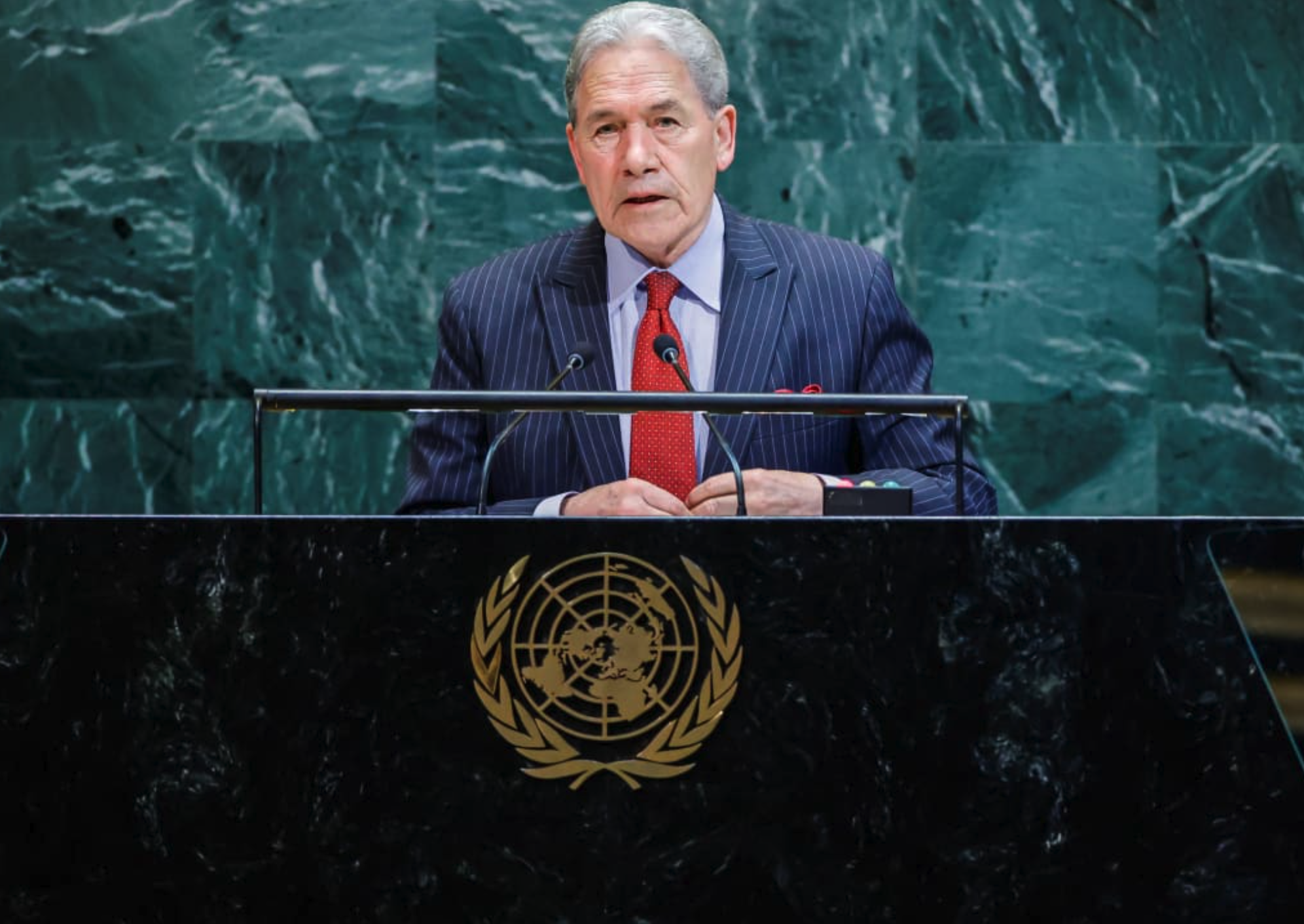
Wellington, September 27, 2025 – New Zealand has decided not to formally recognise Palestine “at this time,” Foreign Minister Winston Peters announced yesterday, reaffirming the country’s long-standing position in favour of a negotiated two-state solution to the Israeli-Palestinian conflict.
The statement comes amid heightened global debate over Palestine’s status, as several nations in recent years – including Ireland, Spain, and Norway – have extended diplomatic recognition. Peters said that while New Zealand remains committed to supporting Palestinian self-determination, “the timing and circumstances are not yet right.”
Concerns Over Governance and Peace Pathways
Peters outlined several concerns influencing the government’s decision. These included:
- Uncertainty over governance in Gaza, where Hamas maintains significant control.
- The lack of a unified Palestinian leadership capable of representing all territories, including the West Bank and Gaza.
- The absence of a clear pathway toward peace negotiations with Israel.
“New Zealand has always stood firmly for peace and for the right of both Israelis and Palestinians to live in security within recognised borders. However, recognition must be more than symbolic – it must help move the peace process forward,” Peters said.
Domestic Criticism and Political Debate
The government’s cautious approach has drawn criticism from the opposition Labour Party and other voices within civil society.
Labour foreign affairs spokesperson [Name] argued that extending recognition would strengthen Palestine’s diplomatic legitimacy and put pressure on Israel to return to negotiations.
“By delaying recognition, New Zealand risks being seen as hesitant when moral clarity is needed. Recognition is a statement that Palestinians, too, deserve a future of dignity and statehood,” Labour said in a statement.
Human rights groups echoed this sentiment, calling the government’s position “disappointing.”
New Zealand’s Balancing Act
New Zealand has historically pursued an independent and balanced foreign policy in the Middle East. As a non-aligned nation, Wellington has consistently condemned violence on both sides and advocated for renewed peace talks under international mediation.
Diplomatic analysts note that the current stance reflects both principle and pragmatism.
- On one hand, New Zealand wishes to remain in step with major allies such as Australia and the United States, which also have not yet recognised Palestine.
- On the other, Wellington seeks to uphold its reputation as a strong advocate for international law and human rights.
Global Context
Momentum for Palestinian recognition has grown internationally, particularly in Europe, where several states argue that recognition is a necessary foundation for a viable two-state solution. The United Nations General Assembly has overwhelmingly supported Palestine’s right to statehood, but recognition remains politically contentious.
With renewed violence and instability in Gaza and the West Bank, Peters stressed that New Zealand will continue to provide humanitarian assistance and engage with international partners to support efforts toward peace.
Looking Ahead
For now, New Zealand’s position is one of “cautious support without formal recognition.” The government says it will continue to monitor developments in the Middle East closely, leaving the door open to recognition at a future date when conditions are more favourable.
The debate is unlikely to fade soon, with growing domestic pressure to take a stronger stance. As one political commentator noted, “New Zealand prides itself on being a principled voice in world affairs. The question is whether holding back aligns with that tradition – or contradicts it.”