The Unseen War: Why NZ’s Small Businesses Are Fighting for Survival
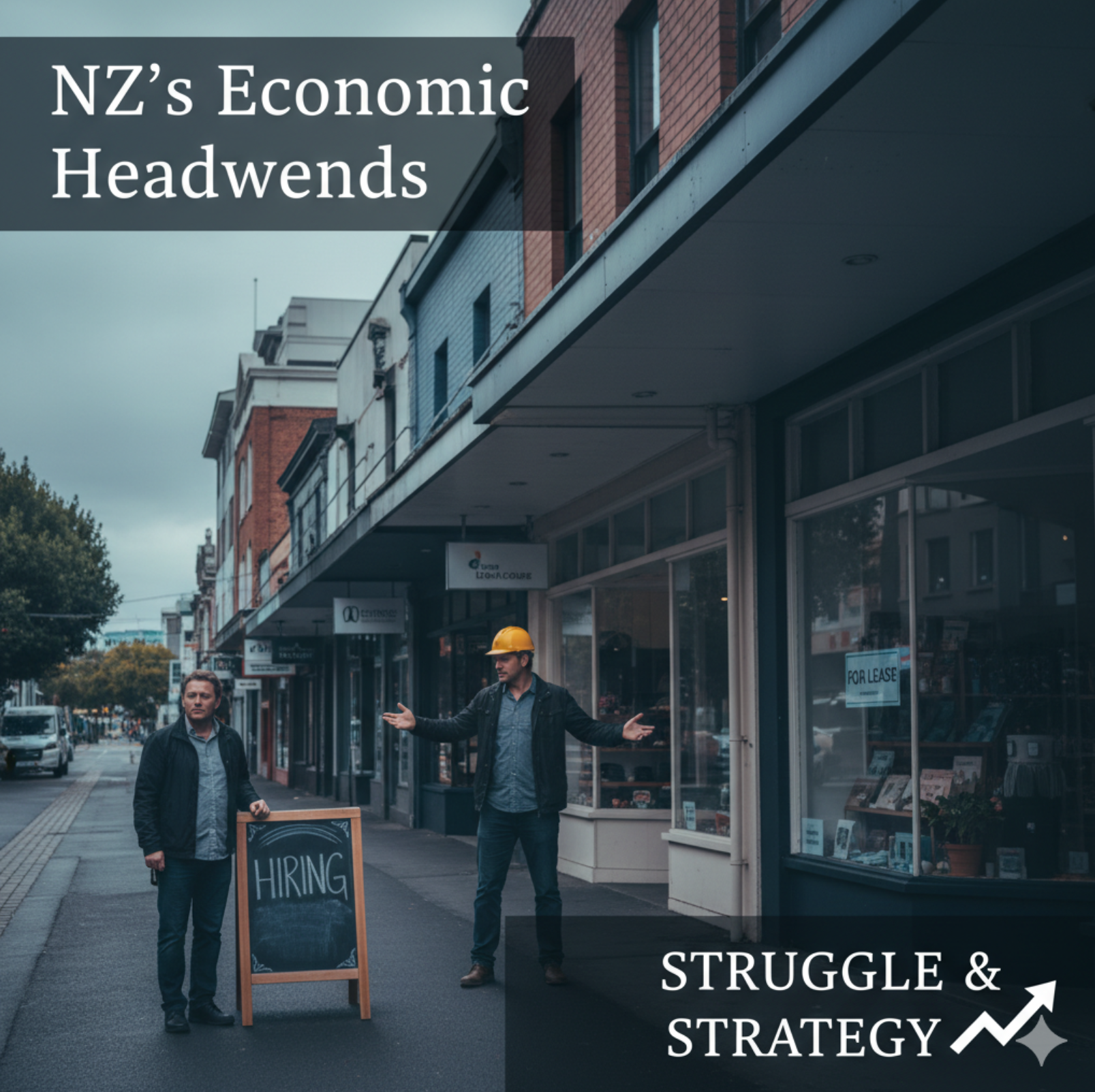
New Zealand’s economic identity has long been synonymous with the agility and resilience of its small and medium-sized enterprise (SME) sector. For generations, these businesses—from the local dairy and cafe to the rural contractor and artisan workshop—have formed the bedrock of our communities, driving innovation, providing local employment, and embodying the national spirit of self-reliance. But this once-stable foundation is now experiencing a seismic shift. The narrative of business as a journey of steady growth has been replaced by a story of relentless pressure and existential struggle. This comprehensive analysis delves into the multifaceted challenges confronting NZ’s SMEs, providing a detailed and human-centered exploration of the economic forces at play, the human toll they exact, and the strategic imperatives for survival, including a focus on government support and digital transformation.
The Unrelenting Squeeze: Unpacking the Economic Crisis
The current crisis facing SMEs is not a simple downturn; it is a complex and severe consequence of a powerful economic cocktail. The primary ingredients are high inflation and the aggressive monetary policy enacted to combat it.
The inflationary period that began in the wake of the global pandemic has driven up the cost of nearly every input a business requires. For a cafe, this means the price of milk, coffee beans, and sugar has soared. For a builder, it’s the cost of timber, steel, and fuel. These costs are not minor fluctuations; they represent a fundamental reshaping of a business’s profit and loss statement. A construction firm, for example, may have based its bid for a project on material costs that have since increased by a significant margin, turning a planned profit into a potential loss. This level of price volatility makes long-term planning almost impossible.
In response, the Reserve Bank of New Zealand (RBNZ) has waged a determined war on inflation by consistently raising the Official Cash Rate (OCR). While intended to cool down the economy, this policy has had a devastating ripple effect on small businesses. The OCR is the foundation of the country’s interest rates. When it rises, banks quickly follow suit, making it more expensive for businesses to borrow money. To illustrate, consider a small manufacturing business with a $1 million floating-rate loan. A rise in the OCR from a low point of 0.25% to a high of over 5% means the annual interest payment on that loan could jump from a few thousand dollars to tens of thousands, a massive and often unmanageable increase that drains a business’s cash flow. This is a direct squeeze, an undeniable burden that forces business owners to make tough choices, from postponing equipment upgrades to laying off staff.
The final piece of this puzzle is the drastic shift in consumer behavior. The same high costs that burden businesses are also squeezing household budgets. The latest ANZ-Roy Morgan Consumer Confidence data shows a persistent state of cautiousness, with a decline in the willingness of households to spend on big-ticket items. This directly impacts businesses that rely on discretionary spending. When a family is worried about their mortgage repayments or the cost of groceries, a night out at a restaurant or a new wardrobe purchase becomes a luxury they simply cannot afford. The result is a dual-sided assault on the SME—rising costs on one side and contracting revenue on the other.
A Tale of Three Industries: The Human Cost of the Downturn
While the economic pressure is systemic, its impact is felt most acutely and personally in specific industries. The struggles of these sectors are not merely statistical; they are lived experiences of uncertainty and loss.
Construction: The Sound of Silence
Once a booming sector, the construction industry is now characterized by a palpable slowdown. The RBNZ’s interest rate hikes have effectively frozen the residential housing market, as potential homebuyers are priced out of the market by high mortgage rates. Building consents have plummeted, and the demand for new projects has evaporated. The repercussions of this are far-reaching. The pain is felt not just by major developers but by the legions of small-scale contractors, builders, electricians, and plumbers who rely on a steady pipeline of work. Many of these small businesses, built on years of hard-won experience and relationships, now find their forward workbooks alarmingly empty. The apathetic silence on a site that should be buzzing with activity is a daily reminder of a once-vibrant industry brought to its knees.
Hospitality: The Empty Chair
New Zealand’s hospitality sector is facing an unprecedented perfect storm. Rising inflation has driven up the costs of food, beverages, and energy, squeezing margins to their thinnest point in years. At the same time, the cost-of-living crisis is changing consumer habits. Diners are no longer ordering that extra glass of wine or dessert, and they are visiting their favorite spots less frequently. Businesses are faced with a terrible choice: raise prices to cover costs and risk losing customers, or absorb the losses and hope to ride it out. The industry is also grappling with a persistent labor shortage, making it difficult to maintain service standards while trying to cut costs. The sight of an empty table in what was once a bustling cafe is a powerful symbol of an industry fighting for its very soul.
Retail: A Battle for Survival
The retail sector’s struggle is a story of intense competition and evolving consumer expectations. The combination of reduced discretionary spending and fierce price competition from global online retailers has created a brutally challenging environment. Small retailers, who cannot compete with the bulk buying power and logistical efficiency of international giants, are finding it difficult to stay relevant. They are forced to manage inventory with razor-sharp precision, as a single bad season can be financially fatal. The quiet aisles and stagnant sales are a stark contrast to the busy days of just a few years ago.
Strategic Imperatives: From Survival to Resilience
For businesses to survive this period, a passive approach is not an option. A proactive and multifaceted strategy is required, one that combines financial discipline with technological innovation and a deep-seated commitment to adaptation.
Financial and Operational Prudence
The foundation of any survival plan is a ruthless commitment to financial prudence. This goes beyond simple cost-cutting. Businesses must develop a deep understanding of their cash flow, creating detailed forecasts and scenario plans. It means negotiating with suppliers, actively managing accounts receivable to ensure timely payments, and scrutinizing every operational expense. This may sound simple, but in the day-to-day chaos of running a business, it requires a mindset shift from simply reacting to proactively planning.
The Power of Digital Tools: Efficiency and Productivity
One of the most powerful tools available to SMEs in this environment is digital transformation. Embracing technology is not just about having an online store; it’s about fundamentally rethinking how a business operates to improve efficiency and productivity.
- Cloud-Based Accounting: Platforms like Xero and MYOB have been transformative. By moving financial records to the cloud, business owners get a real-time view of their cash flow, expenses, and profitability from anywhere (PwC, 2024). This eliminates manual data entry, reduces human error, and gives business owners the critical information needed to make quick decisions, saving countless hours on paperwork.
- Inventory Management Systems: For retailers and hospitality venues, these systems provide a clear picture of what’s selling and what’s not. They can automate reordering, reduce waste, and prevent cash from being tied up in unsold stock.
- Productivity and Communication Tools: Using platforms like Trello for project management or Slack for internal communication can streamline operations. This is especially important for remote teams or businesses with multiple locations, ensuring everyone is on the same page and working efficiently.
- Targeted Digital Marketing: Instead of expensive, traditional advertising, digital tools allow businesses to target potential customers directly through social media ads, email campaigns, and loyalty apps. For a cafe, this might mean using a digital loyalty card to offer personalized deals to regular customers, encouraging repeat visits in a tight market.
Government Support and Community Lifelines
While the pressure on SMEs is immense, they are not entirely alone. The New Zealand government and various industry bodies offer support that can provide a crucial lifeline.
The Regional Business Partner Network (RBP) is a key government-funded initiative designed to connect SMEs with the right advice and support. Through this network, businesses can meet with a Growth Advisor to discuss their challenges and develop a plan. The RBP also provides access to the Capability Development Voucher Fund, which offers eligible businesses up to 50% funding for training and coaching from approved providers (Regional Business Partner Network, 2024). This can be used for training in areas like business planning, financial management, or digital skills.
Furthermore, industry associations like Hospitality New Zealand and Master Builders Association act as powerful advocates for their members. During economic downturns, these organizations provide critical advice, resources, and a collective voice to lobby the government on policy issues that affect their members’ survival. Their role extends to providing legal advice, negotiating supplier discounts, and offering a sense of community to business owners who are feeling isolated.
Finally, the emotional and psychological toll of running a business in a crisis cannot be overstated. The pressure of being responsible for employees, paying bills, and keeping a dream alive is immense. Resources like the business.govt.nz website offer a wealth of tools and advice, but a sense of community and personal support is equally vital. Sharing experiences with fellow entrepreneurs, finding a mentor, or simply talking to a professional can provide the resilience needed to push through.
Conclusion: Forging a Path to a More Resilient Future
The current economic environment is a crucible for New Zealand’s SME sector. It is a period of immense challenge, but also one of profound transformation. The businesses that emerge from this will not be the same as those that entered it. They will be leaner, more digitally savvy, and more adaptable.
Survival hinges on a multi-layered strategy that combines fiscal discipline with a willingness to embrace technological change and seek out available support. It requires business owners to be not only resilient but also relentlessly strategic. While the road ahead is uncertain, the core Kiwi spirit of ingenuity remains. By harnessing this spirit and leveraging the tools and support available, New Zealand’s small businesses can navigate this storm and forge a path towards a more resilient and sustainable future.
References
Grant Thornton. (2023). NZ SME Business Monitor: Navigating economic headwinds. Grant Thornton New Zealand.
MBIE. (2024). New Zealand Company Insolvency and Liquidation Report. Ministry of Business, Innovation and Employment.
NZ Construction Sector Report. (2024). Challenges and Opportunities for New Zealand’s Building Industry. Building Research Association of New Zealand.
NZ Institute of Management. (2024). Leadership in a Crisis: A Survey of NZ Business Leaders. NZIM.
PwC. (2024). NZ SME Survey: The Path to Resilience. PwC New Zealand.
Regional Business Partner Network. (2024). Business Capability Development Voucher Fund. business.govt.nz.
Statistics New Zealand. (2024). Business Demography Statistics. Stats NZ.
Trade & Enterprise NZ. (2023). Export Performance and Diversification Report. NZTE.