Russia Launches Largest Airstrike on Ukraine Since War Began
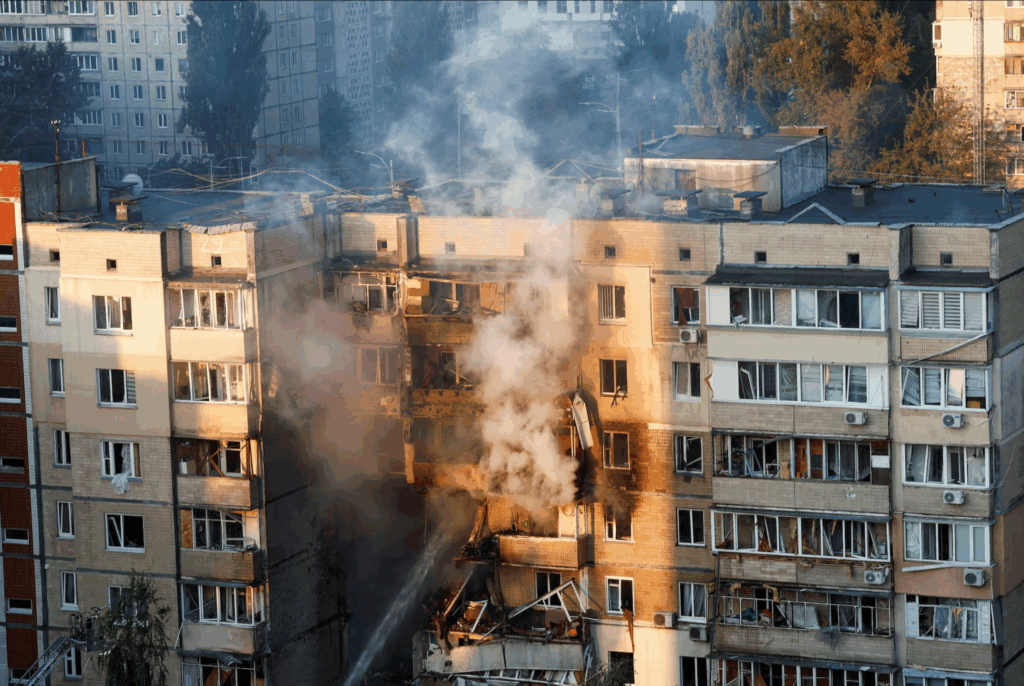
Kyiv, Ukraine – September 7, 2025 – In the most severe escalation of the ongoing conflict to date, Russia launched its largest aerial assault on Ukraine, striking multiple locations, including the capital city, Kyiv. The massive attack caused significant structural damage, including a central government building, and has intensified international concerns about the trajectory of the war.
The scale and intensity of the assault mark a worrying escalation in the nearly three-year conflict, which has already claimed thousands of lives and displaced millions of people across Eastern Europe.
The Assault on Kyiv
Ukrainian officials reported that the airstrike began in the early hours of the morning, targeting strategic infrastructure, government facilities, and key energy hubs. Among the buildings hit was a central government complex in Kyiv, which suffered substantial fire damage. Emergency services rushed to the scene, and several nearby buildings were evacuated as a precaution.
President Volodymyr Zelensky addressed the nation via a televised statement, condemning the attack and reaffirming Ukraine’s resolve:
“This is an unprovoked act of aggression. Our people remain resilient. We will rebuild, defend, and continue to fight for our sovereignty and freedom.”
Local residents reported hearing loud explosions and witnessing smoke rising from the targeted areas. Many families sought shelter in underground stations and reinforced bunkers. Social media videos showed plumes of smoke over Kyiv, emphasizing the scale of the assault.
Casualties and Damage
Early reports suggest a number of casualties, though authorities are still assessing the full impact. Hospitals across Kyiv are on high alert, preparing for a surge in injured civilians. Emergency response teams are working under challenging conditions due to damaged roads and disrupted communication networks.
Infrastructure damage extends beyond government buildings. Power grids, bridges, and communication towers in several regions reportedly suffered damage, causing temporary blackouts and internet outages. Analysts warn that the assault may further strain Ukraine’s already stressed utilities and emergency services.
Strategic Implications
Military analysts say this airstrike reflects a shift in Russia’s strategy, moving toward more aggressive, high-intensity strikes in urban centers. Experts note that targeting key administrative and infrastructure hubs aims to disrupt governance, weaken civilian morale, and challenge Ukrainian defensive capabilities.
“The sheer scale of this strike indicates a strategic push to destabilize Ukraine’s capital and critical infrastructure,” said retired Ukrainian general Oleksandr Muzhenko. “It is also likely intended as a signal to both domestic and international audiences that Russia remains committed to its objectives in the conflict.”
International Response
The global community reacted swiftly to the news. The United Nations Security Council convened an emergency session to discuss the implications of the attack. Western nations, including the United States, United Kingdom, and members of the European Union, condemned the airstrike and reiterated their support for Ukraine’s sovereignty.
U.S. Secretary of State Antony Blinken emphasized:
“These attacks are unacceptable. The United States stands with Ukraine, and we call for an immediate de-escalation and full respect for international law.”
NATO also expressed grave concern, calling for an urgent review of the alliance’s support measures and warning of potential spillover effects into neighboring countries.
Ukrainian Defense Efforts
Ukraine’s air defense systems reportedly intercepted a significant portion of the incoming missiles, mitigating some of the potential damage. The State Air Force Command confirmed that several Russian missiles were shot down over Kyiv and surrounding regions.
Military sources in Kyiv stressed that while the city’s defenses held, the attack underscores the urgent need for continued international assistance in air defense systems, intelligence support, and humanitarian aid.
Impact on Civilians
For the citizens of Kyiv, the airstrike has revived memories of previous attacks in 2022 and 2023, reigniting fears for personal safety. Schools were closed for the day, and public transport systems temporarily halted operations. Families in affected neighborhoods sought shelter, with local authorities distributing emergency supplies, including food, water, and medical aid.
Psychologists warn that repeated exposure to such large-scale attacks can have long-term effects on mental health, particularly for children and vulnerable populations. Community organizations are mobilizing to provide counseling and support services.
The Humanitarian Angle
International humanitarian agencies have expressed concern about the potential for worsening displacement and a surge in civilian casualties. The International Committee of the Red Cross (ICRC) called for unimpeded access to affected areas and reminded all parties of obligations under international humanitarian law to protect civilians.
The Ukrainian government is coordinating with NGOs and UN agencies to ensure that relief reaches the hardest-hit districts, particularly where infrastructure damage has hindered transport and communications.
Looking Ahead
The airstrike raises urgent questions about the future of the conflict. Analysts warn that without renewed diplomatic engagement and increased international pressure, further escalations are likely, potentially affecting both Ukraine and neighboring countries.
The world is now watching how Ukraine will respond strategically, whether through defensive measures, diplomatic initiatives, or appeals for additional international military and humanitarian support.
Conclusion
Russia’s largest airstrike on Ukraine since the war began represents a critical juncture in a conflict that has already reshaped Eastern Europe. With cities under threat, international actors mobilizing responses, and civilian populations at risk, the situation remains highly volatile.
As Ukrainian authorities scramble to assess damage, provide humanitarian relief, and bolster defenses, the global community faces the challenge of responding to an escalating conflict with profound regional and international consequences.
For the citizens of Kyiv and Ukraine as a whole, the path ahead is fraught with uncertainty—but one that underscores resilience, determination, and the pressing need for international solidarity.