Sri Lanka’s Worker Remittances Surge 18% in August, Providing a Lifeline to the Economy
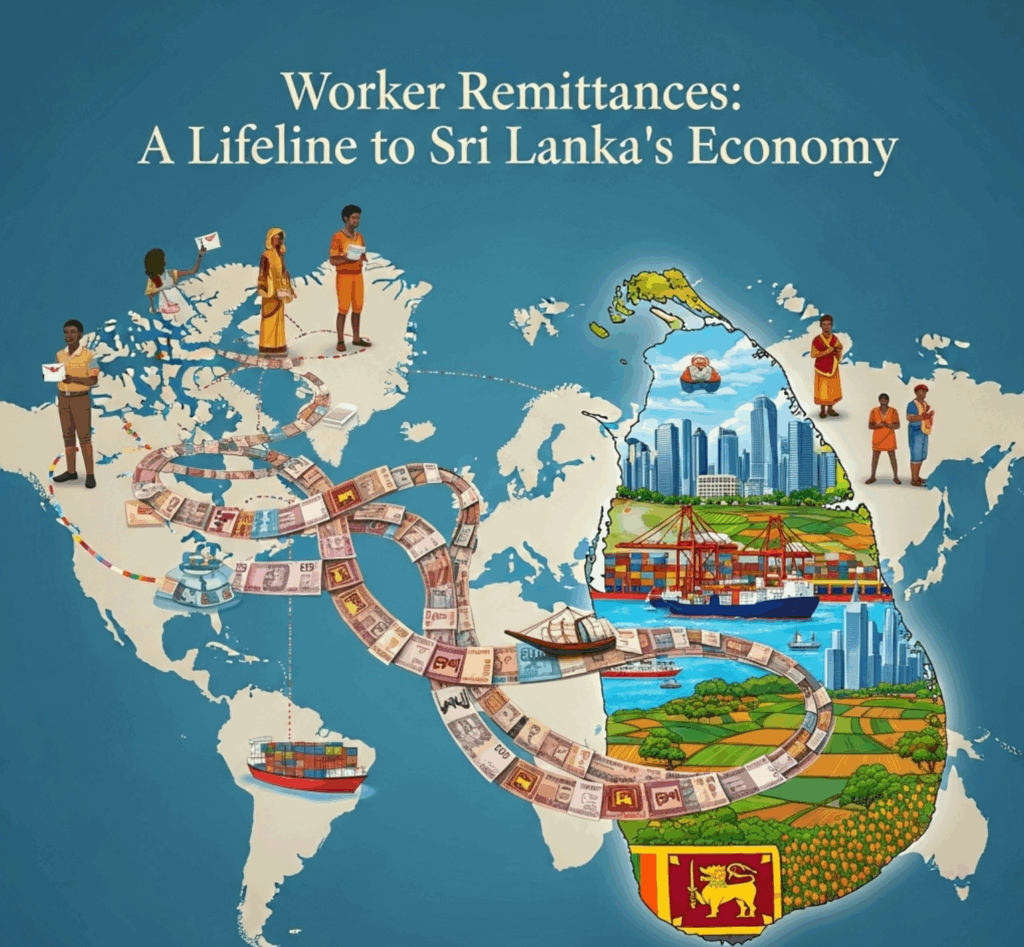
Colombo, September 8, 2025 – In a significant boost to Sri Lanka’s fragile economy, overseas worker remittances surged to US $681 million in August 2025, reflecting an 18% increase compared to July. The rise comes as a relief for the cash-strapped island nation, which has been battling economic headwinds, high debt repayments, and foreign exchange shortages in recent years.
A Vital Lifeline for the Economy
Remittances from Sri Lankans employed abroad, especially in the Middle East, Europe, and Southeast Asia, are the country’s largest single source of foreign exchange. According to the Central Bank of Sri Lanka, the $681 million inflow in August represents not just a seasonal spike but part of a broader upward trend seen in 2025.
Officials estimate that total remittances for the first eight months of the year have already exceeded US $4.8 billion, positioning 2025 as one of the strongest years for foreign income since the 2019 peak.
“Worker remittances continue to be a backbone of our economy,” said a senior official at the Central Bank. “Without them, our reserves would be under extreme pressure, especially given the heavy external debt repayments scheduled this year.”
Why the Surge?
Economists point to several key factors driving this rise:
- Global Employment Recovery – With economies in the Gulf and Europe rebounding strongly after pandemic disruptions, demand for Sri Lankan labor—particularly in construction, healthcare, and domestic work—has increased.
- Attractive Exchange Rates – A relatively weaker Sri Lankan Rupee has encouraged expatriates to remit more money home, maximizing the value of their earnings in local currency.
- Shift to Formal Channels – The government and banking sector have introduced new incentives, such as reduced transaction fees and special savings schemes, to discourage informal “hawala” transactions and promote official remittances.
- Family Support Needs – With inflation still troubling Sri Lanka’s middle and lower-income groups, migrant workers have been sending larger sums to ensure their families can meet basic living expenses.
Impact on Households
Beyond the macroeconomic picture, the surge in remittances has direct effects on millions of households across the island. From paying school fees to building homes, supporting small businesses, and covering medical expenses, the money sent by workers abroad sustains countless families.
A schoolteacher in Kurunegala, whose husband works as an electrician in Qatar, shared:
“Every rupee counts. With prices of food and fuel still high, we rely on his remittances to manage. The increase has helped us pay off some debt and keep our children in school.”
For rural families, in particular, remittances act as a cushion against poverty, ensuring they are less vulnerable to economic shocks.
Macroeconomic Significance
Sri Lanka is currently repaying over US $4 billion annually in foreign debt, making foreign exchange inflows critical. Worker remittances are not just vital for household consumption but also for:
- Stabilizing the currency: Higher inflows reduce pressure on the Sri Lankan Rupee and help curb depreciation.
- Building reserves: The Central Bank can use these dollars to shore up reserves, which had fallen dangerously low during the 2022 financial crisis.
- Supporting imports: Remittances help finance essential imports such as fuel, medicine, and raw materials for industries.
According to independent analysts, without the steady growth of remittances, Sri Lanka would likely face a renewed balance-of-payments crisis.
Challenges Facing Migrant Workers
While remittances benefit the economy, the reality for many Sri Lankan workers abroad remains challenging. Reports of labor exploitation, poor working conditions, and delayed wage payments continue to surface, particularly from the Middle East.
Civil society groups stress the need for the Sri Lankan government to:
- Strengthen bilateral labor agreements.
- Provide legal aid and consular support for distressed workers.
- Expand training programs to ensure workers are better prepared for overseas employment.
Government’s Response
The Sri Lankan government has hailed the surge as a positive sign for economic recovery. In a recent press briefing, Labour and Foreign Employment Minister Manusha Nanayakkara emphasized that the government is targeting US $9 billion in remittances for 2025, nearly 15% higher than last year’s figure.
To achieve this, authorities are rolling out new measures, including:
- Special remittance-linked housing loan schemes to encourage expatriates to invest back home.
- Digital remittance platforms with lower transaction costs.
- Skill development programs for prospective migrant workers in IT, nursing, and technical trades to diversify employment opportunities abroad.
Expert Opinions
Economists, however, warn against over-reliance on remittances as a long-term solution.
Dr. Nishan de Mel, an independent economic analyst, commented:
“Remittances are a stabilizer, not a cure. While they provide breathing space, Sri Lanka must use this opportunity to strengthen exports, attract FDI, and reform its fiscal structure. Otherwise, we risk leaning too heavily on our overseas workforce.”
This sentiment echoes the concerns of international financial institutions, which urge Sri Lanka to diversify its economy beyond labor exports.
Regional Comparisons
Sri Lanka is not alone in depending on remittances. Countries such as the Philippines, Nepal, and Bangladesh also rely heavily on migrant labor income. However, unlike these nations, Sri Lanka has yet to build a robust overseas employment policy that maximizes worker protections while ensuring sustainable economic benefits.
Looking Ahead
The August surge is undoubtedly encouraging, but the challenge will be maintaining momentum in the coming months. With global oil markets fluctuating, Middle Eastern economies—where a majority of Sri Lankan workers are employed—face uncertainties. Additionally, competition from other labor-exporting nations could limit Sri Lanka’s growth potential.
Still, for now, the $681 million inflow represents a much-needed boost. It brings hope for struggling families, stability for the economy, and a reminder of the sacrifices made by millions of Sri Lankans abroad.
Conclusion
At a time when Sri Lanka continues to rebuild from its most severe economic crisis in decades, worker remittances remain its economic lifeline. The August increase of 18% underscores the resilience and contribution of the diaspora, who continue to prop up the country despite their own challenges overseas.
As Sri Lanka looks to the future, leveraging these inflows wisely—by investing in long-term growth, ensuring migrant worker welfare, and reducing dependence on debt—will be key to creating a more stable and self-reliant economy.