“We Are Going Back”: Artemis II Moon Rocket Rolls to Launchpad for Historic Crewed Mission
By Lions Roar News Aerospace & Science Desk
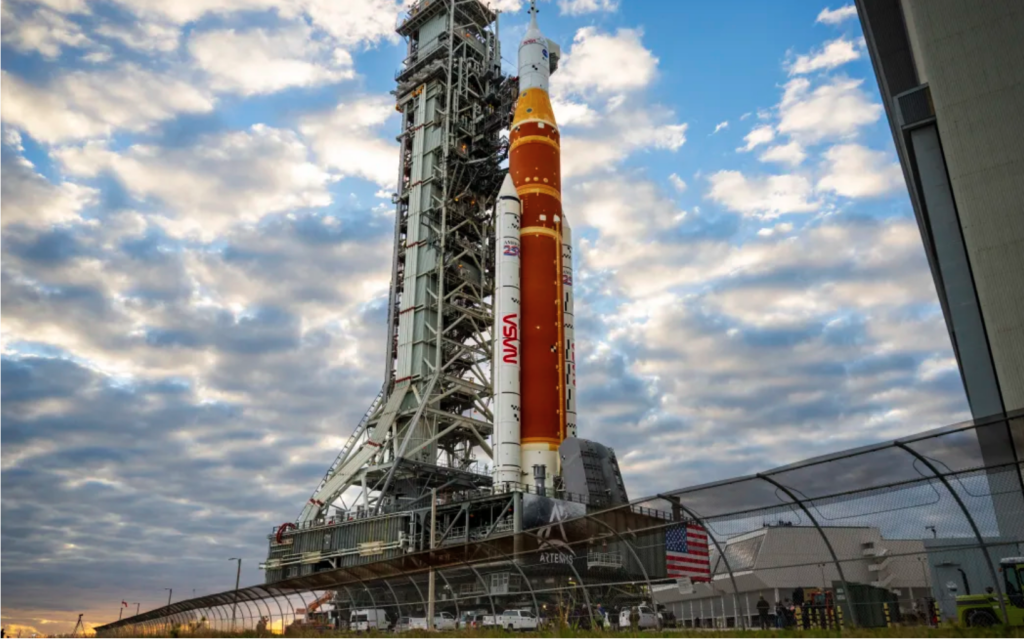
KENNEDY SPACE CENTER, FLORIDA (Monday, January 19, 2026) — In a scene reminiscent of the golden age of the Apollo program, NASA’s massive Space Launch System (SLS) rocket and Orion capsule began their slow, hours-long “rollout” to Launchpad 39B at the Kennedy Space Center this weekend.
The move signals the final countdown for Artemis II, a historic 10-day mission scheduled to lift off as soon as February 6, 2026. For the first time in over 50 years, four human beings will travel to the vicinity of the Moon—though, curiously, they will not be touching the lunar surface.
🌕 Meet the Crew: A Flight of “Firsts”
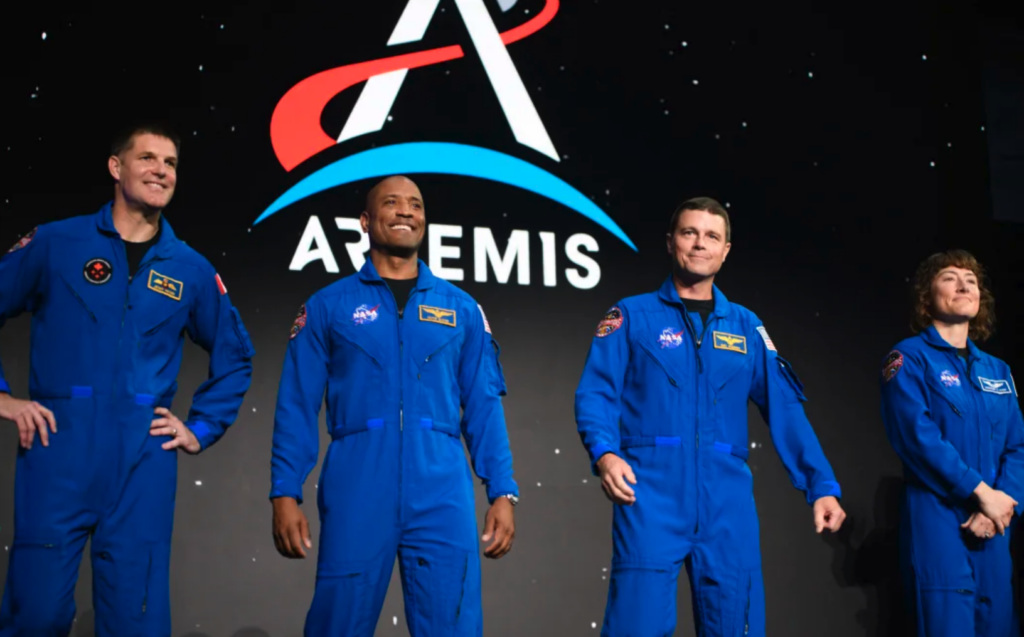
The Artemis II crew represents a new era of space exploration, featuring a diverse team that reflects NASA’s modern vision:
- Reid Wiseman (Commander): NASA veteran leading the mission.
- Victor Glover (Pilot): The first person of color to fly a mission beyond low-Earth orbit.
- Christina Koch (Mission Specialist): The first woman to venture into deep space.
- Jeremy Hansen (Mission Specialist): The first Canadian astronaut to fly a lunar mission.
Together, they are set to travel beyond the far side of the Moon, potentially breaking the 400,171-kilometer distance record set by the legendary Apollo 13 mission in 1970.
❓ Why No Landing? The “Risky Business” of Space
Many have asked why, after half a century, NASA isn’t landing on this trip. The answer is a blend of hardware readiness and safety protocols.
“The short answer is because it doesn’t have the capability. This is not a lunar lander,” explained Patty Casas Horn, NASA’s deputy lead for Mission Analysis.
NASA’s strategy for Artemis is “build, test, repeat.” Artemis II is essentially the “human shakedown” of the Orion capsule. Unlike the uncrewed Artemis I, this vehicle must now support life.
- Life Support: Testing moisture control (humans add a lot of humidity to air), thermal stability, and waste management (toilets).
- Survival: The mission uses a “free return” trajectory. Once they swing around the Moon, gravity will pull them back to Earth automatically. No major engine burns are required to get home—a massive safety net if something goes wrong.
🚀 The Apollo 8 Parallel
Space historians are drawing sharp parallels to Apollo 8 in 1968. Like Artemis II, Apollo 8 took humans to the Moon for the first time without a lander because the Apollo Lunar Module wasn’t ready.
Today, the Starship HLS (Human Landing System), being developed by SpaceX, is the missing piece for a landing. Development delays with Starship mean that a lunar landing is currently pushed to Artemis III, scheduled for 2028.
🌌 A “Higher Purpose” for a Divided Earth
James W. Head, a Brown University professor who worked on the original Apollo missions, believes this launch could be a unifying moment for a world currently mired in confusion and conflict.
“Artemis II will be an awakening moment,” Head told reporters. “Looking back at the Earth after over 50 years… it could even be a force for bringing people together. There’s a higher purpose here.”
📅 The Artemis II Flight Plan
| Milestone | Expected Timing |
| Rollout to Pad | Saturday, Jan 17 (Local Time) |
| Launch Window Opens | February 6, 2026 |
| Lunar Flyby | ~Day 4 of Mission |
| Record Breaking | Potential farthest distance from Earth |
| Splashdown | ~Day 10 in Pacific Ocean |