US Eyes Massive Travel Ban Expansion, Dozens More Nations Face Restrictions
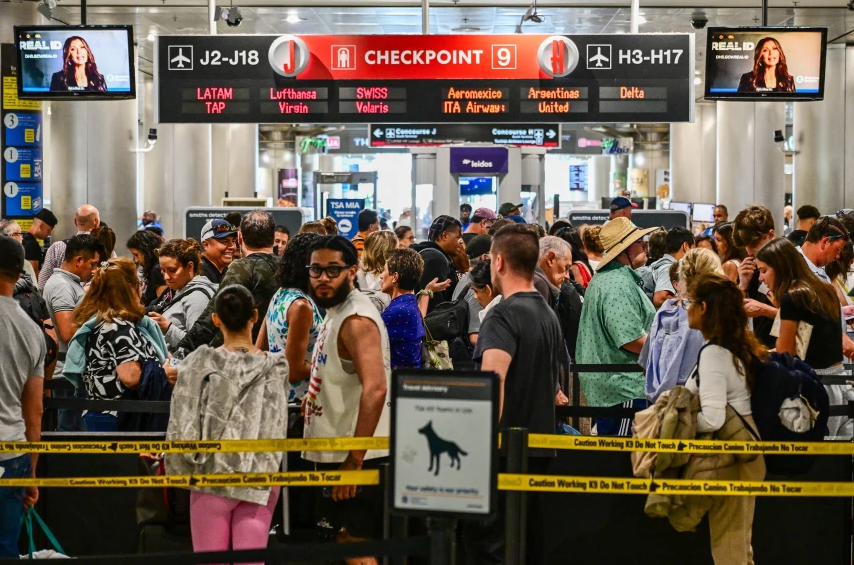
WASHINGTON D.C. – The Trump administration is reportedly poised to dramatically expand its controversial travel ban, with a State Department memo revealing plans to restrict entry for citizens from an additional 36 countries. This significant escalation in the administration’s aggressive immigration crackdown, detailed in a memo reviewed by The Washington Post, could impact a broad swathe of nations across Africa, the Caribbean, Central Asia, and the Pacific.
Among the new list of countries facing potential visa bans or other severe restrictions are 25 African nations, including key US partners such as Egypt and Djibouti. The comprehensive list also includes nations like Angola, Ghana, Nigeria, Ethiopia, and South Sudan, alongside Caribbean states such as Antigua and Barbuda, Dominica, and Saint Lucia, and Pacific Island nations including Tonga, Tuvalu, and Vanuatu.
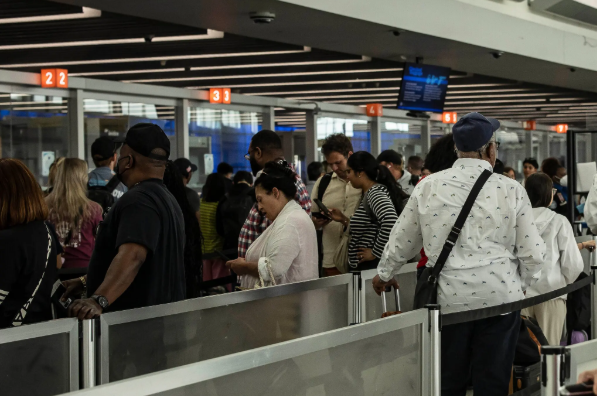
A US State Department spokesperson declined to comment on internal deliberations or communications, and the White House did not immediately respond to inquiries.
The memo, signed by Secretary of State Marco Rubio and dispatched to US diplomats on Saturday, informed the governments of the listed nations that they had been given a 60-day window to meet new benchmarks and requirements established by the State Department. A tight deadline of 8 AM Wednesday was set for these countries to provide an initial action plan detailing how they intend to meet these new demands.
The criteria for inclusion on this potential expanded ban are varied, as outlined in the State Department memo. Some countries were cited for lacking “competent or cooperative central government authority to produce reliable identity documents or other civil documents,” or for suffering from “widespread government fraud.” Others were included due to high numbers of their citizens overstaying visas in the United States.
Additional reasons cited in the memo included the availability of citizenship by monetary investment without a residency requirement, and claims of “antisemitic and anti-American activity in the United States” by individuals from those countries. The memo also suggested that a country’s willingness to accept third-country nationals removed from the United States or enter a “safe third country” agreement could mitigate concerns.
The specific timeline for enforcing these proposed travel restrictions, should the demands not be met, was not immediately clear.
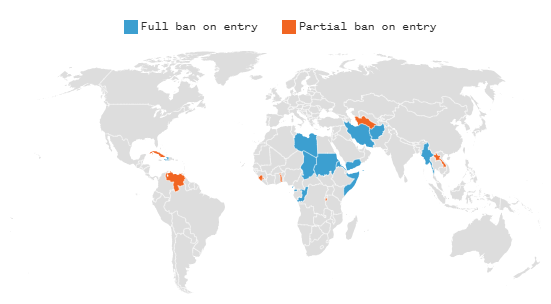
This potential expansion marks a considerable increase from a presidential proclamation issued earlier this month, on June 4, which fully restricted entry from Afghanistan, Myanmar, Chad, Republic of Congo, Equatorial Guinea, Eritrea, Haiti, Iran, Libya, Somalia, Sudan, and Yemen. That earlier order also imposed partial restrictions on travelers from Burundi, Cuba, Laos, Sierra Leone, Togo, Turkmenistan, and Venezuela.
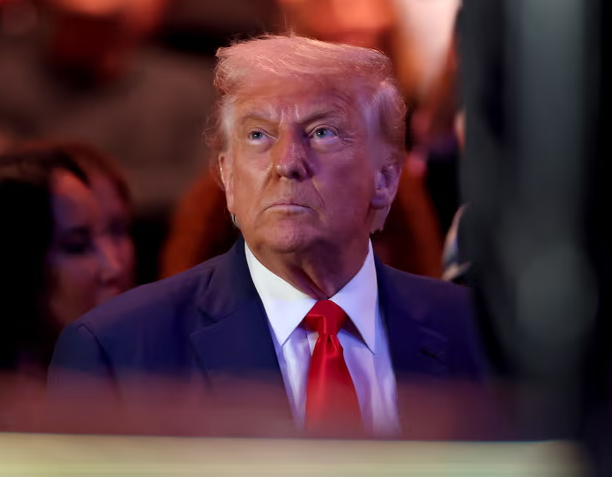
Democrats and other critics of the Trump administration have consistently characterized its efforts to impose blanket travel bans as xenophobic and bigoted. They frequently point to previous attempts by President Donald Trump to block travel from Muslim-majority nations during his first term, and the high proportion of African and Caribbean nations targeted in this latest proposed expansion.
Early in his first term, President Trump’s initial attempt to restrict travel from Iran, Iraq, Syria, Somalia, Sudan, Yemen, and Libya caused widespread confusion and chaos at airports. That ban faced numerous legal challenges before a third version was ultimately upheld by the Supreme Court in June 2018. While the travel ban was later rescinded under the Biden administration, Trump has repeatedly pledged on the campaign trail to reinstate it, vowing it would be “bigger than before.”