Today is Waitangi Day: Understanding Aotearoa’s Founding Story for New Migrants
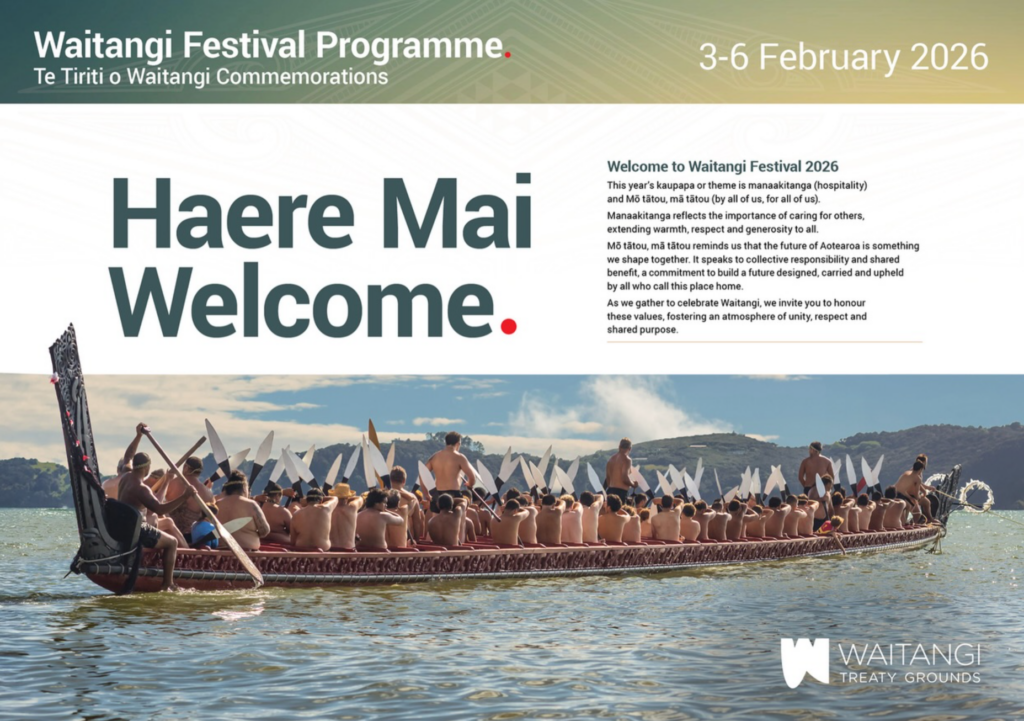
By Lions Roar Aotearoa (Diyatha News New Zealand) Comment & Analysis Desk
WELLINGTON, NEW ZEALAND — Friday, February 6, 2026 — For those who have recently chosen Aotearoa New Zealand as their new home, Waitangi Day—observed annually on February 6th—is far more than just a public holiday. It is the nation’s foundational day, a complex tapestry woven with threads of history, identity, partnership, and ongoing challenges. Understanding Waitangi Day is crucial for every new migrant to truly grasp the unique cultural and political landscape of this beautiful country.
1. The Genesis: What Happened at Waitangi?
To comprehend the significance of Waitangi Day, we must travel back in time to February 6, 1840. On this day, in the Bay of Islands, representatives of the British Crown and over 500 Māori chiefs (rangatira) signed Te Tiriti o Waitangi, or the Treaty of Waitangi.
Before the Treaty: Before the arrival of European explorers and settlers, Aotearoa was home to a sophisticated and thriving Māori society. Māori had complex social structures, unique spiritual beliefs, rich oral traditions, and highly developed systems of governance, land ownership, and warfare. The arrival of Europeans, initially whalers, sealers, and missionaries, brought new goods, technologies, and ideas, but also new diseases, weapons, and conflicts over land and resources.
As the number of British settlers increased, particularly in the early 19th century, the British Crown became concerned about the lawlessness among some of its subjects and the potential for other European powers to claim sovereignty over New Zealand. Māori themselves, facing increasing pressures and internal conflicts exacerbated by European contact, also sought a framework for managing these new relationships and securing their authority (tino rangatiratanga) in a rapidly changing world.
The Signing: The Treaty was primarily drafted by Captain William Hobson, representing the British Crown, with the assistance of James Busby, the British Resident, and missionary Henry Williams and his son Edward, who translated the document into Māori.
The signing ceremony at Waitangi was a momentous occasion, marked by speeches, debates, and the eventual signing by various rangatira. Over the following months, copies of the Treaty were taken around the country, and more chiefs added their signatures. By September 1840, an estimated 500-600 Māori chiefs had signed the Māori text of the Treaty.
2. Two Texts, Two Interpretations: The Heart of the Controversy
Here lies the crux of Waitangi Day’s complexity and why it remains a subject of intense debate and learning: there are two versions of the Treaty—one in English and one in Māori—and they are not exact translations of each other.
The English Text (British Understanding): The English text essentially ceded Māori sovereignty (kawanatanga, or governorship) to the British Crown, guaranteeing Māori ownership of their lands, forests, fisheries, and other possessions. In return, Māori were given the rights and protections of British subjects. From the British perspective, this established British sovereignty over New Zealand.
The Māori Text (Māori Understanding): The Māori text, Te Tiriti o Waitangi, which was signed by the vast majority of chiefs, conveyed a different understanding. Key terms were translated in a way that preserved Māori authority and ownership:
- Kawanatanga (governorship): Māori believed they were ceding a right of governance to the Crown, allowing it to manage its own settlers and maintain order, but not full sovereignty over Māori people or their lands.
- Tino Rangatiratanga (full chieftainship/absolute sovereignty): Article Two of Te Tiriti explicitly guaranteed Māori “te tino rangatiratanga o o ratou wenua o ratou kainga me o ratou taonga katoa” – “the full chieftainship of their lands, their homes, and all their treasured possessions.” This was understood by Māori as retaining their ultimate authority and control over their affairs and resources.
- Taonga (treasures): This term is far broader than just “property” and includes language, culture, spiritual values, sacred sites, and knowledge systems.
The Discrepancy: The fundamental difference lies in the concept of sovereignty. The British believed they were gaining full sovereignty. Māori believed they were granting a limited form of governance to the Crown while retaining their own absolute authority (tino rangatiratanga) over their affairs. This misunderstanding, whether deliberate or accidental, laid the groundwork for decades of conflict, land confiscations, and marginalization of Māori.
3. Why Waitangi Day is Important to Māori: A Day of Rekindled Hope and Ongoing Struggle
For Māori, Waitangi Day is a deeply significant and often bittersweet occasion. It is a day of remembrance, resilience, and renewed advocacy.
- A Promise Betrayed: It commemorates the signing of a sacred covenant that, for generations, was largely ignored or actively breached by the Crown. The period following the Treaty saw extensive land confiscations, the imposition of foreign laws, and the systematic suppression of Māori language and culture. This history of grievance, known as Te Tiriti o Waitangi grievances, is a central part of Māori identity and political consciousness.
- Validation and Identity: Despite the breaches, the Treaty remains a vital document for Māori. It is evidence that Māori never ceded sovereignty, and it affirms their inherent rights, including tino rangatiratanga. Waitangi Day provides a crucial platform for Māori to assert their identity, language (Te Reo Māori), and culture (Tikanga Māori) and to remind the nation of its foundational promise.
- A Platform for Whaikōrero (Formal Speeches): The Waitangi Treaty Grounds become a vibrant forum for Māori leaders to deliver powerful whaikōrero, expressing their concerns, celebrating successes, and advocating for justice and equity. It’s a space where Māori voices, often marginalized in mainstream media, can be heard clearly and collectively.
- Honouring Ancestors: It’s a day to honour the ancestors who signed the Treaty, those who fought to protect their lands, and those who have tirelessly worked to ensure the Treaty’s principles are upheld.
- A Call for Justice and Equity: For many Māori, Waitangi Day is not a celebration of “harmony” but a continued call for the Crown to honour its obligations, address historical injustices, and achieve genuine partnership and equity across all sectors of society—health, education, justice, and economic opportunity. It’s a day to highlight the systemic racism and disparities that continue to affect Māori.
4. Why Waitangi Day is Important to All New Zealanders (Including New Migrants): A Shared Future Built on Understanding
For all New Zealanders, including those who have recently chosen to call Aotearoa home, Waitangi Day is an invitation to engage with the nation’s past, understand its present, and shape a more inclusive future.
- Understanding Our Foundations: It’s an opportunity to learn about the unique bicultural foundations of New Zealand. Unlike many other nations, New Zealand has a founding document that acknowledges an indigenous population and establishes a partnership. Ignoring this history is to misunderstand the very fabric of New Zealand society.
- Embracing Biculturalism: New Zealand is a bicultural nation, shaped fundamentally by Māori and Pākehā (New Zealanders of European descent) cultures. Understanding Waitangi Day helps migrants appreciate the significance of Te Reo Māori, Tikanga Māori, and the ongoing efforts to revitalize Māori language and culture. This biculturalism enriches the national identity and offers a unique perspective to the world.
- A Journey of Acknowledgment and Reconciliation: For many decades, the Treaty was effectively sidelined. However, since the 1970s, there has been a significant movement towards recognizing and addressing Treaty grievances. The Waitangi Tribunal was established in 1975 to hear claims from Māori regarding breaches of the Treaty. This process of acknowledgment, apology, and settlement (often involving land or financial redress) is an ongoing journey of reconciliation. Understanding this process is vital for appreciating contemporary New Zealand politics and social justice movements.
- Developing a National Identity: Waitangi Day encourages all New Zealanders to reflect on what it means to be ‘Kiwi’. It’s about building a shared national identity that acknowledges both Māori and Pākehā heritage, as well as the contributions of all cultures that have made New Zealand home.
- Active Citizenship: For new migrants, engaging with Waitangi Day is an act of active citizenship. It means seeking to understand the historical context, listening to diverse perspectives, and contributing positively to discussions about justice, equity, and the future of Aotearoa. It’s about moving beyond celebrating “harmony” to understanding the ongoing work required to achieve it.
- A Commitment to Equity: The principles of the Treaty – partnership, participation, and protection – are increasingly seen as relevant to all New Zealanders, including other ethnic communities. Understanding these principles can inform efforts to create a more equitable society for everyone, ensuring no community is left behind.
5. How New Migrants Can Engage with Waitangi Day
- Educate Yourself: Read reputable histories of the Treaty. Websites like Te Ara – The Encyclopedia of New Zealand (tearawhenua.govt.nz) and the Waitangi Tribunal (waitangitribunal.govt.nz) are excellent resources.
- Listen to Māori Voices: Seek out and listen to Māori perspectives, whether through news reports, documentaries, or directly from Māori communities. Attend local Waitangi Day commemorations if possible, and listen to the whaikōrero.
- Learn Te Reo Māori: Even a few basic phrases can show respect and open doors to understanding.
- Visit Waitangi: If you have the opportunity, visit the Waitangi Treaty Grounds outside of the official commemorations to experience the site in a quieter, more reflective way.
- Engage Respectfully: Discussions around the Treaty can be passionate. Approach conversations with an open mind, a willingness to learn, and respect for differing viewpoints.
Conclusion: A Journey, Not a Destination
Waitangi Day is not a simple celebration, but a complex and vital annual reminder of New Zealand’s founding document and the ongoing journey towards a truly equitable and bicultural nation. For new migrants, embracing this complexity is not just an academic exercise; it is an essential step in becoming a valued and integrated member of Aotearoa New Zealand. By understanding the promises made at Waitangi and the struggles to uphold them, you contribute to a richer, more just, and truly unique national identity for all. Welcome to Aotearoa – the Land of the Long White Cloud, founded on a Treaty, and built on an ongoing conversation.