The “Rotten Egg” Plague: Christchurch Residents Choke as Wastewater Stench Blankets the City
By Lions Roar Aotearoa Health & Environment Desk
CHRISTCHURCH, NEW ZEALAND (Friday, January 30, 2026) — For Rebecca Robin and thousands of residents in Christchurch’s eastern suburbs, the simple act of opening a window has become a gamble with their health and sanity.
A mysterious, “toxic” stench resembling rotten eggs and raw sewage has drifted from its origin in Bromley across the city centre and as far as the coastal shores of New Brighton. What started as an inconvenience has escalated into a public health crisis, leaving residents gagging, nauseous, and trapped inside their own homes.
😷 “It Feels Toxic”: The Human Cost
Community advocate Rebecca Robin, who lives in Woolston, says the smell is so potent it has forced her to cancel music lessons and keep her doors bolted shut.
- Physical Symptoms: Residents report headaches, sore throats, breathing irritation, and severe nausea.
- Mental Toll: There is a growing sense of “odour anxiety,” with parents afraid to let their children play outside.
- Economic Impact: Local businesses and community activities have been disrupted as the stench makes outdoor engagement impossible.
🧪 What Are You Breathing?
The Christchurch City Council has confirmed that the primary culprit is hydrogen sulphide ($H_2S$).
Shutterstock
Explore
- The Smell: Humans are evolved to detect $H_2S$ at incredibly low levels—far below the threshold of lethal toxicity. It is synonymous with the smell of “rotten eggs.”
- The Risk: While the Council maintains that long-term health effects are unlikely because $H_2S$ does not accumulate in the body, current monitoring has detected levels that could pose a risk to human health during peak flare-ups.
🔥 Why is it happening now? (The 2021 Connection)
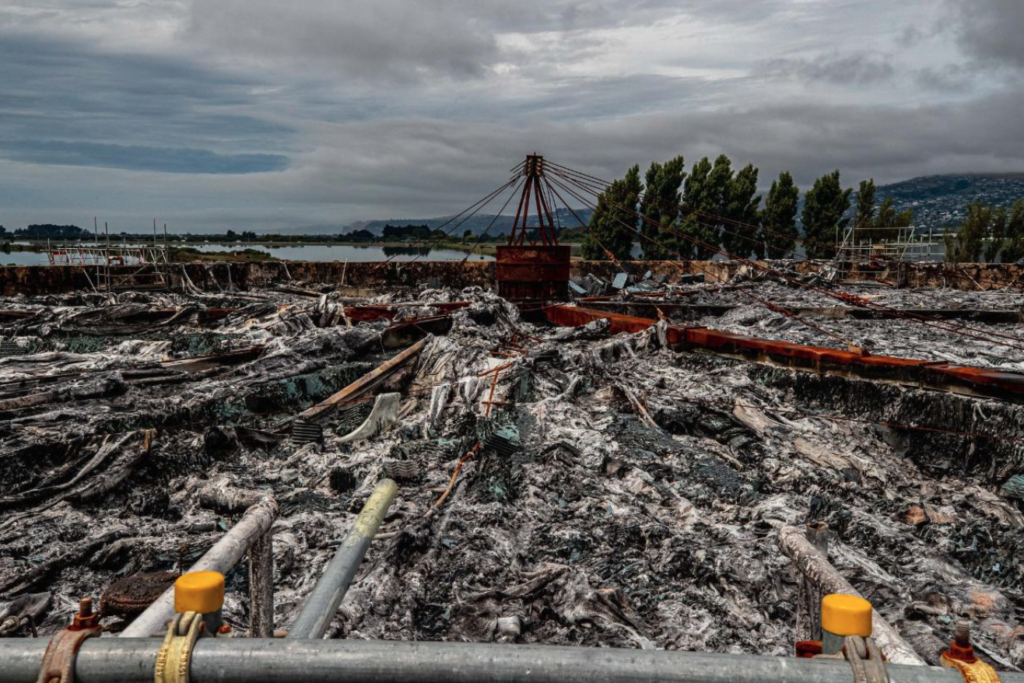
The root of the misery traces back to November 2021, when a massive fire destroyed two critical “trickling filters” at the Bromley Wastewater Treatment Plant.
- Capacity Loss: The fire wiped out 60% of the plant’s treatment capacity.
- System Distress: Without the filters, waste began breaking down in oxidation ponds, releasing the offensive gas.
- The Recent Trigger: Heavy rainfall this month caused oxygen levels in the ponds to plummet. Unlike previous rains which helped “clean” the ponds, this deluge put the damaged system into “distress,” causing the stench to flare up and drift further than ever before.
🏗️ The Long Road to a Fix
The council is currently building a new, modern activated sludge reactor to replace the burnt infrastructure. However, the timeline for completion is grim.
- Immediate Action: Staff are adjusting pond flows and using operational tools to boost oxygen levels.
- Short-Term Outlook: High odour levels are expected to persist for at least another week.
- The Long Wait: The full permanent fix is estimated to be three years away—a timeline Councillor Yani Johanson compares to the construction of a major sports stadium.