The New “Occupants Protection Bill” in Sri Lanka: Shield for Tenants or Trap for Landlords?
By Lions Roar Aotearoa News Legal Desk
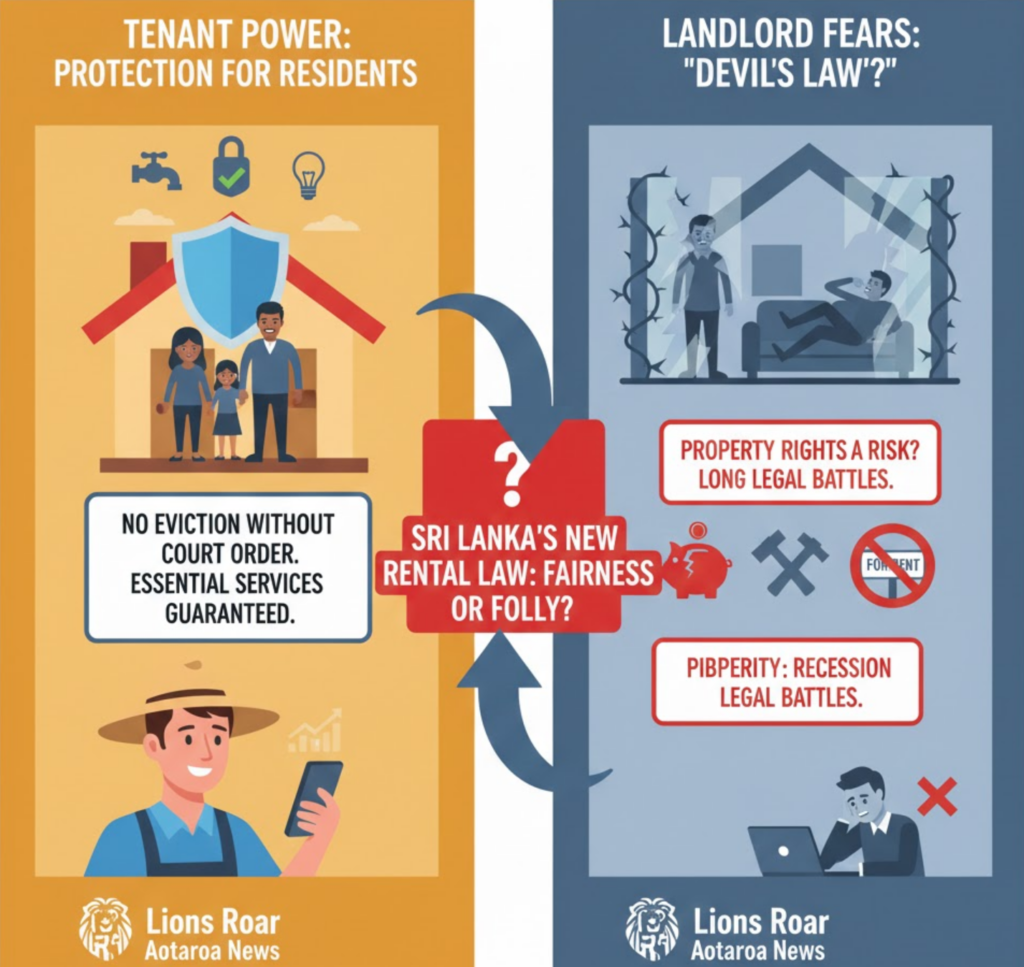
COLOMBO, SRI LANKA — Sunday, February 8, 2026 — A fierce national debate has erupted in Sri Lanka following the introduction of the Occupants Protection Bill in Parliament. While legal experts argue the bill is a vital safeguard against arbitrary evictions, critics—including some lawmakers—have labeled it a “draconian” measure that unfairly targets property owners.
The controversy centers on how the new law balances the rights of those renting or leasing property against the rights of the landlords who own them.
1. What is the Purpose of the New Sri Lankan Law?
The primary goal of the Occupants Protection Bill is to prevent the arbitrary and forceful removal of tenants.
- Scope of Protection: Under Section 2, the law applies to anyone legally residing in a premises under a valid lease or rental agreement.
- Essential Services: Section 3 strictly prohibits landlords from cutting off water, electricity, or other essential utilities as a tactic to force a tenant out. Landlords are also barred from refusing necessary repairs to keep the property habitable.
- Anti-Harassment Clauses: Section 4 prevents owners from using direct or indirect threats, damage to property, or “inducements” to make a tenant leave.
2. The “Court Order” Requirement
One of the most debated aspects of the bill is Section 5, which mandates that no occupant can be evicted without a formal court order.
- Legal Recourse: Tenants are empowered to take legal action against landlords who attempt to bypass the judicial system.
- The “Devil’s Law”: Opposition MP Faiszer Musthapha has been a vocal critic, famously referring to the proposal as “the devil’s law” (yakage neethiyak), arguing that it makes it nearly impossible for rightful owners to reclaim their property from problematic tenants.
- Existing Framework: This new bill would sit alongside existing laws, such as the Recovery of Possession of Premises Given on Lease Act (No. 1 of 2023), leading to concerns about legal overlap and confusion.
3. Supreme Court Challenges and Government Response
The bill has already moved beyond the halls of Parliament and into the highest courts of Sri Lanka.
- Petitions Filed: Several Fundamental Rights (FR) petitions have been filed in the Supreme Court by groups claiming the bill violates the constitutional rights of property owners.
- Ministerial Stance: Justice Minister Harshana Nanayakkara has sought to calm the waters, stating that the bill has not yet reached its final stage. He emphasized that the government is still reviewing feedback to ensure the law is balanced.
[Table: Key Differences Between Current Law vs. Proposed Bill]
| Feature | Current Practice | Proposed Bill (2026) |
| Eviction Process | Often handled via private notice/police | Mandatory Supreme/District Court order |
| Utility Cut-offs | Sometimes used as leverage | Strictly prohibited & punishable |
| Tenant Harassment | Civil dispute | Criminal liability for landlords |