The Inequality of Care: 57,000 Records Reveal the Crisis in NZ Diabetes Management
By Lions Roar Aotearoa (Diyatha News New Zealand) Health Bureau Source Credit: Based on analysis by Lynne Chepulis and Sara Mustafa, University of Waikato, as reported by RNZ and Local Democracy Reporting.
HAMILTON, NEW ZEALAND — Wednesday, February 4, 2026 — A major new study analyzing the health records of over 57,000 New Zealanders has exposed a deep divide in the country’s healthcare system. Despite universal clinical targets, the data shows that Māori, Pacific people, and those in low-income or rural areas are being systematically “left behind” in the fight against type 2 diabetes.
The research, led by the University of Waikato, reveals that while doctors track blood sugar (HbA1c), blood pressure, and cholesterol to prevent life-altering complications, the ability to reach these targets is far from a level playing field.
1. The HbA1c Gap: Who Hits the Target?
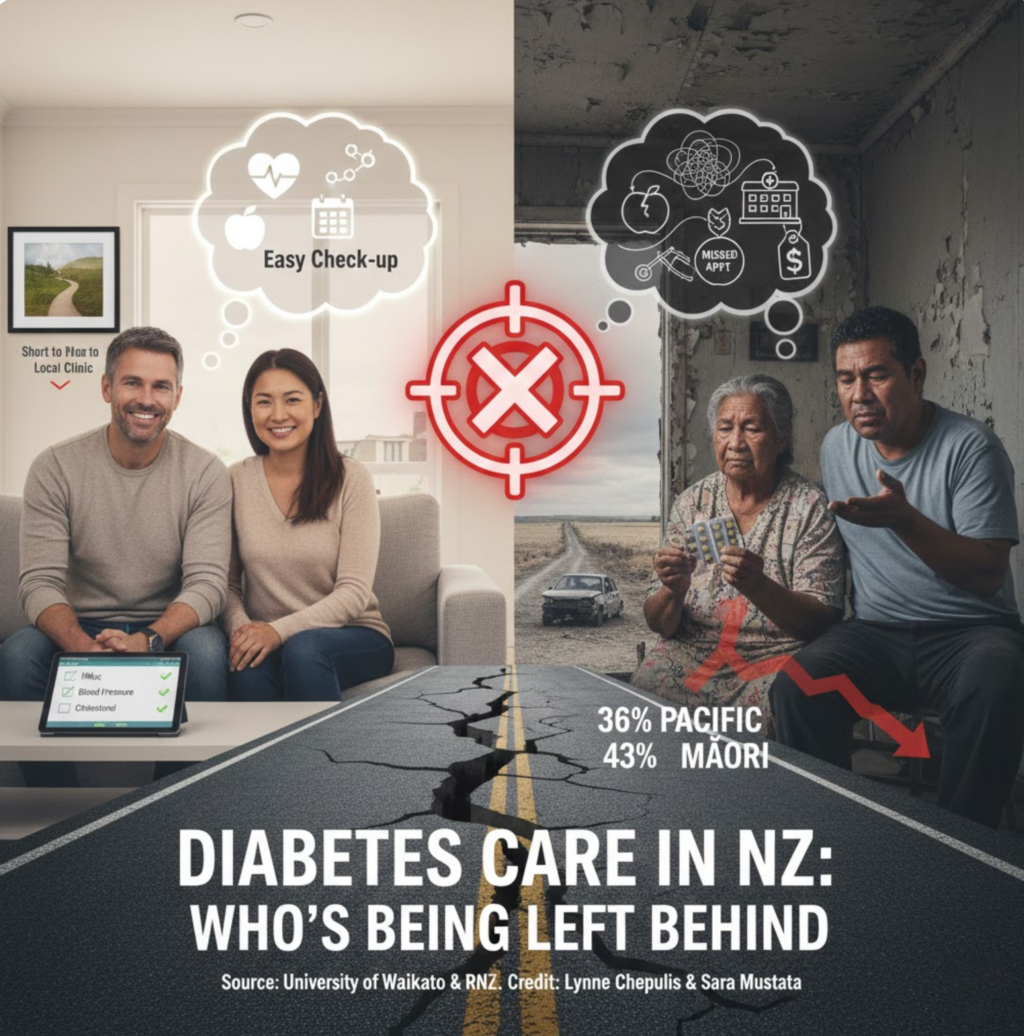
The HbA1c test measures average blood sugar over three months. A lower score reduces the risk of blindness, kidney failure, and amputations. However, the study found a stark ethnic disparity in who actually meets the recommended levels:
| Ethnicity | Percentage Meeting HbA1c Targets |
| New Zealand European | ~50% |
| Asian | ~50% |
| Māori | 43% |
| Pacific Peoples | 36% |
The data also showed that the likelihood of missing these targets increases dramatically in relation to social deprivation.
Shutterstock
2. Barriers Beyond Willpower
The study’s authors, Lynne Chepulis and Sara Mustafa, argue against the common misconception that poor outcomes are the result of “individual choices.” Instead, they point to systemic hurdles:
- Rural Isolation: For rural patients, a “routine” check-up can cost half a day of work and significant fuel expenses.
- Workforce Shortages: Many patients see a different clinician every time, preventing the long-term, trusting relationships necessary for chronic care.
- Financial Strain: Even with funded care, co-payments for GPs and the rising costs of food and housing mean diabetes care often competes with basic survival.
- Complex Eligibility: Newer, life-saving medications are funded but often locked behind “tight eligibility rules” that prevent those most in need from accessing them.
3. The High Cost of Inequity
Because Māori and Pacific people are often diagnosed much earlier in life, they live with high blood sugar for longer. This leads to earlier onset of:
- Amputations
- Kidney Failure
- Heart Attacks and Strokes
The researchers warn that missed targets should not be seen as patient failures, but as system performance indicators. “Right now,” they state, “they show where care is accessible and effective—and where inequity persists.”
4. A New Vision for Diabetes Care
To close the gap, the study suggests the system must shift toward:
- Kaupapa Māori services and rural-specific investment.
- Removing all cost barriers, including transport and co-payments.
- Longer appointments that allow for whānau (family) involvement.
- Closer-to-home care to reduce the burden on those in deprived or remote areas.