The ADHD Paradox: New Studies Link Diagnosis to Lower School Wellbeing and Academic Struggles
By Lions Roar Aotearoa (Diyatha News New Zealand) Health Desk Source Credit: Based on reporting by Kate Green (RNZ) and independent research from University College Dublin and the University of Sydney.
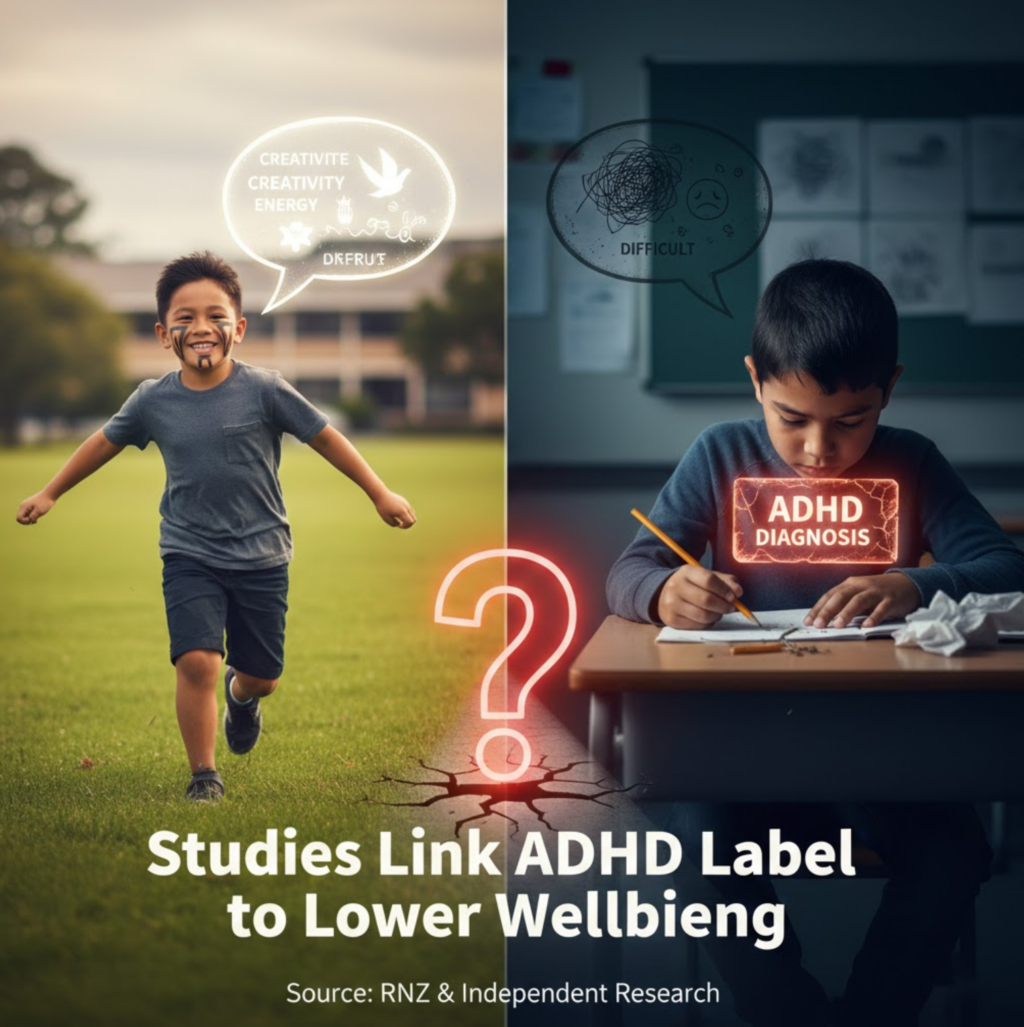
WELLINGTON, NEW ZEALAND — Friday, February 6, 2026 — While an ADHD diagnosis is often seen as a gateway to essential support, two major international studies are sounding a cautionary note. New research indicates that for some children, the “label” of ADHD may lead to worse academic outcomes and a decreased sense of happiness compared to peers with similar behaviors who remain undiagnosed.
The findings have sparked a debate among New Zealand clinicians about the potential for stigmatization and the “unintended side effects” of clinical labeling.
1. The Research: Australia vs. Ireland
Two independent longitudinal studies compared children exhibiting hyperactivity and inattention (H/I). One group received a formal ADHD diagnosis, while the other did not.
- The Australian Study (2022): Led by researchers Luise Kazda and Katy Bell, this study found that diagnosed teens had a 2.5x higher likelihood of self-harm. They also reported a weaker “sense of belonging” at school and lower belief in their own academic abilities.
- The Irish Study (2020): Conducted by Cliodhna O’Connor and Fiona McNicholas, this research followed children from age 9 to 13. By the time they reached their teens, those with an earlier diagnosis showed poorer self-concept and more significant relationship problems with peers than undiagnosed children with the same symptoms.
2. The “Labeling” Effect
Wellington-based clinical psychologist Giselle Bahr noted that the results were surprising because most experts expect a diagnosis to lead to better outcomes through targeted help.
“The research shows that while people feel relief at finally having an answer, there is also a process of stigmatization,” Bahr told RNZ. She suggested that a diagnosis might lead to:
- Negative Self-View: Children internalizing the idea that they are “broken” or “different.”
- Differential Treatment: Teachers and parents potentially lowering expectations or interacting with the child differently once the label is applied.
- Immaturity Bias: Bahr highlighted that the youngest children in a class are statistically more likely to be diagnosed simply because they are less developmentally mature than their older classmates.
3. The Other Side: Validation and Support
Despite these findings, many New Zealanders argue that a diagnosis is a lifeline.
- Kelly Cuff, a Wairarapa resident diagnosed as an adult, shared that her life changed drastically for the better once she started medication. “I look at my dishes and I… just do them. There’s no guilt there,” she said, reflecting on how earlier support might have prevented “questionable choices” in her youth.
- Jayne Fox, an ADHD coach, emphasizes that a diagnosis provides “legitimacy” and self-compassion, helping adults regulate emotions and focus at work.
4. Beyond Medication: A Holistic Approach
Experts like Carolyn Robertson suggest that “meeting a child where they are” is more effective than relying solely on a label.
- Tapping into Strengths: Focus on what a child is interested in to build confidence.
- Behavioral Strategies: Using charts, dopamine-boosting activities, and modified tasks to manage focus.
- Multimodal Support: Combining coaching, environmental changes, and (if necessary) medication for a balanced outcome.