Sri Lanka: Weather Alert: Deep Depression Weakens but Heads for North-Eastern Coast; Heavy Rain and Gale Winds Expected
By Lions Roar News Weather Desk
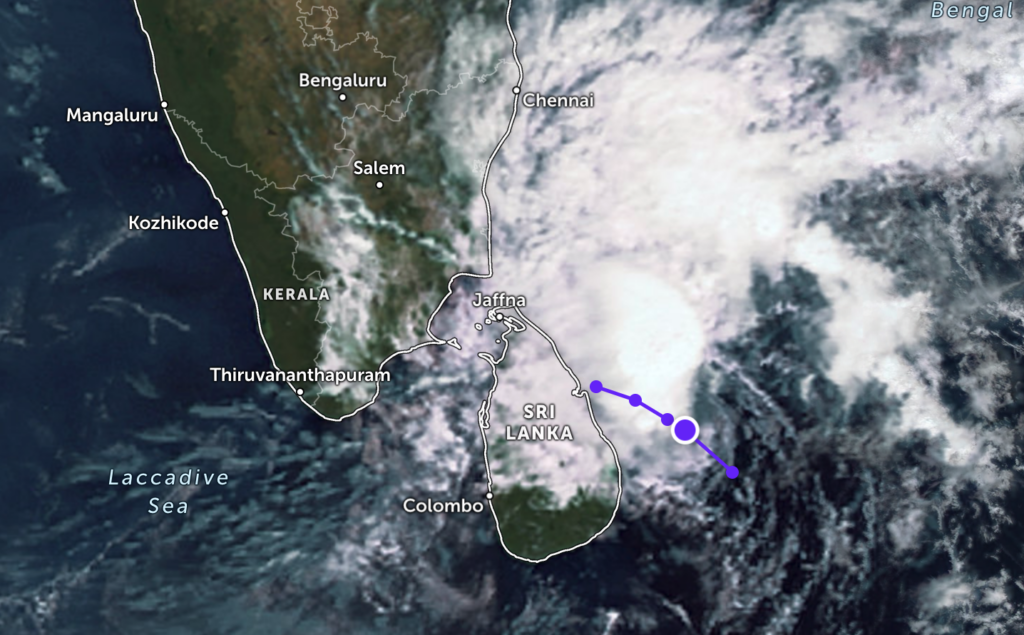
COLOMBO, SRI LANKA (January 10, 2026) — The Department of Meteorology has issued an urgent weather advisory as a deep depression in the Southwest Bay of Bengal begins its transition across the Sri Lankan coastline. As of 4:00 AM today, the system was located approximately 100 km North-Northeast of Trincomalee.
The system is expected to weaken into a standard depression as it moves North-West, likely crossing the coast between Trincomalee and Jaffna by midday today.
🌧️ Heavy Rain Forecast for Northern Districts
A thick cloud cover has already blanketed the northern half of the island. Residents should prepare for significant rainfall throughout the day:
- High Intensity Rain: Certain areas in the Northern Province are expected to receive heavy downpours exceeding 100 mm.
- Frequent Showers: Intermittent rain or thundershowers are predicted for the Northern Province as well as the Puttalam, Anuradhapura, and Trincomalee districts.
- Regional Outlook: Several spells of rain are expected in Kurunegala, Polonnaruwa, and Matale, while other parts of the island may see localized thundershowers during the evening or night.
💨 Dangerous Wind Warnings
The depression is bringing intense wind speeds that pose a risk to property and maritime activities.
- Northern Province: Expect very strong winds between 50-60 km/h, with aggressive gusts reaching up to 70 km/h.
- Central & Western Regions: Strong winds of 40-50 km/h are forecast for the North-Western Province, as well as Matale, Trincomalee, and Nuwara Eliya districts.
🛡️ Safety Advisory
The Department of Meteorology urges the public to take immediate precautions to minimize damage from lightning and temporary strong winds during thundershowers.
Key Safety Steps:
- Secure outdoor furniture or loose structures.
- Avoid open areas or tall trees during lightning.
- Stay updated with the latest bulletins from the Disaster Management Centre (DMC).