Pacific Powerhouse: Peters and Baerbock Ink Strategic Deal During Northland Summit
By Lions Roar Aotearoa Diplomatic Bureau
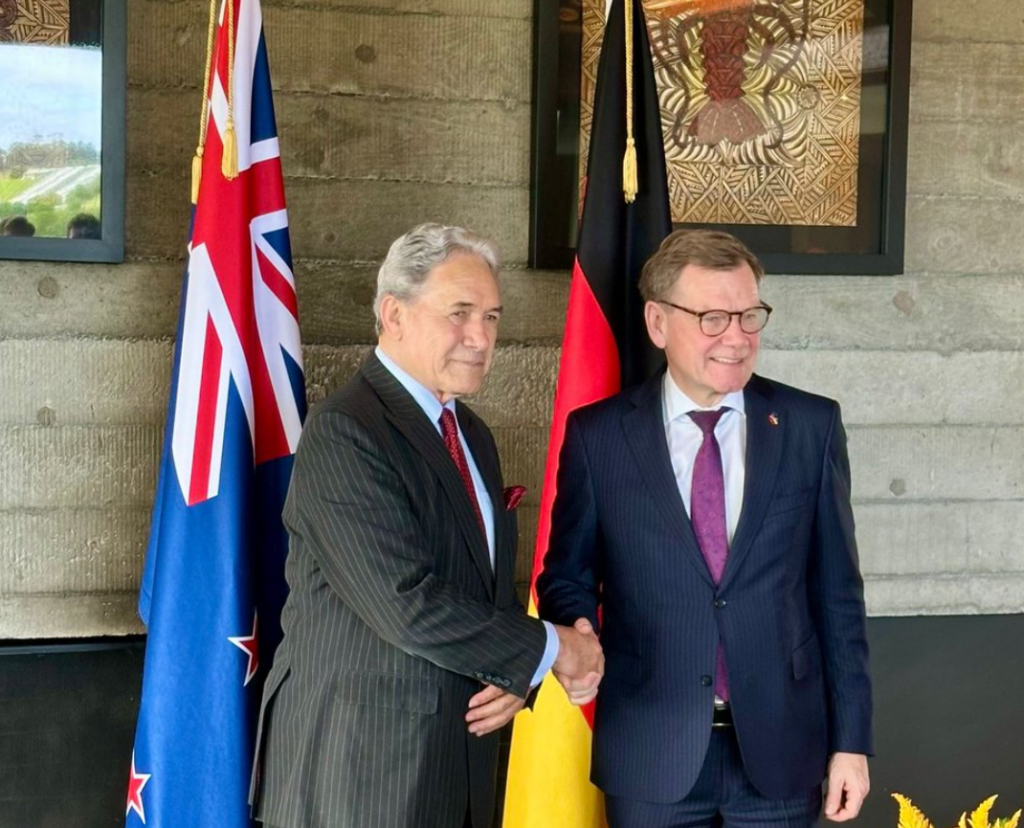
PURERUA PENINSULA — Wednesday, February 4, 2026 — Against the breathtaking backdrop of the Purerua Peninsula in Northland, New Zealand’s Foreign Affairs Minister Winston Peters has hosted his German counterpart, Annalena Baerbock, for a high-stakes bilateral meeting that has redefined the two nations’ roles in the Pacific.
The meeting, held away from the traditional diplomatic halls of Wellington, resulted in a landmark cooperation agreement aimed at stabilizing and supporting Pacific Island nations as they face escalating climate and geopolitical pressures.
1. The Northland Summit: Diplomacy in the Winterless North
Minister Peters chose the secluded and culturally significant Purerua Peninsula to welcome Baerbock, a move seen as a masterstroke of “kanohi ki te kanohi” (face-to-face) diplomacy. The setting allowed the two leaders to discuss complex international issues—including the ongoing conflict in Ukraine and tensions in the South China Sea—in a focused, private environment.
“Germany is a vital partner for New Zealand,” Peters said following the hui. “Bringing Minister Baerbock here to Northland was about showing the heart of our country while we discuss the future of our shared interests in the Pacific.”
2. The “Pacific Deal”: A New Era of Cooperation
The headline of the summit was the signing of a new Strategic Pacific Partnership. This deal commits Germany to increased investment in the region, channeled through New Zealand’s existing diplomatic and developmental networks.
Key Pillars of the Agreement:
- Climate Resilience: A joint fund to support infrastructure in low-lying Pacific nations, focusing on sea-level rise mitigation.
- Maritime Security: Germany has pledged increased naval cooperation and training to help Pacific nations protect their Exclusive Economic Zones (EEZs).
- Green Energy Transition: Utilizing German engineering and New Zealand’s regional expertise to accelerate the move away from diesel generators to solar and wind power in the islands.
Minister Baerbock praised the deal, stating that Germany views New Zealand as its “anchor” in the Indo-Pacific region. “We share the same values of democracy and the rule of law. Today, we have made those values practical for our friends in the Pacific,” she said.
3. Why Germany? Why Now?
Germany has been steadily increasing its focus on the Indo-Pacific as part of a broader European Union strategy to diversify partnerships away from a sole reliance on China. By aligning with New Zealand, Germany gains “on-the-ground” legitimacy in the Pacific, while New Zealand gains the financial and political weight of Europe’s largest economy.
The timing is also significant. With Waitangi commemorations taking place just kilometers away, Peters used the opportunity to highlight New Zealand’s unique position as a Pacific nation with deep European ties.
4. A Brief Pause for Culture
Before heading back to more formal engagements, Baerbock was given a brief tour of the local area and introduced to the history of the Bay of Islands. The visit concluded with a private dinner featuring Northland produce, cementing what both leaders called a “renewed and revitalized” friendship.