Nipah Virus Alert: Experts Urge Vigilance in Sri Lanka Amid Regional Outbreaks
By Lions Roar Aotearoa Health & Security Desk
COLOMBO, SRI LANKA (Friday, January 30, 2026) — Sri Lankan health experts are calling for heightened surveillance and proactive measures following reports of the Nipah Virus (NiV) in several Asian countries, including India. While the Ministry of Health maintains that the risk to the island remains low, medical professionals are urging the government to fortify border controls and public awareness to prevent a potential localized outbreak.
🛡️ Call for Urgent Border Surveillance
Dr. Chamal Sanjeewa, an expert in Medical and Civil Rights, has formally requested health authorities to closely monitor international arrivals. He emphasized the need for a robust screening process at airports and other entry points to identify high-risk travelers.
- Port of Entry Vigilance: Dr. Sanjeewa highlighted the importance of health awareness programs and blood-related health counseling at airports.
- Preemptive Action: He urged authorities not to wait for the first domestic case but to implement preventative activities, including vaccination-related strategies where applicable, for incoming tourists and returning citizens.
🧬 Understanding the Nipah Virus
Nipah is a zoonotic virus, meaning it spreads from animals to humans. The primary carriers are fruit bats (Pteropodid family).
- Transmission Methods: The virus spreads through direct contact with infected bats’ urine, saliva, or droppings. It can also be contracted by eating contaminated food (such as fruit bitten by bats) or through contact with infected animals like pigs.
- Human-to-Human Spread: Although limited, human-to-human transmission has been recorded in previous outbreaks, usually through close contact in family or hospital settings.
⚠️ Symptoms and Severity
Health specialists warn that Nipah can cause severe illness, with a high mortality rate in complicated cases.
- Common Symptoms: Patients typically present with fever, body aches, muscle pain, and vomiting.
- Severe Complications: In acute cases, the virus can lead to encephalitis (inflammation of the brain), which can result in coma or death.
🏛️ Official Stance: “Risk is Minimal”
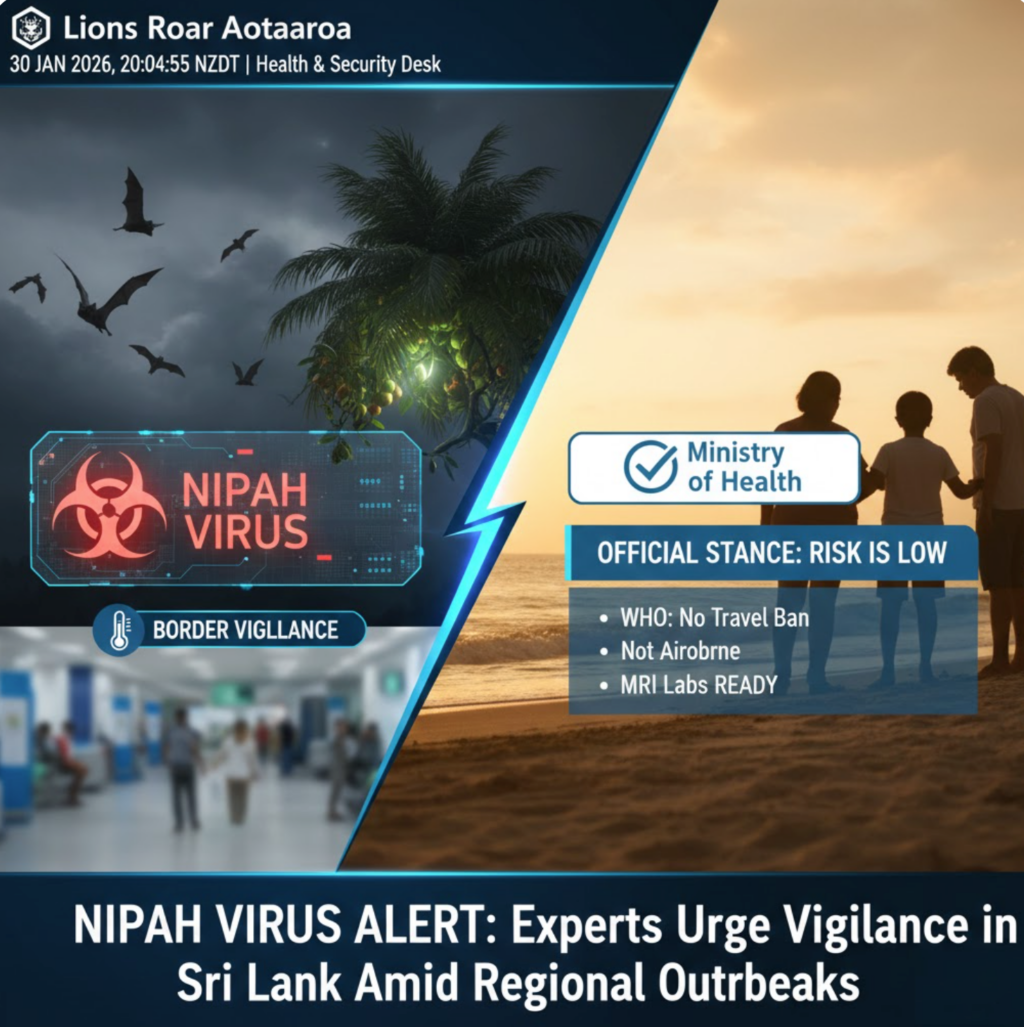
In a clarifying statement, Dr. Anil Jasinghe, Secretary to the Ministry of Health and Media, reassured the public that the current risk of a Nipah outbreak in Sri Lanka is very low.
- WHO Guidelines: Dr. Jasinghe noted that while cases were detected in West Bengal, India, the World Health Organization (WHO) has not recommended any international travel restrictions.
- Not Airborne: He clarified that unlike Influenza or COVID-19, Nipah is not easily transmitted through the air and requires very close, prolonged contact for human-to-human infection.
- Laboratory Readiness: The Medical Research Institute (MRI) is fully equipped with the necessary laboratory facilities to diagnose the virus immediately should a suspected case arise.
📋 Advice for the Public
Despite the low risk, authorities are advising Sri Lankans—especially those traveling abroad—to remain alert.
- Food Safety: Avoid consuming fruits or raw date palm sap that may have been contaminated by bats.
- Hygiene: Maintain strict hand hygiene and follow health guidelines issued by the Ministry.
- Official Sources: The public is urged to rely only on official announcements and credible sources for information to avoid unnecessary panic.