End of an Era: Historic Ōpiki Toll Bridge to Lose Its Cables After New Year’s Failure
By Lions Roar Aotearoa Heritage & Regional Bureau
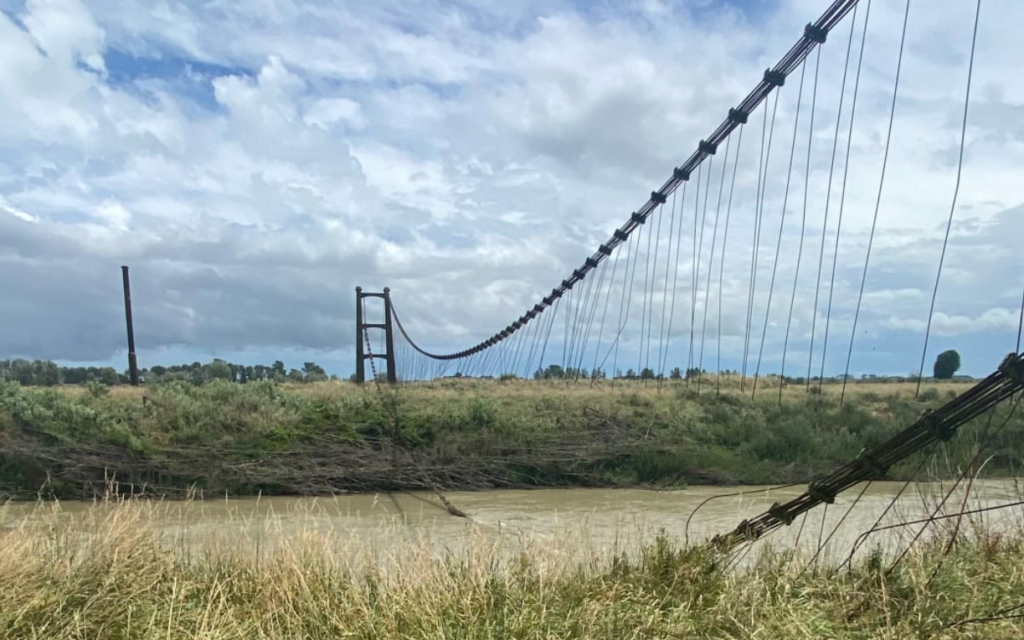
ŌPIKI, MANAWATŪ — Wednesday, February 4, 2026 — One of the Manawatū’s most haunting and recognizable landmarks is set to change forever. Horizons Regional Council has confirmed that the decaying cables of the historic Ōpiki Toll Bridge will be removed this week, leaving only the iconic concrete pylons standing against the flat southern skyline.
The decision follows a catastrophic failure on New Year’s Eve, when strong winds snapped a cable, sending it plunging into the Manawatū River for the second time in just over two years.
1. A Century of History: From Flax to Fares
Originally built in 1918 by the Akers family to service their flax business, the bridge was repurposed as a private toll bridge after the industry collapsed. For nearly 50 years, it served as the vital link between Manawatū and Horowhenua.
- The Toll Keeper’s Life: Toll keepers lived on-site in a role similar to lighthouse keepers. They were alerted to arriving cars by an air pipe that rang a bell in their house, or simply by the rattling of the bridge’s loose wooden boards.
- Pricing: In its final years, a trip cost 10 cents for vehicles under three tonnes—though insistent midnight travelers were sometimes charged triple!
- Political Scandal: In the 1930s, the Minister of Public Works was so horrified at being charged a toll that he vowed to build a public bridge within five years. It actually took over 30 years for the current highway bridge to finally open in 1969.
2. The Final Snap: Why the Cables are Coming Down
The suspension bridge—once the longest in New Zealand at 150 metres—has struggled with structural integrity since its decking was removed in the late 60s. After a cable failure in 2023 was repaired by the council, the same cable snapped again on December 31, 2025.
Dr. Jon Roygard, Horizons Regional Council general manager of catchment operations, explained that the decision to strip the cabling was driven by safety and cost:
- Navigational Hazard: The fallen cable poses a risk to jet boaters and river users.
- Preventative Action: The remaining cable is in equally poor condition. Removing both now prevents a future collapse and is significantly cheaper than piecemeal repairs.
- Public Money: The council must balance heritage preservation with the responsible use of public funds.
3. A Loss of “Elegance” and Spookiness
The bridge holds a Category 1 rating from Pouhere Taonga Heritage NZ. Historic Places Trust chairwoman Cindy Lilburn expressed sadness over the move, noting that the cabling provided a certain “elegance” and a “spooky” silhouette that rose out of the morning mist.
“It is such a landmark,” Lilburn said. “We would have liked a long-term plan to clip new cabling to the structure, but we understand the reality of the situation.”
In a gesture of respect to its history, sections of the original cabling—rumored to have come from the Waihi gold mines—will be gifted to the Historic Places Trust and the Akers family.