A “Missed Red Flag”: Systemic Failure Led to Avoidable Death of 20-Year-Old in Secure Care
By Lions Roar News Investigative Desk
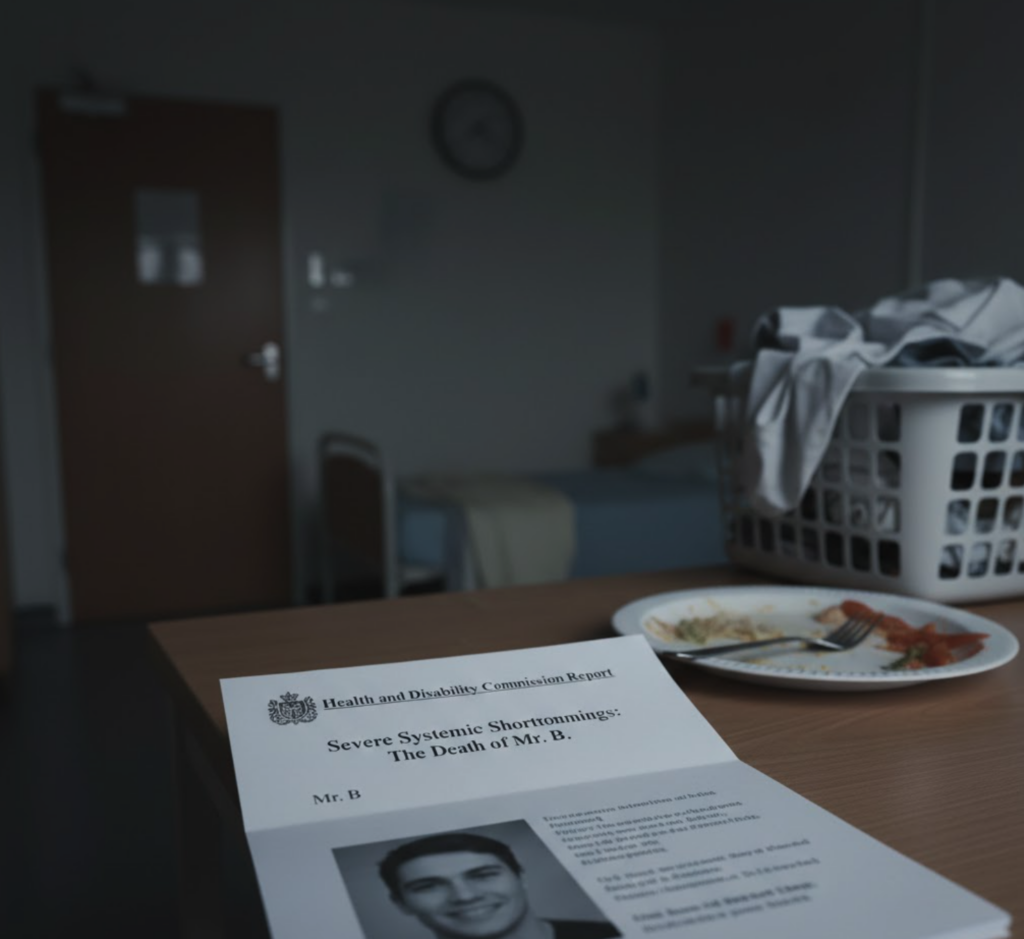
AUCKLAND, NEW ZEALAND (Tuesday, January 20, 2026) — A damning investigation by the Health and Disability Commission (HDC) has revealed “severe systemic shortcomings” in the care of a 20-year-old man who died after staff failed to recognize that his bowel had ruptured.
The man, identified as “Mr. B,” lived with Prader-Willi Syndrome (PWS)—a rare genetic condition characterized by a chronic, life-threatening urge to eat. Despite being in a secure residence for people with intellectual disabilities, Mr. B died in May 2023 from multi-organ failure triggered by a perforated bowel that went unnoticed for nearly a week.
⚠️ The Fatal Oversight
The HDC report, released today by Deputy Commissioner Rose Wall, paints a harrowing picture of neglect and poor clinical judgment.
- The Sepsis Spiral: Mr. B’s death was caused by diabetic ketoacidosis (a dangerous buildup of acid in the blood) and sepsis, both triggered by a hole in his small intestine.
- The Ignored Red Flag: A key symptom of PWS is a constant, insatiable appetite. In the days leading to his death, Mr. B lost his appetite—a major clinical “red flag” for PWS patients. Staff reportedly ignored this, along with abdominal distension and pain.
- The Final Hours: On the day he was hospitalised, Mr. B was left alone in his room for hours. By the time staff checked on him at 8:00 PM, his speech was slurred, he had wet the bed, and he was unable to move.
📉 Systemic Failures: “Avoidable and Critical”
The investigation found that the unnamed provider failed Mr. B on almost every level of care:
- Weight Management: Despite his condition, staff allowed Mr. B’s weight to balloon by 20kg in just six months. In one instance, he was able to eat an entire plate of ham and drink all the milk in a shared fridge unsupervised.
- Staffing Crisis: The provider admitted to struggling with recruitment, but the HDC found they failed to put safety plans in place to mitigate these shortages. On the morning Mr. B was taken to the hospital, a reliever was called in who was not even aware Mr. B was in the house.
- Training Gaps: Despite PWS being a specialized condition, the provider did not give staff appropriate training or resources to manage it safely.
- Poor Record Keeping: Shift handovers were described as ineffective, with conflicting accounts from staff members about Mr. B’s condition on his final day.
🏛️ Commissioner’s Verdict
Deputy Commissioner Rose Wall rejected the provider’s claim that staff actions were “appropriate.”
“Mr. B’s worsening health and ultimately his death were avoidable,” Wall stated. “I am critical that Mr. B was not supervised, monitored, and cared for adequately when he became unwell.”
She highlighted a “missed opportunity” to work with the man’s family, who had successfully managed his condition at home for years but felt their expertise was ignored by the facility.
📋 The Recommendations
The provider has accepted the breach and has been ordered to:
- Formally apologize to Mr. B’s family.
- Audit management plans for all compulsory care residents.
- Revise operating procedures regarding daily notes and handovers.
- Implement mandatory PWS training for all staff members.
The provider claims it has since recruited more staff and created a new “Quality Manager” role to prevent a repeat of this tragedy.