The $10,000 Subaru: Why Your Old Car’s Insurance Value Just Skyrocketed
By Lions Roar Aotearoa News Financial Desk
AUCKLAND, NEW ZEALAND — Sunday, February 8, 2026 — In a bizarre twist of the 2026 insurance market, New Zealand drivers are waking up to renewal notices that suggest their aging “runabouts” have suddenly become high-value assets.
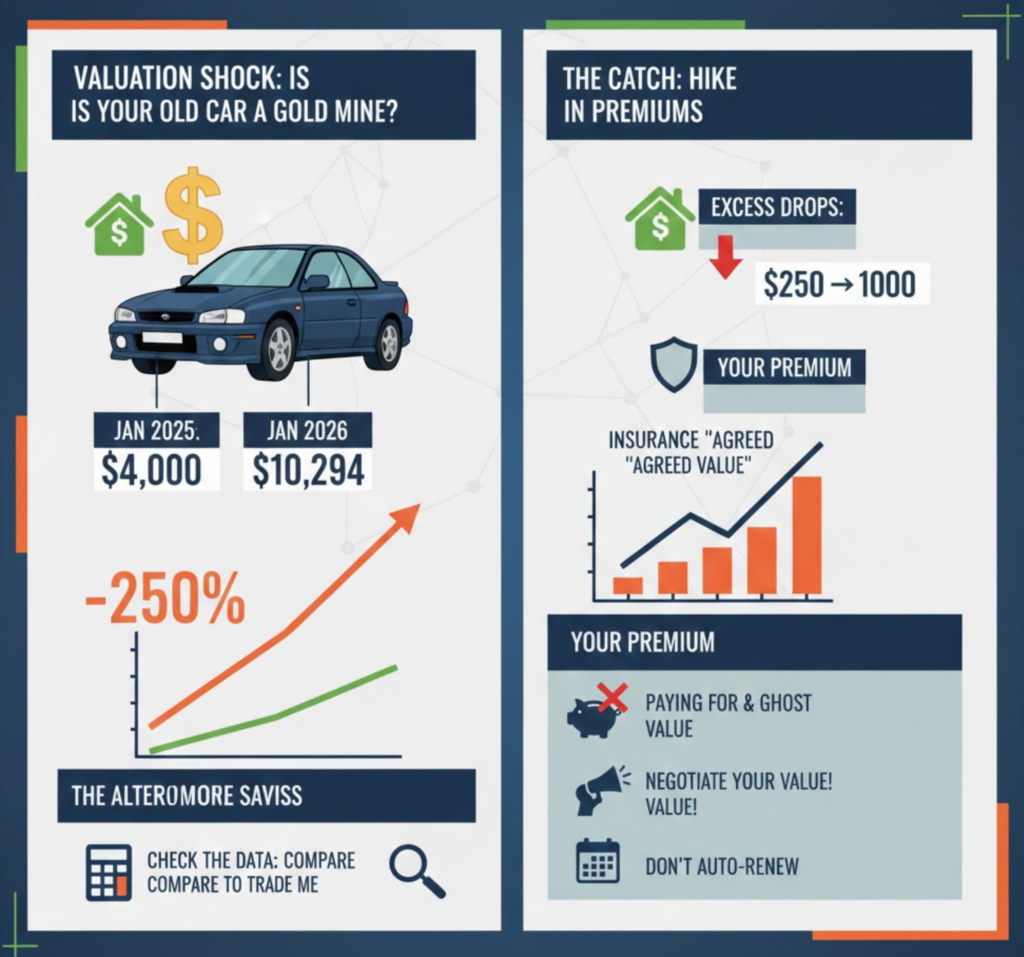
The latest case involves an Auckland woman, Nicki, who was stunned to find her 2002 Subaru Impreza—previously valued at $4,000—now valued by AA Insurance at a staggering $10,294. Her 2012 Suzuki Alto also jumped from $5,500 to nearly $10,000.
While a 250% value increase on a 24-year-old car sounds like a win, it comes with a catch: higher premiums and lower excess options.
1. The “Third-Party Data” Trap
Insurers like AA Insurance rely on independent data providers (such as RedBook or AutoGrab) to set “Agreed Values.”
- The Glitch: Occasionally, these providers update their algorithms or data sources. If the “market condition” data spikes—even due to a low volume of sales for older models—the algorithm can produce an unrealistic valuation.
- The “Protection” Narrative: Insurers argue that they must set these high values to protect customers from “underinsurance,” ensuring you can actually afford a replacement in a market where used car prices have remained stubbornly high.
2. The Excess Squeeze
Alongside the value hike, Nicki noticed her maximum allowable excess dropped from $2,500 to $1,000.
- Premium Pressure: A lower excess (the amount you pay toward a claim) almost always results in a higher premium.
- Simplification or Revenue? While AA says they are “simplifying options,” critics argue that removing the choice of a high excess prevents savvy drivers from lowering their annual bills.
3. Reality Check: What is it Actually Worth?
A quick scan of the 2026 market shows a significant gap between insurance “Agreed Values” and actual sales:
- Market Reality: Similar Subaru models are currently listed on Trade Me and Turners for between $4,500 and $6,000.
- The Imbalance: If you agree to a $10,000 valuation, you are paying a premium for a payout you likely wouldn’t be able to justify if the car were written off, as insurers often reserve the right to pay “Market Value” if it’s significantly lower than the “Agreed Value” at the time of loss.