Money & The Economy: Should KiwiSaver Be a Weapon Against Inflation?
By Lions Roar Aotearoa News Financial Desk
AUCKLAND, NEW ZEALAND — Sunday, February 8, 2026 — As New Zealand grapples with the lingering effects of global inflation, a bold debate has resurfaced: Should the government swap mortgage rate hikes for compulsory KiwiSaver adjustments?
In the latest episode of the “No Stupid Questions” podcast with Susan Edmunds, RNZ listeners have raised a provocative alternative to the Reserve Bank’s primary tool for cooling the economy. This news is made based on the information found online. The ownership of this discussion goes to relevant authorities.
1. The Case for the “KiwiSaver Lever”
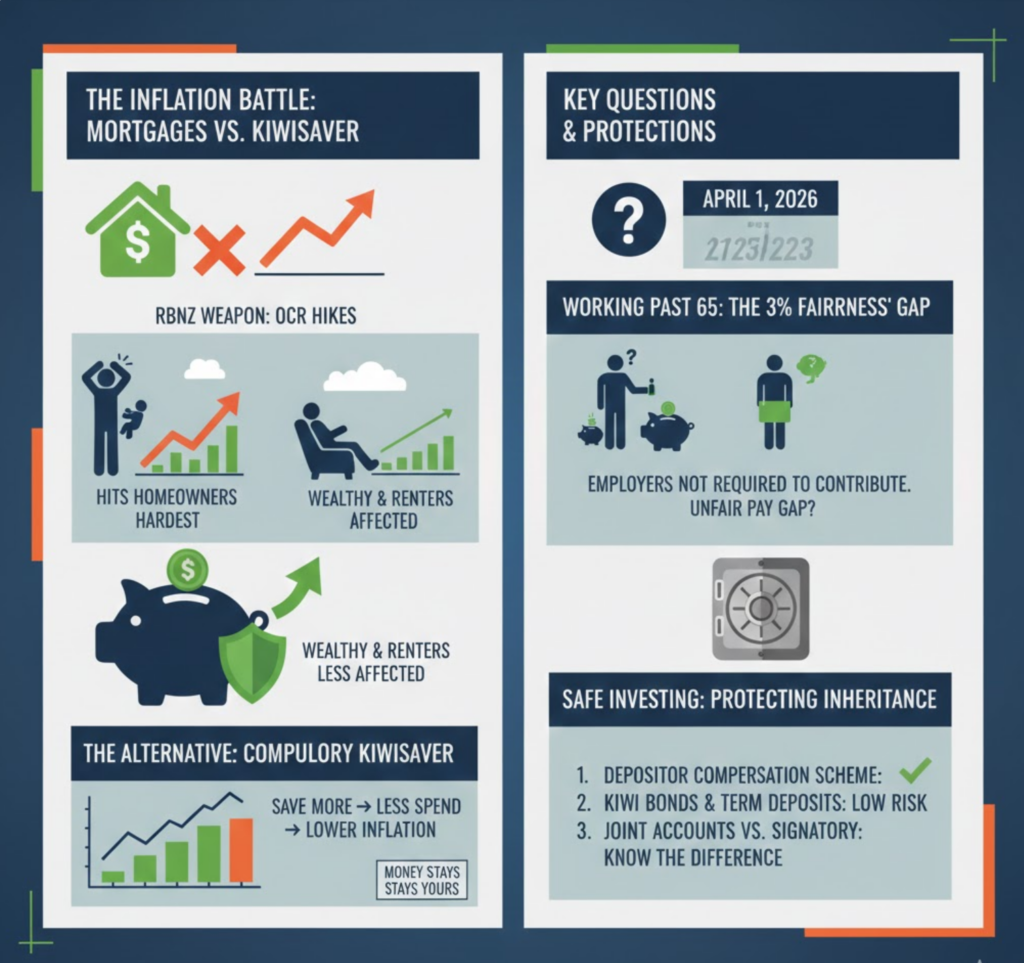
Currently, the Reserve Bank of New Zealand (RBNZ) uses the Official Cash Rate (OCR) to influence mortgage rates. When inflation is high, rates go up, forcing homeowners to spend more on interest and less on goods.
- The Critique: Critics argue this “weapon” is unfair. It primarily hits young families with large mortgages while leaving the wealthy (who own homes outright) and renters largely untouched.
- The Alternative: Instead of “recycling money into bank profits,” some suggest making KiwiSaver compulsory and increasing contribution rates during high inflation.
- The Benefit: Your money stays yours. Instead of paying higher interest to a bank, you are forced to save more for your own retirement, effectively removing that cash from the immediate economy to lower demand.
2. Why Isn’t It Happening?
While the idea has merit, experts point to significant hurdles:
- The Rental Trap: Renters, often on lower incomes, already struggle with rising costs. Compulsory, higher KiwiSaver contributions could push them into financial hardship.
- The “Gain” Imbalance: Homeowners with mortgages would technically “gain” the most by not having their interest rates hiked, potentially widening the wealth gap.
- Retirement Goals vs. Economic Goals: Retirement savings should be calculated based on what you need at age 65, not on how fast prices are rising at the supermarket today.
3. Working Past 65: The “3% Fairness” Debate
A common point of frustration for older workers is the “65-year-old cutoff.”
- The Law: Currently, employers are not legally required to continue their 3% (rising to 3.5% on April 1, 2026) contribution once an employee turns 65.
- The Pay Gap: This often results in a 65-year-old effectively being paid less than a 64-year-old colleague doing the same job. While some workers negotiate to have that 3% added back into their base salary, employers are not obligated to agree.
4. Safety First: Protecting an Inheritance
For those looking to grow “modest inheritance” money safely in 2026, the landscape has changed:
- Depositor Compensation Scheme (DCS): Since July 1, 2025, New Zealanders are protected for up to $100,000 per bank if a financial institution fails.
- Low-Risk Options: For maximum safety, Kiwi Bonds (lending to the Government) or Term Deposits remain the gold standard.
- What Happens Upon Death? If you are just a “signatory” on an account, your access ends the moment the account holder passes away. The funds then become part of the estate. Only “joint accounts” typically pass directly to the survivor.