“More Than Just a Ceremony”: Former President Mahinda Rajapaksa Reflects on Sri Lanka’s Sovereignty and Heritage
By Lions Roar Aotearoa (Diyatha News New Zealand) National Bureau
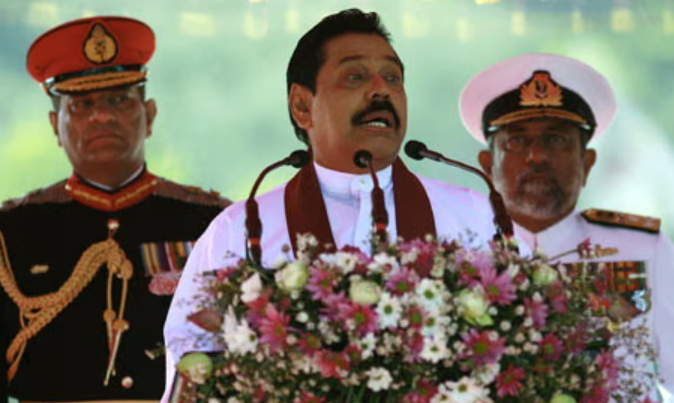
COLOMBO, SRI LANKA — Thursday, February 5, 2026 — Former President Mahinda Rajapaksa has issued a stirring message to the nation on its 78th Independence Day, asserting that the annual celebration is not merely a “simple ceremony” but a vital expression of national pride and the culmination of centuries of sacrifice.
In a detailed statement, the former leader—who presided over the end of the country’s 30-year civil war—reflected on the historical weight of the Lion Flag and the diverse heroes who fought to unfurl it once again in 1948.
1. The Symbolism of the Lion Flag
Rajapaksa reminded the nation that the Sri Lankan flag, which was lowered on March 2, 1815, was only raised again in February 1948. He emphasized that this restoration was the result of the “unwavering courage” of both known and unknown heroes who lived and died for the motherland.
“During my tenure as President, I raised that national flag with immense pride and honor,” he stated. “I raised it as the People’s Sovereign and as the Commander-in-Chief before the brave defenders of our nation. The pride I felt for my country in those moments is beyond words.”
2. A Tribute to a Diverse Front of Freedom Fighters
A significant portion of the message was dedicated to the multi-ethnic and multi-religious nature of the independence struggle. Rajapaksa highlighted that Sinhalese, Tamil, and Muslim citizens united to win a free nation.
He paid special tribute to:
- The Clergy: Venerable Kadahapola Thero, Migettuwatte Gunananda Thero, and Father S.G. Perera, who protected the nation’s heritage.
- National Heroes: Monarawila Keppetipola, Madugalle, Puran Appu, and Gongalegoda Banda.
- Political Pioneers: D.S. Senanayake, F.R. Senanayake, Ponnambalam Arunachalam, and Philip Gunawardena.
- International Allies: Tibetan monk S. Mahinda Thero and American Col. Henry Steel Olcott, who contributed significantly to the revival of national identity.
3. Recalling the Victory Over Terrorism
The former President touched upon a personal and historical milestone: the 1998 Independence Day celebrations. Originally scheduled for Kandy, the event was moved to Colombo following a terrorist attack on the Sri Dalada Maligawa (Temple of the Tooth).
“It remains vivid in my memory that years later, after defeating terrorism, we were able to celebrate the 62nd Independence Anniversary in 2010 at that very Temple of the Tooth premises in Kandy,” he noted. He described this as a victory not just over colonial rule, but over the “cruel war” that had deprived citizens of their life and liberty.
4. A Lesson for the Next Generation
Rajapaksa concluded by stating that Independence Day is the primary opportunity to teach children to love and respect their birthplace. He defined the day as a moment to honor the bravery of the Tri-Forces and Police and to value the “proud and fearless history” that defines Sri Lanka.
“I wish my beloved people, who inherit such a proud history, the strength to move forward as a free and honorable nation. Victory to the Motherland!”