ADHD Breakthrough: GPs to Gain Diagnosis and Prescribing Rights from February 1
By Lions Roar Aotearoa Health & Policy Desk
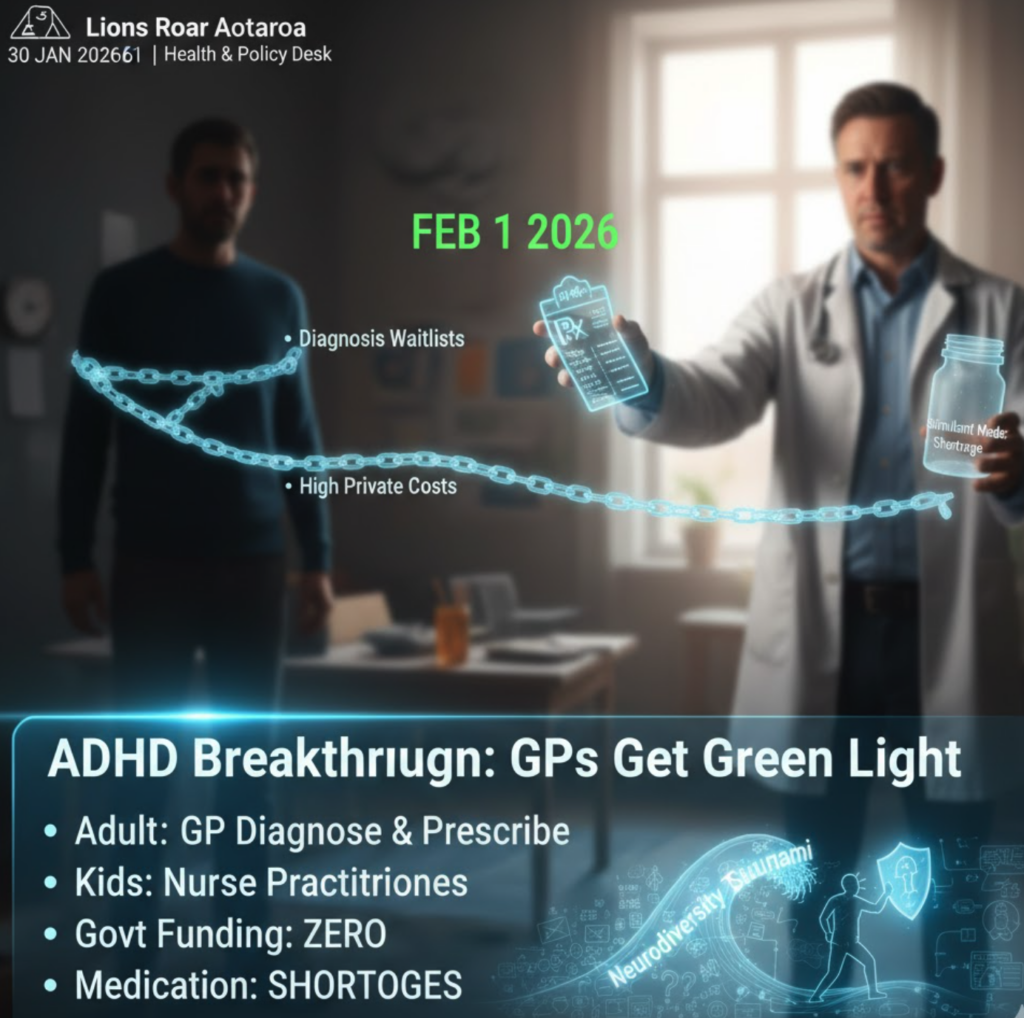
WELLINGTON, NEW ZEALAND (Friday, January 30, 2026) — In one of the most significant shifts in New Zealand mental health policy in decades, specialist GPs and nurse practitioners will be authorized to diagnose adult ADHD and prescribe stimulant medications starting this Sunday, February 1.
The move aims to break the “neurodiversity tsunami” that has left thousands of New Zealanders on years-long waiting lists or forced to pay thousands of dollars for private psychiatric consultations. However, experts warn that while the law is changing, the system may not be ready to “scale up” overnight.
🩺 What Changes on February 1?
The new rules, signed off by Pharmac and Medsafe with cross-party support, dismantle a 25-year-old restriction that prevented GPs from initiating ADHD treatment.
- For Adults (18+): Suitably trained GPs can now diagnose ADHD and prescribe stimulants without needing a psychiatrist’s sign-off.
- For Children & Teens (<18): Nurse practitioners working in paediatric services and Child and Adolescent Mental Health Services (CAMHS) can now diagnose and treat patients.
- Existing Paths: Psychiatrists and paediatricians will continue their current prescribing roles.
💰 The “No Funding” Hurdle
Despite the wider prescribing rights, the Government has provided no additional funding for GP training or for the consultations themselves.
“It will not be as simple—or as cheap—as booking a 15-minute appointment,” warns College of GPs president Luke Bradford.
- Time-Intensive: A standard ADHD assessment takes at least 90 minutes, often spread across multiple sessions.
- Cost to Patients: While psychiatrist fees can reach $2,000, a GP assessment will still likely cost in the hundreds of dollars due to the time required.
- Equity Concerns: Advocates like Tami Harris from Acorn Neurodiversity worry that without public funding, the “diagnosis barrier” will remain for low-income New Zealanders.
📉 Supply Chain Warning: The Medication Shortage
Even for those who secure a diagnosis, getting the medicine remains a challenge. Pharmac has confirmed that global supply shortages for ADHD medications are expected to persist throughout 2026. This shortage was the primary reason the new rules—initially planned for mid-2025—were delayed until now.
🌟 Impact: From “Broken” to Guinness World Record Holder
The importance of early diagnosis is highlighted by Tauranga entrepreneur Freddie Bennett. Undiagnosed until his mid-30s, Bennett struggled with depression and addiction before his ADHD diagnosis provided the “answers” he needed.
Since then, he has:
- Crossed the Sahara Desert on foot.
- Run to the North Pole.
- Set a Guinness World Record for the fastest marathon dressed as a fisherman.
“I spent my life thinking I was broken,” Bennett says. “Once I got my diagnosis, I finally discovered my strengths.”
📊 ADHD Policy Shift: At a Glance
| Feature | Old Rules (Pre-Feb 2026) | New Rules (From Feb 1, 2026) |
| Adult Diagnosis | Psychiatrist only | Trained GPs & Psychiatrists |
| Child Diagnosis | Paediatrician / Psychiatrist | Paeds, Psychs, & Specialist Nurse Practitioners |
| Wait Times | Often 1–2 years (Public) | Expected to decrease gradually |
| Govt Training Funding | N/A | Zero |
| Medication Availability | Stable (Historical) | Ongoing Global Shortages |