The Spiritual and Political Pilgrimage: Understanding the Rātana Tradition
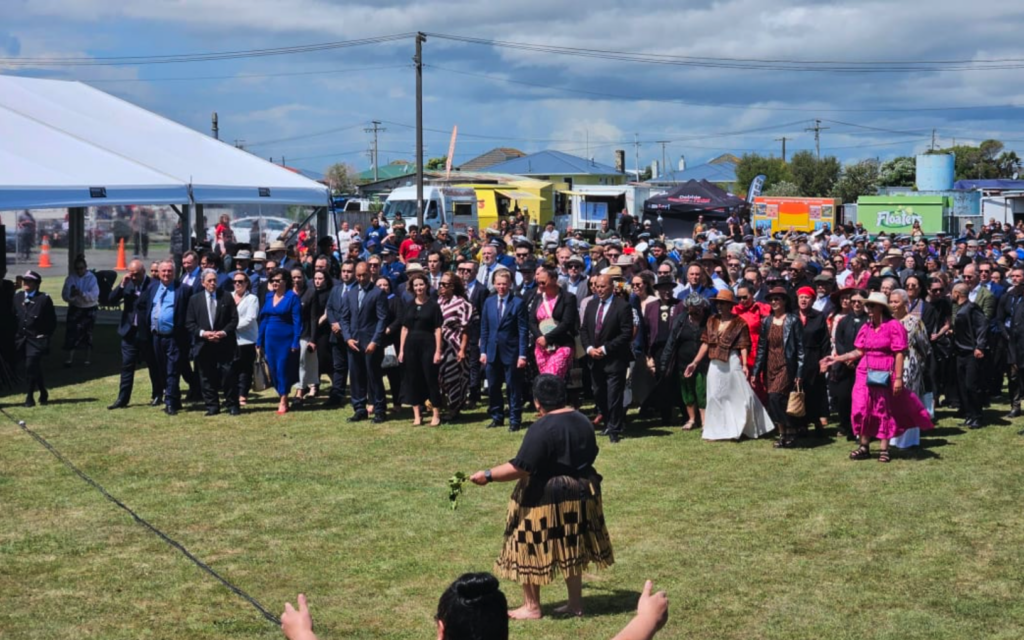
For over a century, a small settlement south of Whanganui becomes the center of New Zealand’s universe every January. To understand the news, one must first understand what Rātana represents.
What is Rātana?
Rātana is a spiritual and political movement founded by Tahupōtiki Wiremu Rātana (the Mangai) in the early 20th century. After receiving a divine vision in 1918, Rātana became a powerful faith healer and prophet. He founded the Rātana Church, which today has tens of thousands of followers (mōrehu).
Why the annual ceremony?
Every year on January 25th, thousands gather at Rātana Pā to celebrate the founder’s birthday. It is more than a religious birthday party; it is the official “kick-off” for the New Zealand political year. Historically, the movement formed a famous alliance with the Labour Party, and today, politicians from nearly all parties (with the notable exception of ACT) attend to listen to the concerns of Māori and present their own visions for the year ahead.
A New Era of Independence: “Cooler” Rhetoric and Self-Reliance at Rātana 2026
By Lions Roar Aotearoa Bureau
RĀTANA PĀ (Saturday, January 24, 2026) — Amidst thunder and heavy rain that mirrored the shifting political climate, the annual pilgrimage to Rātana Pā concluded today with a distinct change in tone. After years of fiery exchanges and historical protests, the 2026 celebrations were marked by a “cooler” rhetoric and a powerful message of Māori self-reliance.
The Prime Minister’s Strategic Absence
In a move that significantly lowered the temperature at the pae (oratory bench), Prime Minister Christopher Luxon chose not to attend this year, opting instead to survey storm-damaged regions. This follows his tense appearance in 2025, where he was warned that the Treaty of Waitangi was “sacrosanct” amidst the controversy of the now-defeated Treaty Principles Bill.
While his absence was noted, it was supported by opposition leaders like Chris Hipkins and Debbie Ngarewa-Packer, who saw it as a way to de-escalate the “fractured” relationship between the Crown and Māori.
A Move Toward “Mana Motuhake” (Self-Determination)
The most striking theme of the event was the declaration that Māori can no longer rely solely on the government. Kiingitanga representative Tukoroirangi Morgan delivered a sobering assessment of the relationship with the current coalition.
“We can’t rely on the Crown to do everything for us,” Morgan said. “When you’re pushed into a corner and marginalized… it makes us much more united so that we can survive in the long term.”
This shift toward independence is being led by Kuini Arikinui Nga Wai hono i te po, whose coronation in late 2024 has ushered in a wave of economic initiatives, including a seed investment fund. The message was clear: Māoridom is cutting the “purse strings” of government to avoid political entanglement.
$10 Million Boost for Ringatū Marae
Despite the talk of independence, the government maintained its tradition of kohā (gifting). Regional Development Minister Shane Jones announced a $10 million investment for the Ringatū marae infrastructure near Ōhope.
- Infrastructure: The funding will build a new wharenui, wharekai, and a modern space for worship and learning.
- Jobs: The project is expected to create 71 local jobs.
- No “Bribes”: Both Jones and Winston Peters dismissed claims that the funding was an election-year bribe. “It’s the Māori way; we’ve done it for decades,” Peters stated, emphasizing that the gift is a sign of respect, not a play for votes.
📊 Rātana 2026 Snapshot
| Feature | Details |
| Atmosphere | “Cooler” rhetoric compared to the “fiery” 2024/2025 events. |
| Key Absentees | PM Christopher Luxon (surveying storm damage) and ACT Party. |
| Major Announcement | $10 Million for Wainui Marae (Ringatū). |
| Political Outlook | Parties keeping “gunpowder dry” ahead of the November 7 election. |