Global Milestone: EU and Mercosur Sign Historic Trade Deal in Asunción After 25-Year Wait
By Lions Roar News Global Desk
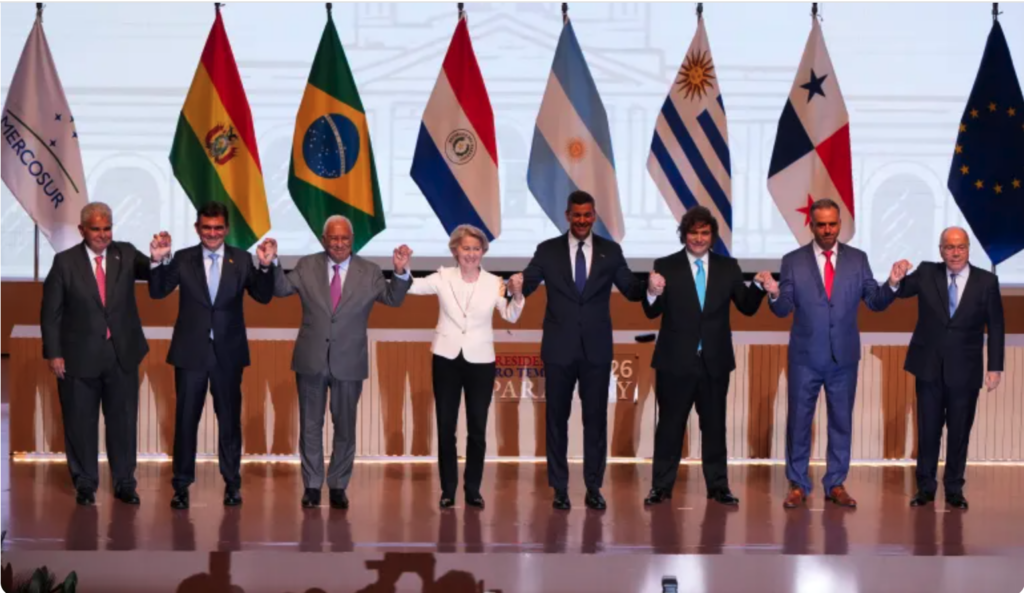
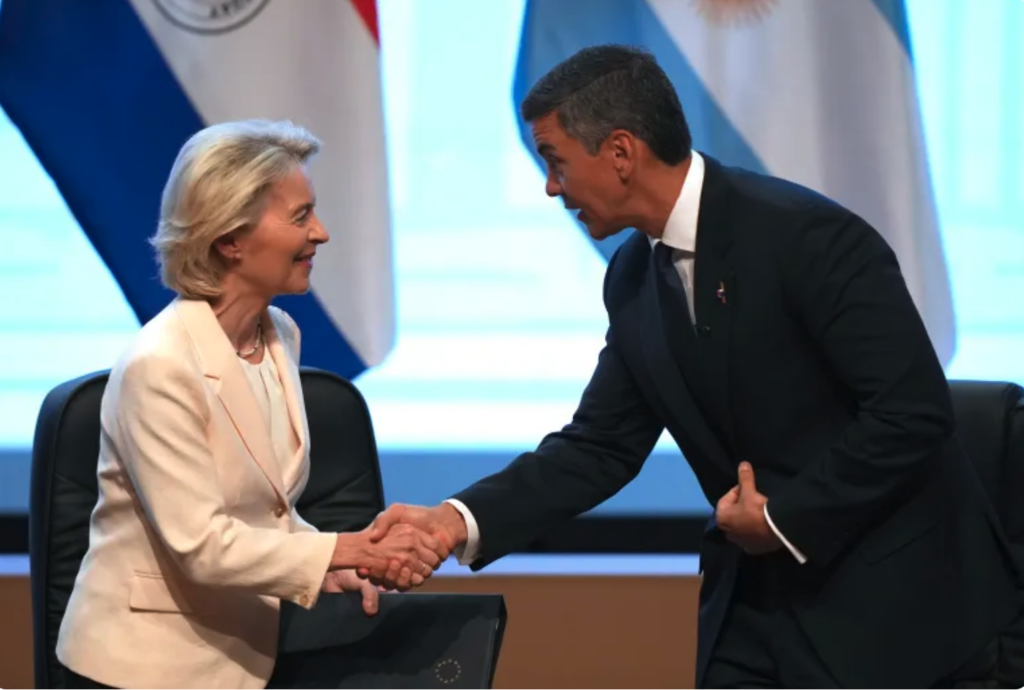
ASUNCIÓN, PARAGUAY (Sunday, January 18, 2026) — In a landmark move for international commerce, the European Union (EU) and the Mercosur bloc (comprising Argentina, Brazil, Paraguay, and Uruguay) officially signed a historic free trade agreement yesterday (January 17). The signing ceremony took place in the Paraguayan capital of Asunción, marking the end of a grueling 25-year negotiation process.
The agreement creates the world’s largest free trade zone, covering a combined market of over 700 million consumers.
🌍 Creating a Trade Behemoth
The new pact is designed to slash tariffs and eliminate trade barriers between Europe and South America, fostering unprecedented economic cooperation.
- Massive Market Reach: The deal integrates two of the world’s most significant economic regions, representing nearly 20% of the global economy.
- Geopolitical Victory: At a time of rising protectionism, increasing U.S. tariffs, and the dominance of Chinese exports, the deal is seen as a major strategic win for the European Union.
- Economic Boost: European industries, particularly automotive, chemicals, and pharmaceuticals, are expected to gain expanded access to South American markets, while Mercosur nations will see a surge in agricultural and raw material exports to Europe.
⏳ A Quarter-Century in the Making
Negotiations for this treaty first began in 1999. For two and a half decades, the deal was repeatedly stalled due to a variety of complex hurdles:
- Environmental Concerns: European nations frequently raised issues regarding deforestation in the Amazon and climate change commitments.
- Agricultural Tensions: Farmers in Europe expressed fears over competition from high-volume South American beef and poultry imports.
- Political Shifts: Changes in government across both continents often led to shifting priorities, requiring multiple rounds of renewed diplomacy.
The final signing in Asunción is being hailed by diplomats as a triumph of persistence and multilateralism over regional isolation.
📈 Strategic Shift in Global Power
Analysts suggest that this agreement significantly strengthens the EU’s geopolitical footprint in Latin America. By securing this deal, the EU provides a credible alternative to Chinese investment in the region, ensuring that European standards on labor and environmental protection are integrated into South American supply chains.