Sri Lanka Makes TIN Mandatory for Vehicle Ownership Transfers Starting January 2026
By Lions Roar News National Desk
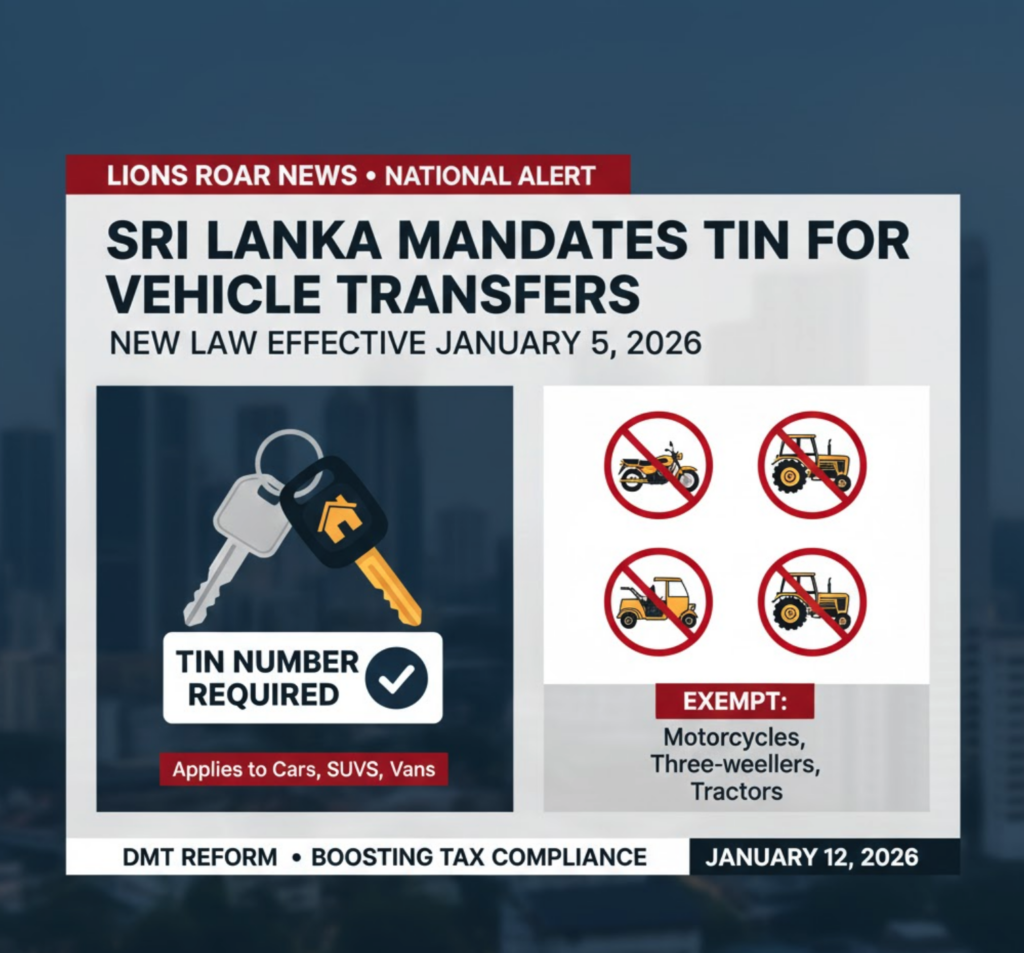
COLOMBO, SRI LANKA (January 12, 2026) — The Department of Motor Traffic (DMT) has officially announced that the Taxpayer Identification Number (TIN) is now mandatory for the transfer of vehicle ownership. Commissioner General of Motor Traffic, Kamal Amarasinghe, confirmed that this new regulation came into full effect on January 5, 2026.
While a TIN was previously only required for the registration of brand-new vehicles, the government has now expanded the law to include all pre-owned vehicle transactions, marking a significant step in the nation’s efforts to broaden the tax base.
🚗 What You Need to Know
Under the new guidelines, the DMT data system will now require both the National Identity Card (NIC) number and the TIN of the new owner for any transfer to be processed.
- Effective Date: January 5, 2026.
- Scope: Applies to both the initial registration of vehicles and the transfer of ownership for existing vehicles.
- Mandatory Data: Applications will not be processed without a valid TIN linked to the new owner’s profile.
🛵 Exemptions to the Rule
Not all vehicles are subject to this new requirement. To minimize the burden on low-income earners and small-scale farmers, the following categories remain exempt from providing a TIN during registration or transfer:
- Motorcycles
- Three-wheelers
- Hand Tractors
- Tractors
All other motor vehicles, including private cars, SUVs, and commercial vans/lorries, must comply with the new regulation.
📅 A Long-Awaited Implementation
According to the DMT, the plan to integrate TIN with vehicle records was initially proposed two years ago. However, the implementation was postponed multiple times to allow for system upgrades and to give the public more time to register with the Inland Revenue Department (IRD).
This move is part of a larger government strategy to ensure that high-value asset owners are integrated into the national tax system, fostering greater economic transparency.