Tragedy at Farewell Spit: Six Whales Dead After Mass Stranding
By Lions Roar News Environment Desk
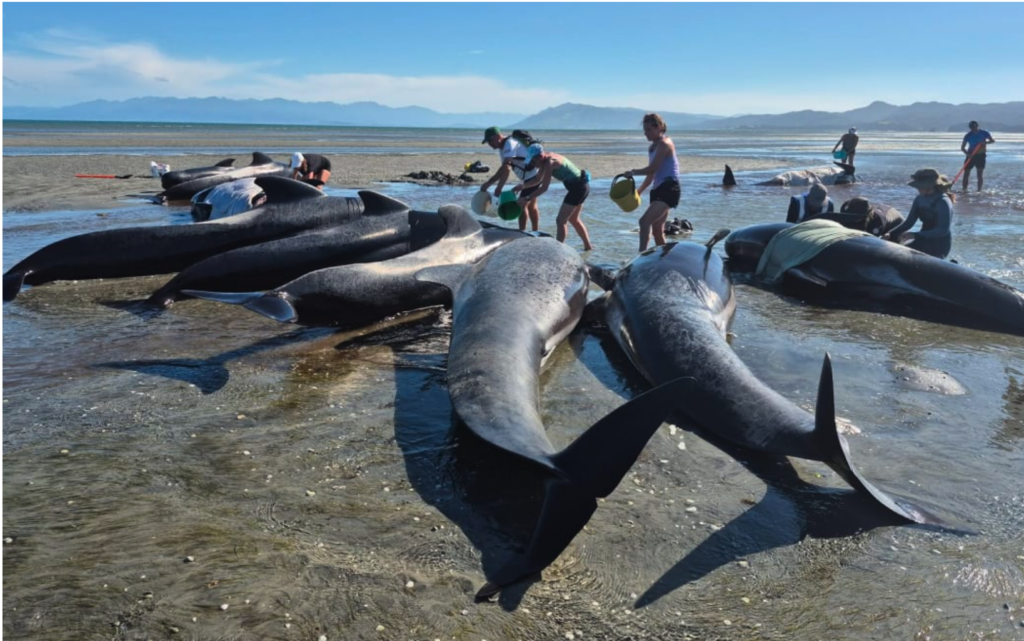
GOLDEN BAY, NEW ZEALAND (January 9, 2026) — Conservation workers and local volunteers are racing against the clock at Farewell Spit today following a devastating mass stranding. Authorities have confirmed that six whales have died, while several others remain stranded on the beach, fighting for survival as the tide recedes.
Farewell Spit, a 26km-long curved sandbar at the northern tip of the South Island, is a notorious “whale trap” due to its shallow, shifting sands that can interfere with the sonar of marine mammals.
🌊 Race Against Time
The Department of Conservation (DOC) was alerted to the stranding early this morning. Despite the rapid response of “Project Jonah” volunteers and local residents, the harsh conditions of the Spit have already claimed six lives.
- Current Situation: Rescue teams are working to keep the surviving whales cool and hydrated by covering them with wet sheets and buckets of water.
- The Goal: The primary focus is to keep the animals stable until the next high tide, at which point a refloating attempt will be made.
- Species: While the species is yet to be officially confirmed, pilot whales are the most common victims of mass strandings in this specific area.
⚠️ Public Advisory
DOC has requested that members of the public stay away from the area unless they are trained volunteers.
- Safety First: Large stranded whales can be dangerous and unpredictable due to stress.
- Logistics: The Spit is a remote nature reserve, and extra foot traffic or unauthorized vehicles can hinder the movement of rescue equipment and stress the surviving animals further.
- Health Risks: Dead whales can carry diseases; the public is advised to maintain a significant distance from the carcasses.
📉 Why Farewell Spit?
Farewell Spit is globally recognized as a high-risk zone for strandings. Its vast, flat sandbanks create a “hollow” sound environment that confuses whales, leading them into dangerously shallow water during the outgoing tide.