NZ House Price Forecast 2026: Modest Growth Predicted After Years of “Sideways” Movement
By Lions Roar News Business Desk
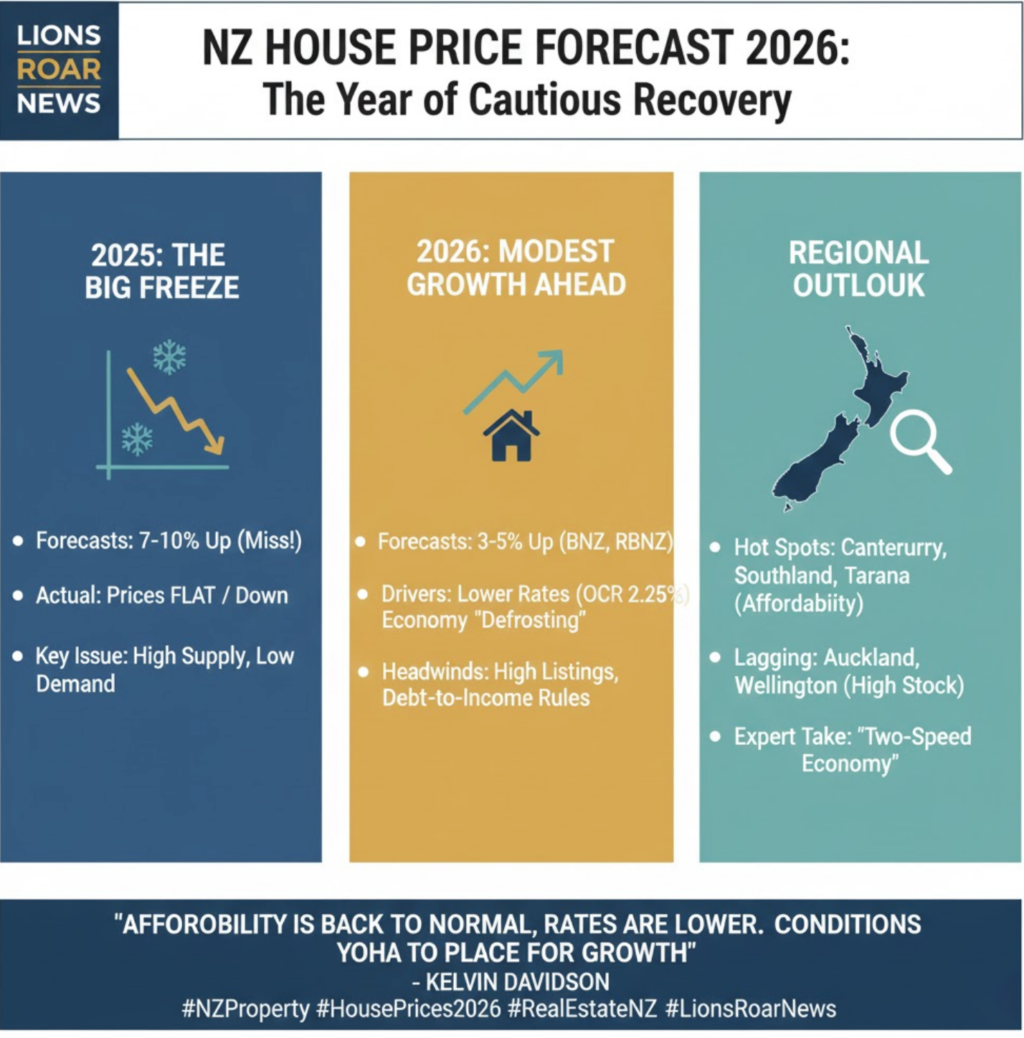
WELLINGTON, NEW ZEALAND (January 2, 2026) — After a disappointing 2025 that saw many economists slash their growth predictions, the New Zealand property market is entering 2026 with a sense of “cautious optimism.” While the double-digit “booms” of the past remain a memory, major bank economists are now forecasting a gentle upward bend in property values.
BNZ chief economist Mike Jones and property data firm Cotality (formerly CoreLogic) suggest that after three years of stagnant or declining prices, the market is finally “defrosting.”
📈 The 2026 Forecast Leaderboard
Economists have largely aligned around a 4% to 5% growth target for the next 12 months. This is a significant downgrade from the 7–10% many had predicted for last year, reflecting a new realism in the sector.
| Institution | 2026 Price Growth Forecast |
| Kiwibank | ~6.0% |
| Westpac | 5.4% |
| ANZ | 5.0% |
| BNZ | 4.0% |
| Reserve Bank (RBNZ) | 3.9% |
| ASB | 3.0% – 4.0% |
⚖️ The “Conflict of Forces”: Why Prices Aren’t Soaring
While mortgage rates have dropped to more manageable levels (with the OCR now at 2.25%), several factors are keeping a “handbrake” on the market:
- The Supply Glut: A massive surge in listings toward the end of 2025 has given buyers “unprecedented choice,” preventing the price tension that usually drives values up.
- Debt-to-Income (DTI) Ratios: New lending regulations are limiting how much buyers can borrow relative to their income, capping the “bidding war” potential.
- Affordability: Despite lower rates, the house-price-to-income ratio remains higher than any period prior to 2020, making entry difficult for first-home buyers.
- Migration Slump: Net migration has fallen to nearly half its long-run average, reducing the immediate demand for both rentals and new home purchases.
📍 Regional Winners and “Problem Children”
The 2026 market is shaping up to be a “two-speed economy,” with rural regions outperforming the major metros.
- The Stars: Southland, Canterbury, and Taranaki are expected to see the strongest growth, driven by lower entry prices and resilient local economies.
- The Lagging Giants: Auckland and Wellington continue to struggle with high stock levels and job insecurity in the public and corporate sectors. However, experts like Kelvin Davidson suggest these markets could “snap back” faster if the economic recovery accelerates.