New Year, New Rules: How the 2026 Govt Changes Will Impact Your Wallet
By Lions Roar News Financial Desk
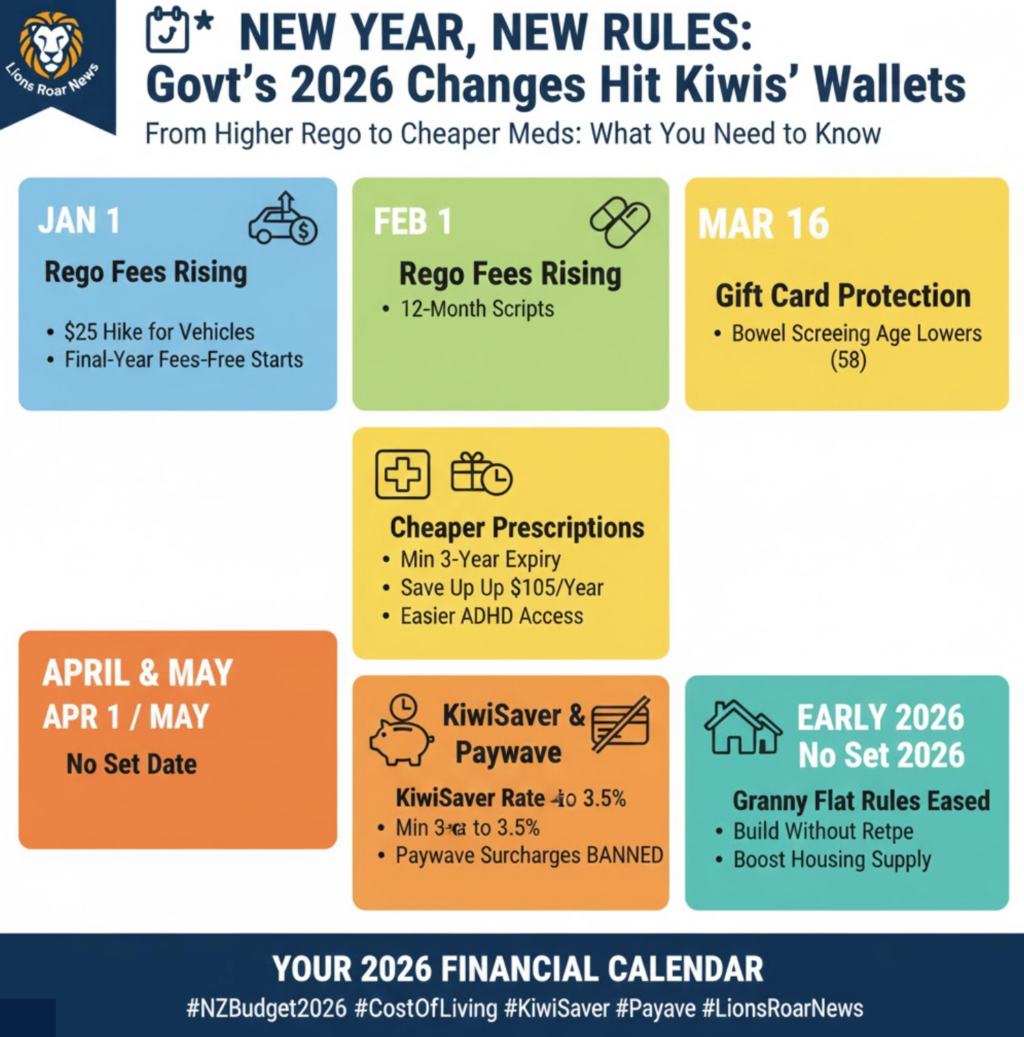
NEW ZEALAND (January 1, 2026) — As the sun rises on 2026, New Zealanders are waking up to a series of significant policy shifts that will impact everything from the cost of driving to the price of life-saving medicine. The Government’s “Early 2026” roadmap includes a mix of fee hikes, cost-cutting reforms, and structural overhauls aimed at addressing the cost-of-living crisis and housing shortage.
Here is your comprehensive guide to the financial and regulatory changes rolling out over the next five months.
🚗 January: Rising Regos and Education Overhauls
The first day of the year brings a literal “price of entry” for motorists, alongside a pivot in how tertiary education is funded.
- Vehicle Registration Hike: From January 1, registration fees have risen by approximately $25. For a standard petrol passenger car, the annual license fee jumps from roughly $144 to $173. This is the first of two planned inflation-adjusted increases.
- Tertiary “Fees-Free” Pivot: The first-year fees-free scheme has officially been phased out. Starting today, the scheme switches to Final Year Fees-Free. Students who began their final year on or after January 1, 2025, can apply for this rebate (up to $12,000) starting January 15, 2026.
- Polytechnic Re-establishment: Ten polytechnics are being re-established as independent entities this month, reversing the previous consolidation under Te Pūkenga.
- School Attendance: New “Attendance Services” are being deployed to schools nationwide to combat truancy rates.
💊 February: Prescription Relief and ADHD Access
February marks a major milestone for healthcare affordability and mental health accessibility.
- 12-Month Prescriptions: From February 1, patients with stable, long-term conditions (like asthma or high blood pressure) can receive 12-month prescriptions. While you still collect medicine in 3-month batches, you no longer need a GP appointment for every repeat. This is expected to save frequent patients up to $105 per year in GP fees.
- ADHD Prescribing: In a move to clear specialist bottlenecks, qualified GPs and Nurse Practitioners will be allowed to diagnose and start medical treatment for adults with ADHD.
- KiwiSaver Opt-Outs: Members wishing to maintain their contribution at 3% (before the April hike) can begin applying to Inland Revenue from February 1.
🎗️ March: Health Screening and Gift Card Protection
Consumer rights get a boost in March, while life-saving cancer screenings expand to younger Kiwis.
- Bowel Screening Expansion: The National Bowel Screening Programme eligibility age drops from 60 to 58. Residents in the Midland and Central North Island regions will see this rollout begin this month.
- The “Three-Year” Gift Card Rule: From March 16, all new gift cards must have a minimum expiry of three years. Any card sold with a shorter expiry will legally be considered valid for three years regardless of what is printed on the card.
💰 April & May: KiwiSaver Hikes and Paywave Peace
The focus shifts to long-term savings and everyday retail transparency as we head into late autumn.
- KiwiSaver Rate Rise (April 1): Default employer and employee contribution rates will increase from 3% to 3.5%. Additionally, 16- and 17-year-olds will now become eligible for mandatory employer contributions for the first time.
- Paywave Surcharge Ban (May): By May 2026 at the latest, the government intends to ban surcharges on in-store contactless payments. Shoppers will no longer be penalized with a 1–3% fee just for “tapping” their card or phone at the terminal.
🏡 “Early 2026”: The Granny Flat Revolution
While no specific date is set, new housing legislation is expected within the first quarter of the year.
Property owners will soon be able to build secondary dwellings (granny flats) up to 60sqm on their sections without the previously required resource consents. While ministers hail this as a win for “intergenerational living” and rental supply, critics have raised concerns about potential “substandard” builds if quality control isn’t strictly enforced.