Sri Lanka’s Debt Crisis Deepens: Total Debt Surpasses Rs. 29.6 Trillion
By Lions Roar News Economic Desk
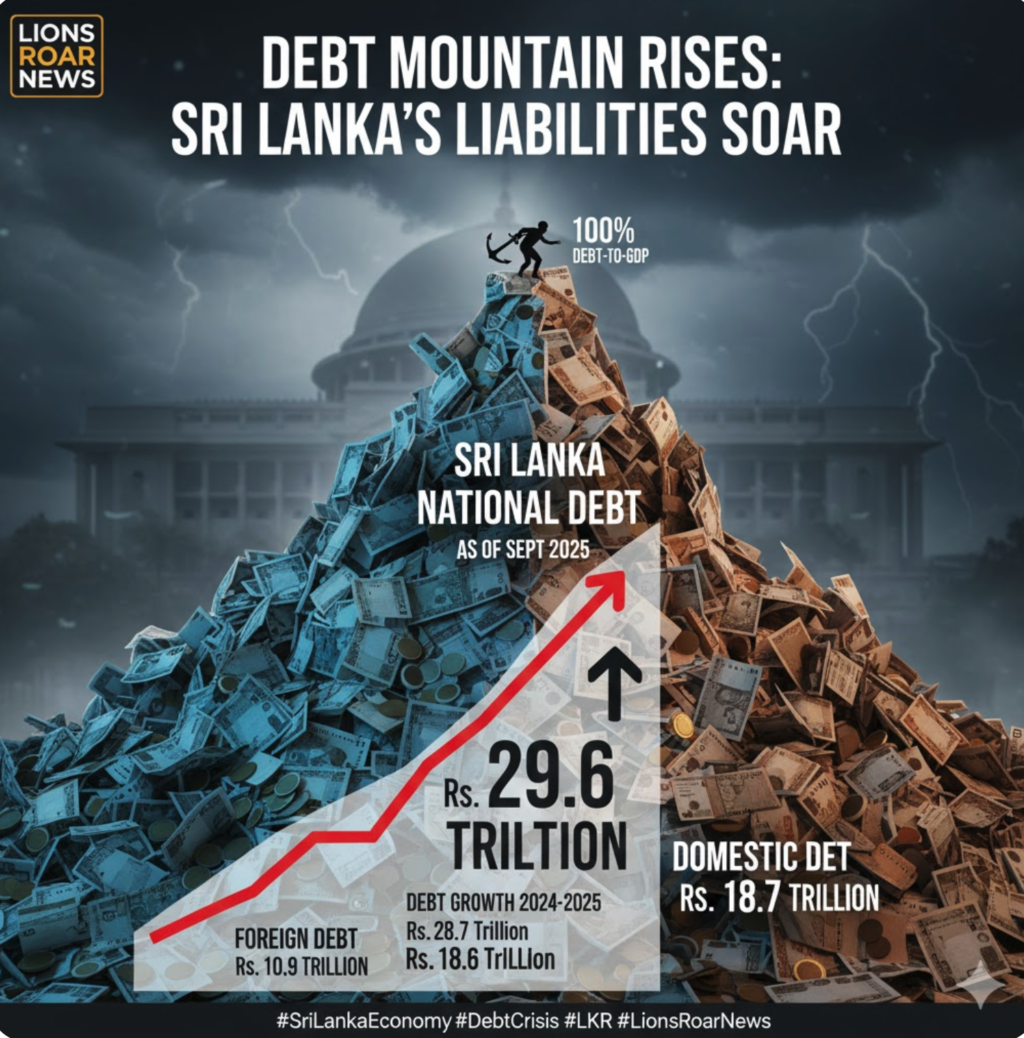
COLOMBO, SRI LANKA (December 29, 2025) – Sri Lanka’s total outstanding government debt has climbed to a staggering Rs. 29.67 trillion (Rs. 2,967,500 Crores) as of the end of September 2025, according to the latest data released by the Central Bank of Sri Lanka (CBSL).
The figures reveal a significant upward trend in the nation’s liabilities over the first nine months of the year, highlighting the persistent fiscal challenges facing the economy despite ongoing restructuring efforts.
📊 A Growing Debt Mountain
The data shows that total government debt has increased by Rs. 936.3 billion (Rs. 93,630 Crores) since the beginning of 2025.
| Debt Category | End of 2024 (Rs. Crores) | Sept 2025 (Rs. Crores) | Increase (Rs. Crores) |
| Total Public Debt | 2,873,870 | 2,967,500 | +93,630 |
| Foreign Debt | 1,042,904 | 1,097,434 | +54,530 |
| Domestic Debt | 1,830,966 | 1,870,066* | +39,100* |
*Domestic debt calculated based on the total minus foreign debt.
🔍 Key Insights from the Report
The Central Bank’s latest report underscores two critical areas of concern:
- Surging Foreign Liabilities: Foreign debt rose by Rs. 545.3 billion in the first nine months of 2025 alone. This increase is partly attributed to the accumulation of unpaid interest and the impact of currency fluctuations, even as the government continues its complex negotiations with international creditors.
- Domestic Pressure: While the government has focused heavily on external debt restructuring, domestic debt remains a massive portion of the total, accounting for approximately 63% of the country’s total liabilities.
The Current Economic Context
This report comes at a delicate time. While the IMF recently approved emergency support following natural disasters in late 2025, analysts warn that Sri Lanka’s debt-to-GDP ratio remains near 100%. The government is under pressure to increase revenue through taxes and tourism while managing a repayment schedule that is expected to peak in 2026.