WOF Overhaul Faces Heavy Criticism: Motor Industry Warns Longer Intervals Will Lead to Higher Repair Bills and Unsafe Roads
By Lions Roar News Automotive Correspondent
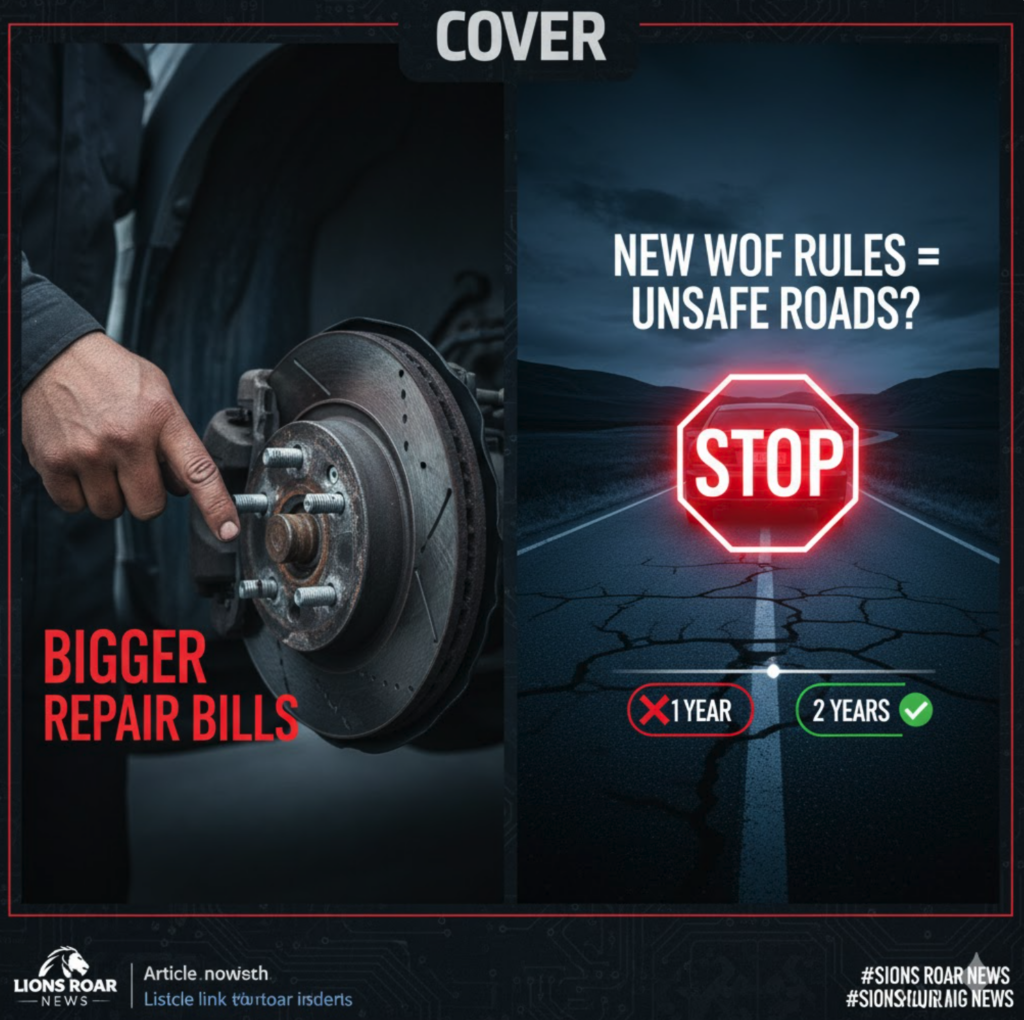
AUCKLAND, NZ – A major government proposal to drastically change the frequency of Warrant of Fitness (WOF) inspections is facing fierce opposition from the Motor Trade Association (MTA), which warns the shift could push repair costs up and compromise road safety. While the proposed changes offer a tempting financial break for motorists, the industry argues that longer intervals between safety checks will allow minor issues to compound into expensive and dangerous defects.
The concerns come amidst reports from mechanics across the country of a noticeable increase in the strictness of current WOF inspections. Issues previously considered minor or borderline are now leading to outright failures, forcing vehicle owners to undertake more extensive and costly repairs even before the new frequency changes come into effect.
“We’re seeing cars fail for things that, honestly, a year or two ago would have easily passed,” says Dave Kelly, owner of a busy workshop in West Auckland. “Things like a tiny bit of play in a steering component or a minor weep from an oil seal – now they’re automatic fails. It’s pushing up the cost for car owners, and frankly, some just can’t afford it.”
📅 The Proposed New WOF Schedule: A Significant Shift
The government’s proposal, aimed at reducing the regulatory burden on motorists, introduces sweeping changes to the required WOF frequency based on a vehicle’s age.
The proposed schedule changes are as follows:
| Vehicle Age | Current WOF Frequency | Proposed New WOF Frequency |
| New Cars (First Inspection) | 3 years | 4 years (Extended First WOF) |
| 4 to 10-Year-Old Cars | Annually (Every 12 months) | Biennially (Every 2 years) |
| 10 to 25-Year-Old Cars | Annually (Every 12 months) | Annually (No Change) |
| 25+ Year-Old Cars (Pre-2000 vehicles) | Every 6 months | Annually (Every 12 months) |
💸 Cost vs. Safety: MTA’s Stark Warning
MTA Head of Advocacy, James McDowall, was vocal on the risks associated with the proposal, particularly the change to two-yearly inspections for the large fleet of four-to-ten-year-old cars.
McDowall acknowledged the “political temptation of the prospect of a $70 saving” for some motorists per inspection. However, he warned that this immediate saving would be dwarfed by increased repair costs later.
“The reality is it might save one warrant, but problems just compound over time,” McDowall told a recent interview.
He pointed to current WOF failure rates, which suggest a real danger in extending the time between checks:
- Excluding brand new vehicles, the overall WOF failure rate is over 40 per cent.
- The failure rate for the four-to-ten-year-old vehicle category, set to move to biennial checks, is still high at up to 31 per cent.
The industry’s concern is that extending the time between inspections to two years will allow safety-critical issues—such as worn brakes, suspension damage, and bald tyres—to deteriorate significantly, potentially causing a crash or resulting in a far more complex and expensive repair bill when the check finally rolls around.
⚠️ Unintended Consequences: The Road Safety Paradox
The motor industry warns that while the intention behind the proposed changes is to ease the financial burden, the outcome could increase the number of unsafe vehicles on the road. When faced with prohibitively expensive repairs every two years instead of manageable annual fixes, some vehicle owners may:
- Delay Repairs: Continue driving their vehicle with serious, compounded defects, making the vehicle genuinely unsafe.
- Drive Unlicensed/Un-WOF’d: Financially strained owners might drive their vehicles without a current WOF, removing them from the regulated safety net entirely.
This risk is particularly acute in New Zealand, where the average light vehicle age is around 15 years, significantly older than in comparable countries overseas (around 10 years). The older fleet is more susceptible to rapid deterioration between inspections.
NZ Transport Agency Waka Kotahi (NZTA) has conceded in its own cost-benefit analysis on the proposed changes that shifting the WOF for new vehicles from three years to four, and altering the frequency for four-to-ten-year-old cars, could lead to a moderate increase in crashes, including several fatal and serious injury incidents between now and 2055.
🔍 Industry Calls for Balance
MTA is urging the government to reconsider the scope of the changes. The association has called for the government to retain the first WOF at three years, arguing this is “already late for picking up tyre and brake wear” given new vehicles can quickly rack up high mileage. It also suggests restricting any proposed two-yearly checks to vehicles that are only three to seven years old, where the failure rates are lower.
“We need clear, consistent guidelines that are practical and affordable for the average Kiwi motorist,” MTA’s Tony Smith stated. “It’s not about compromising safety, it’s about finding a balance that ensures vehicles are safe without bankrupting families or pushing them into driving un-warranted cars.”
The proposal is currently under public consultation, putting the onus on the government to weigh the promised cost savings for motorists against the serious road safety concerns raised by the experts who conduct the checks.