Catastrophe Unfolds: Sri Lanka Disaster Death Toll Hits 627 as International Aid Ramps Up
COLOMBO/ANURADHAPURA — Sri Lanka is grappling with a rapidly escalating humanitarian crisis as the death toll from the island-wide catastrophic weather conditions has tragically climbed to 627, with 190 people officially reported missing, according to the latest figures released by the Disaster Management Centre (DMC) today (December 7). The profound scale of the tragedy is being met with immediate, high-level government intervention and a surge of international assistance, particularly in providing aid, restoring critical infrastructure, and ensuring food security.
The disaster has affected a staggering 2,179,138 individuals across the island. The immediate focus remains on rescue, relief, and stabilizing the vast number of displaced persons, even as the scale of physical devastation comes into sharp relief, with 4,517 homes reported completely destroyed and 76,066 sustaining partial damage.
💔 The Human Cost: A Crisis Centred in the Central Hills
The DMC report, released Sunday afternoon, highlights the extreme concentration of fatalities in the central highlands, though the crisis has impacted every region of the island:
- Kandy District remains the epicenter of the human tragedy, reporting the highest number of deaths at 232.
- Badulla District follows with 90 deaths.
- Nuwara Eliya District has recorded 89 deaths.
- Surprisingly, Puttalam District accounts for the fourth-highest fatality count, with 35 deaths, underscoring the widespread nature of the calamity beyond the traditional landslide zones.
As of the latest update, 89,857 individuals from 27,663 families remain sheltered in temporary safety centers across the country, reliant on ongoing relief efforts for basic necessities. The search for the 190 missing persons continues under challenging conditions.
🌾 President Disanayake Directs High-Priority Restoration in Anuradhapura
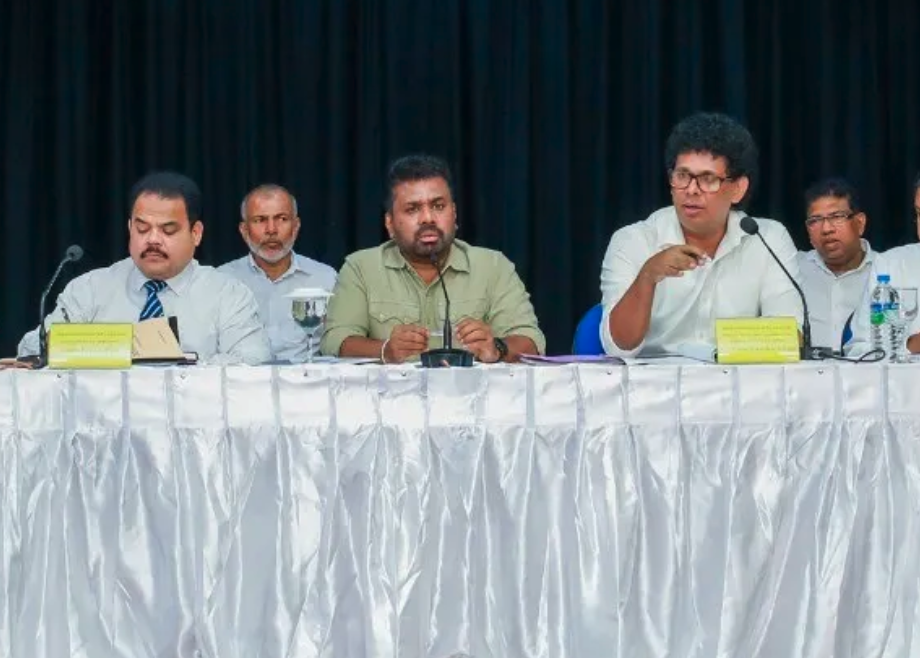
Responding directly to the devastation, President Anura Kumara Dissanayake convened a special coordination committee meeting at the Anuradhapura District Secretariat this morning (December 7). The President issued immediate and stringent directives to officials to prioritize the recovery of the district, particularly focusing on the rapid restoration of its vital agricultural sector.
The President emphasized the urgent need to re-cultivate the paddy fields in the Anuradhapura District, which were severely damaged by the floodwaters, stressing that this must be treated as a national necessity. He called for the complete dedication and strong coordination of all relevant institutions to achieve this goal.
Highest-Ever Compensation and Infrastructure Fixes
A core component of the President’s strategy is financial relief and rebuilding confidence among the farming community.
- Record Compensation: President Dissanayake instructed officials to prepare for the distribution of the highest compensation payments in the country’s history for crop damage, stating that the government’s expectation is that this aid will encourage farmers to swiftly restart cultivation activities.
- Fair Disbursement: The President stressed the importance of ensuring that compensation funds are distributed fairly and only to those genuinely affected, cautioning against any unjust allocation. Officials were directed to submit a report on the number of fully damaged farms, the total affected land area, and the required funds before the upcoming Friday.
- Restoring Water Supply: Temporary repairs to damaged irrigation systems were ordered to ensure the necessary water supply is available for the “Maha” cultivation season. The President emphasized the need to foster trust and encouragement among the farmers to move past the disaster and resume their work.
Restoring Lifelines and Services
The meeting also focused intensely on the damaged infrastructure across the district:
- Roads: The President instructed officials to expedite temporary repairs to blocked and damaged roads to meet the immediate transportation needs of the public while permanent road development plans are finalized and implemented.
- Power Supply: Ceylon Electricity Board (CEB) officials reported that out of 580 electrical transformers in the district, 473 had been damaged. They assured the President that the supply was being restored and anticipated full power restoration by tomorrow (December 8).
- Water Supply: Officials noted that 49,000 water supply connections had been damaged, with 99% already restored. The remaining areas are being supplied by bowsers, with full restoration of the entire water supply expected within the next two days. Furthermore, damaged community water projects are also being restored.
- Sanitation: The President directed officials to accelerate the cleaning of contaminated wells with the assistance of the Navy and community participation, coordinated by Divisional Secretariats.
Discussions were also held regarding compensation for other crops like maize, restarting livelihoods for livestock farmers, restoring healthcare services, and the development of damaged religious sites, including temples.
Housing and Education Focus
The President also addressed the critical need for housing and the return to education:
- Housing: With 228 houses fully destroyed in the Anuradhapura District, the President ordered a detailed data collection process to determine whether affected families should be resettled on their original sites or moved to safer locations. The process of identifying suitable alternative land was ordered to begin immediately.
- Schools: Education officials reported that all schools in the district are expected to be able to reopen by December 16. The President instructed officials to finalize the necessary name lists and ensure that all affected students receive the Rs. 15,000 grant from the Treasury before December 31.
President Dissanayake concluded the meeting by expressing gratitude to the state officials, police, and the tri-forces for their invaluable role in providing relief and developing infrastructure.
🇺🇸 C-130 Hercules Deployment: US Military Aid Arrives
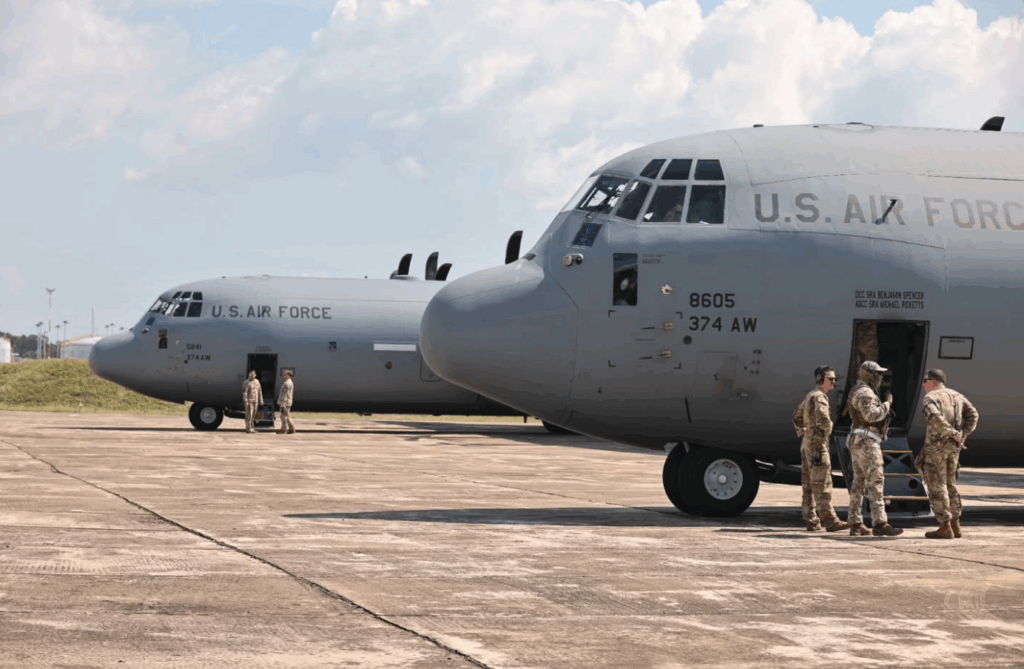
In a significant show of international support for Sri Lanka’s disaster recovery efforts, two United States Air Force C-130 Hercules transport aircraft arrived at the Katunayake Air Force Base this afternoon (December 7).
The aircraft, which arrived from a US Air Force base in Thailand, carried approximately 60 US rescue Marines and essential goods and supplies. Their primary mission is to assist in the transportation of goods, personnel, and other essential service providers within Sri Lanka. The C-130s are scheduled to facilitate internal air transport services between the Katunayake base and regional airfields such as those in Anuradhapura and Jaffna.
The arrival was marked by a formal reception attended by key Sri Lankan officials, including Deputy Minister of Defence (Retired Major General Aruna Jayasekara), Minister of Science and Technology (Professor Krishantha Abeyasena), Deputy Minister of Ports and Civil Aviation (Janith Ruwan Kodithuwakku), alongside US Ambassador to Sri Lanka Julie Chung, and the Director-General of the Disaster Management Centre (Retired Major General Sampath Kotuwegoda).
🇦🇺 Australia Delivers Nutritional Relief for Displaced Persons
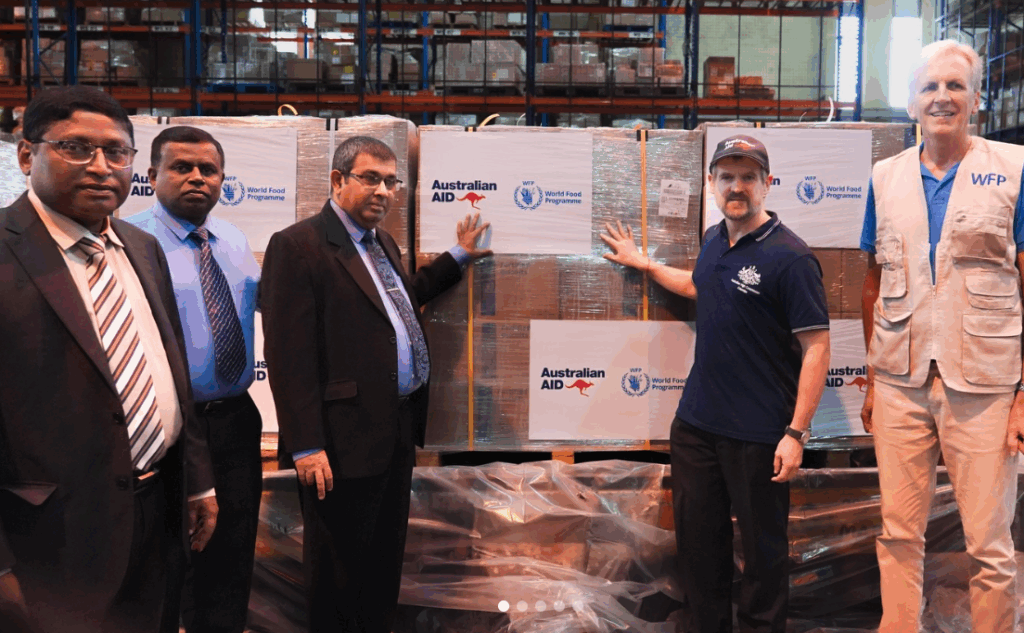
Adding to the wave of international assistance, the Australian government has initiated a critical aid program focused on stabilizing the nutritional levels of the population affected by the disaster, particularly those currently residing in safety centres or still isolated.
- First Shipment: A total of 10.2 metric tons of specially formulated, fortified nutritional biscuits arrived at the Katunayake Airport this morning (December 7) via SriLankan Airlines flight UL-226 from Dubai.
- $3.5 Million Commitment: This consignment is the first part of a substantial commitment from Australia, which plans to deliver a total of 70 metric tons of these biscuits, valued at $3.5 million. The biscuits were dispatched from an Australian government-maintained warehouse in Dubai.
- Distribution Focus: The biscuits that arrived today are scheduled for immediate distribution among the disaster-affected populations in the Matale and Nuwara Eliya districts, targeting the most vulnerable groups.
The Australian government is implementing this vital nutrition program in collaboration with the World Food Programme (WFP), ensuring efficient and widespread distribution to those in greatest need.
The combined efforts of the Sri Lankan government, led by President Dissanayake’s direct intervention in hard-hit areas like Anuradhapura, alongside the timely and substantial aid from international partners like the United States and Australia, underscore a unified approach to mitigating the fallout from what is rapidly becoming one of the country’s most severe natural disasters in recent memory.