Geopolitical Firestorm: China Demands Retraction as Japanese PM Takaichi’s Taiwan Warning Triggers Diplomatic Crisis
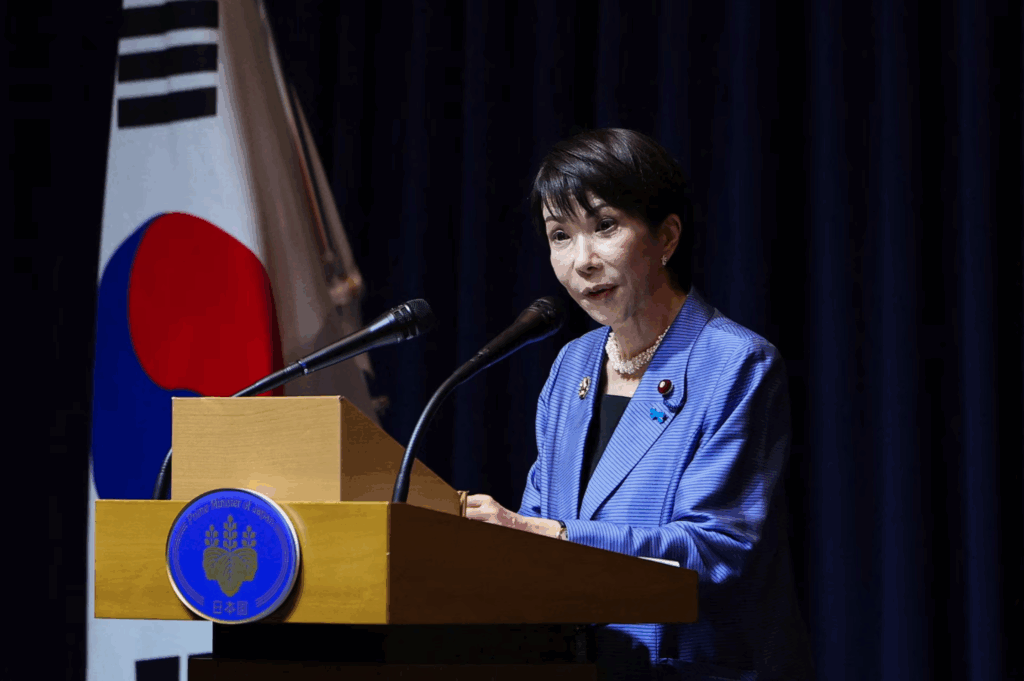
Tokyo/Beijing – November 15, 2025 – A fierce diplomatic confrontation has erupted between China and Japan after Japanese Prime Minister Sanae Takaichi declared that a Chinese military attack on Taiwan could be a “life-threatening situation” for Japan. Beijing has responded with fury, summoning the Japanese ambassador and warning Tokyo that it must “bear all the consequences” if the remarks are not immediately retracted. The escalating rhetoric, which includes a provocative threat from a Chinese diplomat, signals a profound deterioration in Sino-Japanese relations over the highly sensitive Taiwan Strait issue.
Takaichi’s ‘Survival-Threatening’ Red Line
The crisis began last Friday during a session of the Japanese Parliament (Diet). Prime Minister Takaichi, known for her hawkish views and strong support for Taiwan, stated that a Chinese military operation—involving warships and the use of force—against Taiwan could be recognized as a “survival-threatening situation” for Japan.
This legal designation is critical under Japan’s 2015 security legislation. The laws allow Japan’s constitutionally constrained Self-Defense Forces (JSDF) to exercise the right to collective self-defense—meaning they could aid a key ally, like the United States, even if Japan itself is not directly attacked. By defining a Taiwan conflict in these terms, Takaichi was essentially signalling that Japan would consider military intervention to defend the island, a move that directly challenges China’s core sovereignty claims.
Prime Minister Takaichi has since refused to retract her remarks, insisting that they were based on a “worst-case scenario” and remain “consistent with the government’s traditional stance” on security.
Beijing’s Escalation: Summons and Threats
China’s reaction was immediate and severe. Foreign Ministry Spokesperson Lin Jian publicly condemned the statement as “egregious” and a “gross interference in China’s internal affairs.” The diplomatic crisis quickly escalated with three key actions from Beijing:
- Consul General’s Threat: Over the weekend, Xue Jian, the Chinese Consul General in Osaka, posted a highly inflammatory message on social media (X), commenting on Takaichi’s remarks with a chilling quote: “The dirty head that is put inside should be cut off.” This was widely interpreted as a direct physical threat against the Japanese Prime Minister, leading to a strong protest from Tokyo. The post was later made inaccessible.
- Ambassador Summoned: On Thursday, Chinese Vice Foreign Minister Sun Weidong summoned Japan’s Ambassador to China, Kenji Kanasugi. Sun lodged a “strong protest” and delivered a severe warning, calling Takaichi’s remarks “extremely wrong and dangerous” and asserting that they “severely hurt the feelings of Chinese people.”
- Explicit Warning: Vice Minister Sun explicitly warned that if Japan does not “correct its wrongdoing at once and retract the unjustified remarks,” then “all the consequences arising therefrom must be borne by the Japanese side.” China’s Defense Ministry echoed the threat, warning that any Japanese military intervention would lead to a “crushing defeat” and a “heavy price.”
Mutual Protests and Worsening Ties
The diplomatic confrontation quickly turned into a rare exchange of mutual summons. While Ambassador Kanasugi was being rebuked in Beijing, the Japanese Foreign Ministry also summoned Chinese Ambassador Wu Jianghao in Tokyo to “strongly protest” the Osaka Consul General’s menacing social media post, which they called “highly inappropriate.”
Japanese officials, including Foreign Minister Toshimitsu Motegi, maintained that there was no need for Takaichi to retract her remarks, arguing that the explanation of Japan’s security legislation is clear and does not violate international law. However, they urged Beijing to “appropriately deal with” the Consul General’s threat so as not to “negatively affect the overall direction” of Sino-Japanese relations.
China, in turn, has doubled down, urging its citizens to avoid visiting Japan due to the deteriorating atmosphere surrounding people-to-people exchanges. State media editorials have called Takaichi’s statements “absurdity, heinous nature, and malicious intent,” equating her stance with a dangerous attempt to break free from the constraints of the post-war pacifist Constitution and return to militarism.
The escalation marks one of the most serious diplomatic crises between the two economic powerhouses in years, underscoring the volatility of the Taiwan Strait and the widening strategic gulf between Japan, which views Taiwan’s security as vital, and China, which considers the issue an untouchable “red line.”