Parliament’s Productive Week: Four Bills Pass Amidst Political Firestorms
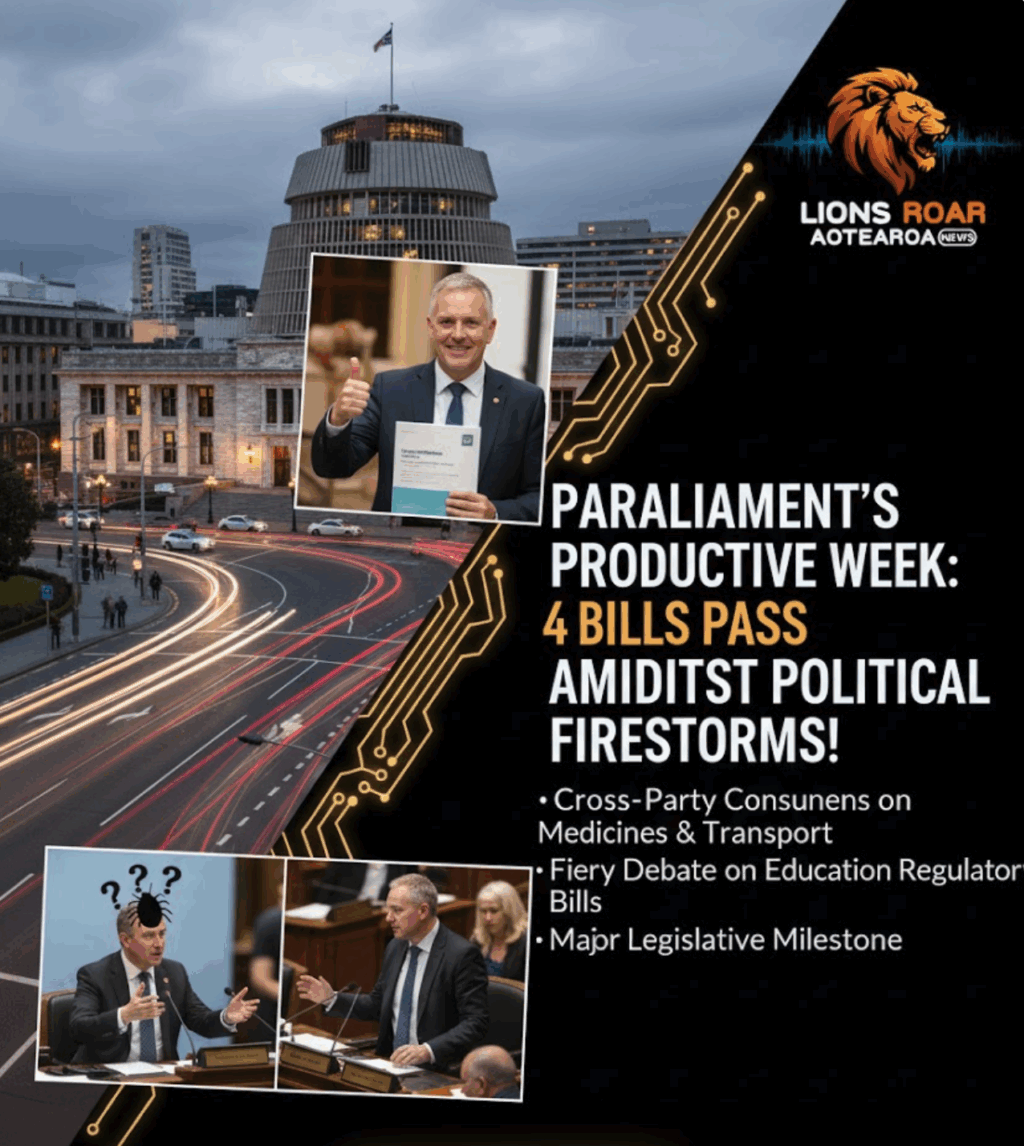
Wellington, New Zealand – November 14, 2025 – Despite a week dominated by political controversies – including ongoing tensions within Te Pāti Māori and the revelations of the Independent Police Conduct Authority report – New Zealand’s Parliament has quietly achieved a significant legislative milestone. Four government bills successfully completed their final readings and are now awaiting Royal Assent, marking a productive period amidst the political sideshows.
The week showcased a clear divide in parliamentary consensus, with two bills enjoying broad cross-party support, while the other two sparked intense and fiery debate between the government and the Opposition.
Bills Passed with Consensus: Collaboration Across the Aisle
The spirit of collaboration was evident in the passage of two key pieces of legislation:
- The Medicines Amendment Bill: This bill, which passed its third reading on Wednesday morning during an extended sitting, aims to significantly increase the accessibility of medicines for New Zealanders. Its core tenet is “the rule of two,” a mechanism allowing for fast-tracked approval of medications already approved in two recognized overseas jurisdictions. Associate Minister of Health David Seymour, who championed the bill, highlighted its rare consensual nature. “This has been a collaborative effort,” Seymour stated, noting that “the rule of two was campaigned on by all three coalition parties and and so far has had support from every party in this Parliament.” He hailed it as an example of politicians effectively responding to community concerns.
- The Land Transport Management Amendment Bill (Congestion Charging Bill): This bill also navigated Parliament with relative ease, with even the Labour Opposition describing it as a “very good bill.” Its passage suggests a degree of bipartisan agreement on the mechanisms for managing urban traffic congestion and investing in transport infrastructure.
Contentious Legislation: Fierce Debate Ignites the House
The harmony quickly dissipated as Parliament moved to the third readings of two other significant bills, which ignited passionate exchanges:
- The Education and Training Amendment Bill (No. 2): This bill gives effect to new government education policy, primarily by placing educational achievement at the centre of decision-making. However, it was amendments introduced during the committee stage that drew fierce criticism from the Opposition. Minister of Education Erica Stanford, through her colleague Minister for Vocational Education Penny Simmonds, tabled Amendment Paper 428, which significantly altered Section 127 of the bill – a section pertaining to schools upholding the principles of the Treaty of Waitangi. Minister Simmonds explained the government’s stance: “This government considers that it is unreasonable to expect elected parents, who volunteer their time, to discharge the Crown’s legal responsibilities in respect of the Treaty. Instead, the government believes that it is the Crown’s responsibility to support Māori educational success.” Labour MP Willow Jean-Prime vehemently criticized these changes, arguing that making such significant amendments after the public submission period at the select committee stage was “a travesty” and lacked proper consultation or debate.
- The Regulatory Standards Bill: Spearheaded by ACT leader David Seymour, this bill proved to be the most contentious of the four. It seeks to limit future lawmakers from introducing what Seymour deems “unnecessary red tape” into legislation, with a strong emphasis on prioritising private property rights. This bill has been a long-standing policy ambition for the ACT Party, and Seymour expressed immense pride in finally seeing it through Parliament’s final hurdles. “The Regulatory Standards Act means that politicians need to at least be open and honest about the impacts that they have on individuals when they pursue their goals,” Seymour declared, portraying it as a step towards a “more civilised society.” However, the Green Party’s Tamatha Paul offered a scathing critique, controversially comparing the bill to a “cockroach.” She argued that the bill’s deliberately technical and “boring” language masked its true, potentially detrimental intentions, allowing the ACT Party to advance its agenda without sufficient public scrutiny or understanding. “That’s how a cockroach lives, isn’t it? In the dark, in the night-not in broad daylight, being clear about the intentions of what they hope to achieve,” Paul lamented.
All four bills now await Royal Assent by the Governor-General, a formality that will officially bring them into law, likely next week. While headlines were dominated by other political dramas, this week in Parliament has undeniably been a period of significant legislative action, shaping future policy across key sectors.