Geopolitical Icebreaker: Taliban Foreign Minister’s Historic Visit Signals India’s Major Policy Shift on Afghanistan
By Lions Roar News Geopolitical Desk
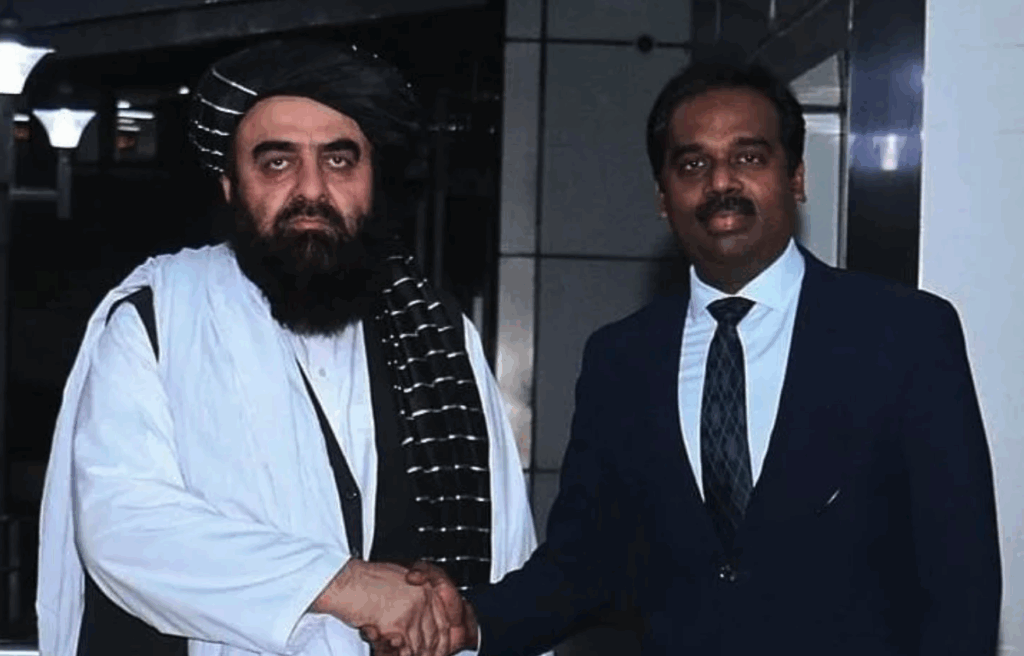
NEW DELHI — The Foreign Minister of the Afghan Taliban, Amir Khan Muttaqi, arrived in India this week for an eight-day official visit, marking the highest-level diplomatic engagement between the two countries since the Taliban seized power in Kabul in August 2021. The visit, which signals a profound and pragmatic shift in India’s long-standing policy towards Afghanistan, is being closely monitored by regional powers, particularly Pakistan, India’s arch-rival and the Taliban’s historical ally.
Muttaqi’s delegation, which includes senior officials from Afghanistan’s trade and foreign ministries, is slated to hold extensive discussions with Indian officials on diplomatic, trade, and economic relations. This convergence of interests highlights a growing realization in New Delhi that engaging with the de facto rulers of Afghanistan is essential for regional stability and India’s strategic interests.
Policy Pivot: From Boycott to Pragmatism
India was historically a staunch supporter of the Western-backed Afghan government that the Taliban overthrew. For four years following the 2021 takeover, New Delhi maintained a cautious distance, refusing to grant official recognition to the Taliban administration while focusing primarily on humanitarian aid channeled through multilateral agencies.
The meeting today between Muttaqi and his Indian counterpart, External Affairs Minister S. Jaishankar, provided the clearest indication of New Delhi’s policy pivot. Following the meeting, India announced it would re-open its embassy in Kabul, which had been closed after the Taliban regained control. While this move does not constitute formal recognition, it is a massive step toward normalization and establishing direct, consistent communication with the Taliban regime.
Jaishankar confirmed India’s full commitment to Afghanistan’s sovereignty, territorial integrity, and independence, and stated, “The close cooperation between us contributes to your national development as well as regional stability and resilience.” Muttaqi, in turn, referred to India as a “close friend,” expressing confidence that his visit would further strengthen ties between the two nations.
The Pakistan Factor: A Deepening Rift
The historical context of this visit is critical. Pakistan has long been considered the Taliban’s most important regional benefactor and has leveraged its relationship with the group for strategic depth. However, the dynamics have dramatically deteriorated.
The sheer fact that this high-level visit to New Delhi—a city that was once the heart of the anti-Taliban alliance—is happening while relations between the Taliban regime and Islamabad are at an all-time low is astonishing to geopolitical observers.
The primary point of friction between Afghanistan and Pakistan has been the rising insurgency led by the Tehrik-i-Taliban Pakistan (TTP), a militant group that Islamabad claims operates from safe havens inside Afghanistan. Pakistan’s recent mass deportation of undocumented Afghans, including many who fled the Taliban, further strained ties, culminating in increased cross-border military exchanges.
Muttaqi’s itinerary—traveling to New Delhi directly from Russia, the only major power that has fully recognized the Taliban government—underscores the shifting alliances. The fact that the Taliban are engaging in high-level trade and diplomatic talks with India, without Pakistan’s involvement, is a significant marker of Islamabad’s diminishing influence in Kabul.
Trade and Economic Imperatives
Beyond diplomacy, the driving force behind this engagement is economics. The Afghan delegation, including trade officials, is scheduled to meet with representatives of the Indian business community.
India is a natural economic partner for landlocked Afghanistan, providing an accessible and robust market for Afghan goods, particularly dried fruits and fresh produce. For India, engaging with the Taliban facilitates two key goals:
- Aid and Influence: India has already invested heavily in Afghanistan, completing major infrastructure projects like the Afghan Parliament building and the Salma Dam. Direct engagement allows New Delhi to monitor and ensure the security of its remaining aid projects.
- Trade Route Stabilization: Establishing a stable trade corridor is vital for both nations. The visit aims to address logistical barriers and streamline the flow of commerce, which suffered heavily after 2021.
However, the major hurdle remains the international legitimacy of the Taliban government, which has yet to meet the international community’s conditions on human rights, particularly concerning the education and employment of women and girls. Muttaqi’s visit was only made possible through a temporary exemption from United Nations sanctions, highlighting the precarious legal status of the current administration.
While New Delhi has not officially recognized the regime, its decision to host Muttaqi and discuss reopening its embassy signals a clear shift towards prioritizing regional stability and economic pragmatism over ideological opposition. This high-profile visit marks a decisive moment in South Asian geopolitics, demonstrating a mutual willingness by India and the Taliban to build a working, albeit cautious, relationship amidst the deterioration of Kabul’s traditional ties with Islamabad. The coming week of negotiations will determine the true extent of this new geopolitical alignment.