ASB Agrees to Massive $135.6 Million Settlement in Landmark Credit Disclosure Class Action
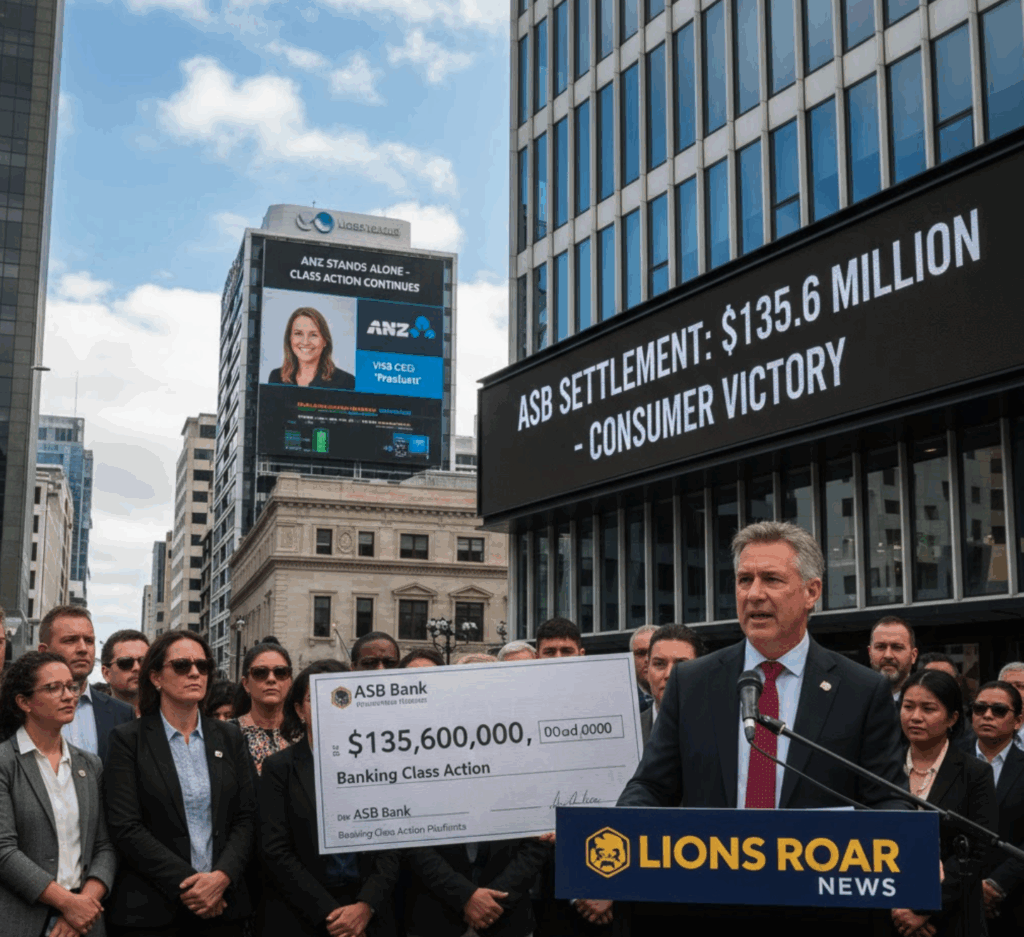
Auckland, New Zealand — In a major development for consumer protection and the financial sector, ASB Bank has reached a $135.6 million settlement to resolve a long-running class action lawsuit over alleged historical breaches of credit disclosure obligations. The move brings four years of intense legal proceedings to a close for ASB, while their co-defendant, ANZ Bank, remains in the crosshairs of the continuing litigation.
The settlement, which is one of the largest in New Zealand’s legal history, relates to allegations that ASB failed to provide compliant disclosure documents to customers who had requested changes to their lending arrangements, including home and personal loans, between June 2015 and June 2019.
The Heart of the Dispute: CCCFA Breaches
The lawsuit, brought by the Banking Class Action in 2021, centered on alleged breaches of the Credit Contracts and Consumer Finance Act (CCCFA). The plaintiffs argued that the banks’ failure to provide accurate and timely “Variation Disclosure”—information detailing changes to loan terms, such as new payment amounts or frequencies—meant the banks were not legally entitled to charge interest and fees on those affected loans for the period of non-compliance.
The CCCFA contains clear consumer protection provisions. Specifically, a central element of the claim rests on the interpretation of the Act, which suggests that if a creditor fails to meet its disclosure obligations, the borrower is not liable for the interest and fees during that non-compliant period. The class action sought to enforce the requirement for the banks to refund or credit these costs of borrowing to their customers.
While the total number of affected customers across both banks was estimated to be over 150,000, the settlement focuses on the ASB-specific plaintiffs.
Certainty over Courtroom Battle
ASB Chief Executive Vittoria Shortt characterized the agreement as a practical move that provides finality.
“The settlement brings to an end four years of legal proceedings and provides certainty for us and for our customers,” Shortt said in a statement. “The agreement we’ve come to is a pragmatic way to settle this matter.”
It is important to note that ASB reached the settlement with no admission of liability or wrongdoing. This is a common feature in large corporate settlements, allowing the bank to mitigate financial risk and avoid the prolonged uncertainty of a court trial without formally conceding the legal interpretation of the CCCFA put forth by the plaintiffs.
Lawyer Hails ‘Positive Outcome’
Scott Russell, the lawyer representing the ASB plaintiffs, praised the resolution for the affected customers.
“This is a positive outcome for affected ASB customers,” Russell stated. “After four years of litigation, settlement provides certainty, avoiding what would otherwise be a very long and expensive fight through the courts.”
Russell also highlighted a key factor influencing the decision: the potential risk posed by the Government’s proposed CCCFA Amendment Bill. This Bill included a controversial retrospective clause that sought to change how the CCCFA was applied during the 2015-2019 period, potentially limiting a court’s power to award the full statutory penalty, opting instead for ‘just and equitable’ compensation. By settling, the plaintiffs have secured a tangible result for their members regardless of any future legislative changes.
The $135.6 million figure is less than half of the approximately $300 million originally sought from ASB in an open settlement offer made by the class action team in July. Despite the reduction, the amount represents a substantial recoupment for thousands of New Zealand borrowers.
ANZ Stands Alone as Class Action Continues
With ASB’s exit, the class action lawsuit will now proceed solely against ANZ Bank.
The case against ANZ involves similar allegations of failing to provide accurate disclosure for loan variations, including issues admitted by the bank to the Commerce Commission in 2020 relating to a coding error in a loan calculator that led to incorrect information being sent to over 100,000 customers between May 2015 and May 2016.
Scott Russell confirmed the determination to continue the fight on behalf of ANZ customers. “ANZ customers also deserve a positive outcome,” he stressed. “We remain fully committed to ensuring the rights of ANZ customers are upheld.”
ASB’s decision to settle now puts further pressure on ANZ, which had previously dismissed the class action’s settlement offers as a “stunt” and is defending the claim vigorously.
Next Steps for Affected Customers
The $135.6 million settlement is subject to approval by the High Court, a process which ASB expects will take several months.
Affected ASB customers are advised that they do not need to take any action at this stage. The ASB plaintiffs will seek directions from the court on the process for communicating with potential class members and distributing the settlement funds in due course.
For the wider financial sector, the outcome underscores the costly consequences of complexity and alleged non-compliance with consumer lending legislation. The substantial payout is likely to be viewed as a definitive victory for consumer advocacy groups and a strong signal of the CCCFA’s power as a consumer protection tool.