Deadly Car Bomb Rocks Balochistan: At Least 10 Killed, Dozens Injured in Quetta Attack
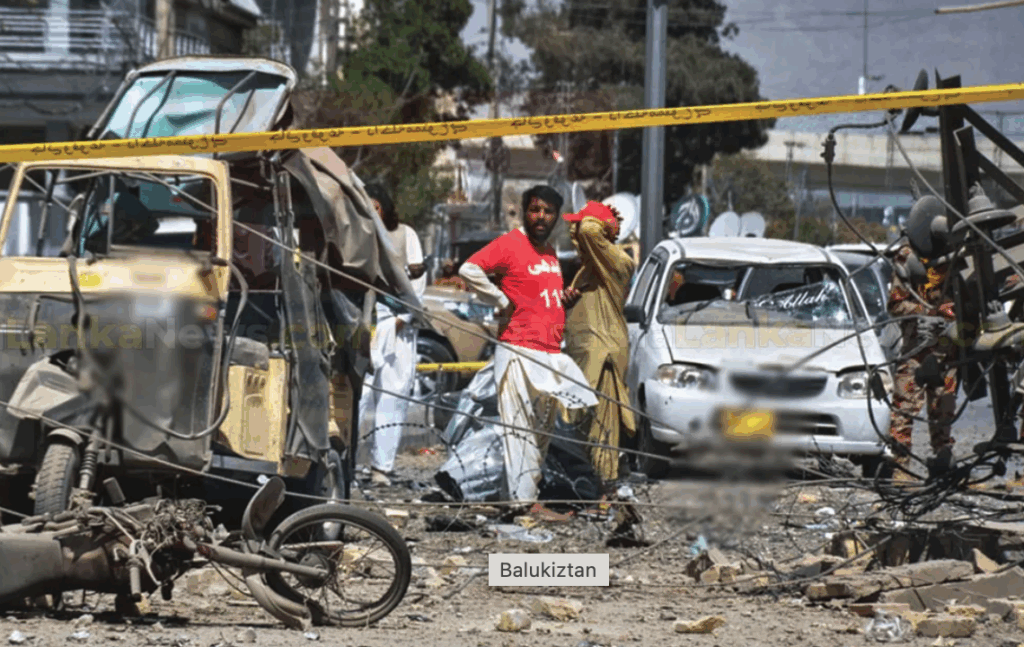
Quetta, Pakistan – October 3, 2025 – A powerful car bomb exploded outside a paramilitary base in Balochistan’s provincial capital, Quetta, killing at least 10 people and injuring more than 26 others, according to initial reports from local authorities. The blast, which ripped through the high-security zone near the Frontier Corps headquarters, sent plumes of black smoke into the sky and reignited concerns about the region’s fragile security situation.
The Attack
Eyewitnesses described scenes of panic and devastation as the explosion shook buildings several kilometers away. Closed-circuit television footage captured the moment a vehicle parked outside the compound detonated, unleashing a fireball that tore through nearby cars and shattered shop windows.
Among the dead were eight civilians and two paramilitary personnel, according to police sources. Security officials later confirmed that at least four suspected militants were killed during an armed clash with security forces in the aftermath of the bombing.
Rescue teams rushed to the scene, navigating heavy debris and burning vehicles to extract victims. Hospitals in Quetta quickly became overwhelmed as ambulances ferried dozens of wounded people, many suffering from severe burns, shrapnel wounds, and head injuries.
Dr. Iqbal Kasi, a senior physician at Quetta’s Civil Hospital, said:
“We have received more than 25 injured patients, some of them in critical condition. Our medical staff is working around the clock, but we are in urgent need of blood donations.”
No Claim of Responsibility
As of Friday evening, no group had claimed responsibility for the attack. Balochistan has long been plagued by separatist insurgencies, religious extremism, and cross-border militancy, making it difficult for authorities to immediately identify the perpetrators.
In recent years, both Baloch separatist groups and Islamist militants such as the Pakistani Taliban (TTP) and ISIS affiliates have carried out bombings in the province. The attack outside a paramilitary installation raises the possibility that the target was the Frontier Corps itself – a force that has often been at the frontlines of counter-insurgency operations in Balochistan.
Security analysts note that the deliberate targeting of security forces, while inflicting civilian casualties, is a hallmark of groups seeking to undermine both state authority and public confidence.
A Province in Perpetual Turmoil
Balochistan, Pakistan’s largest yet least populated province, has endured decades of violence stemming from ethnic, political, and economic grievances. Rich in natural resources like gas, coal, and minerals, the province has often complained of neglect and exploitation by the central government. Separatist groups have waged armed campaigns demanding greater autonomy or outright independence.
In addition to insurgency, the province is a key node in the China-Pakistan Economic Corridor (CPEC), a multi-billion-dollar infrastructure project linking China to Gwadar port on the Arabian Sea. This has heightened the strategic importance of Balochistan but has also made it a target for militant attacks seeking to disrupt regional connectivity projects.
Quetta, as the provincial capital, has frequently borne the brunt of such violence. Bombings, targeted killings, and ambushes against security personnel have periodically jolted the city, despite heavy deployment of police and paramilitary units.
Reaction from Authorities
Pakistan’s Prime Minister [Name] condemned the attack in a late-night statement, expressing grief over the loss of life and vowing that the perpetrators would be brought to justice.
“This cowardly act of terrorism is aimed at destabilizing Pakistan and sowing fear among our people. We will not allow such forces to succeed. Our law enforcement agencies are determined to eliminate terrorism from every corner of the country.”
Interior Minister [Name] confirmed that an investigation was underway, led by both local police and the Counter Terrorism Department (CTD). Forensic teams were seen collecting evidence from the blast site, including vehicle fragments and chemical residues.
Army spokespersons also condemned the attack, highlighting the sacrifices of the Frontier Corps in maintaining peace in volatile regions.
Civilian Toll and Human Stories
While official statements focused on national security, the immediate human toll was evident in Quetta’s hospitals and streets. Families rushed to emergency wards seeking news of loved ones. Some wept inconsolably as the names of the deceased were read out by hospital staff.
Among those killed was a young shopkeeper whose small stall stood across the road from the paramilitary base. His relatives told reporters that he had been preparing to close for the day when the blast erupted. Another victim was a schoolteacher walking home with her students, several of whom were badly injured.
These stories underline the indiscriminate nature of the violence, where ordinary lives are lost in the crossfire of a conflict that shows no signs of ending.
Security Challenges in Balochistan
The bombing raises fresh questions about the capacity of Pakistani security forces to prevent attacks in Balochistan despite years of military operations. While officials often claim successes in counter-terrorism campaigns, the recurrence of large-scale attacks highlights persistent gaps.
Experts argue that security cannot be guaranteed by military means alone. Socio-economic grievances, political marginalization, and lack of development continue to fuel resentment in the province. Unless these root causes are addressed, militant groups will likely continue to find recruits and resources.
International Implications
The attack also carries international implications. Balochistan borders both Afghanistan and Iran, and instability in the region has long worried Pakistan’s neighbors. The province is central to Chinese investment under CPEC, and Beijing has previously pressed Islamabad to step up security after Chinese nationals were targeted in Baloch militant attacks.
Observers warn that continued violence could undermine investor confidence, derail development projects, and further isolate Balochistan’s population from the rest of the country.
A Cycle of Violence
Friday’s bombing is the latest reminder of the cycle of violence that has gripped Balochistan for decades. Militant attacks prompt military crackdowns, which in turn fuel more resentment and resistance. Civilians, caught between insurgents and security forces, pay the heaviest price.
Despite repeated government pledges, long-term peace remains elusive. Each new attack brings fresh promises of justice and reform, yet the underlying problems persist.
Looking Forward
For now, Quetta mourns its dead as investigations continue. Security forces have cordoned off the area, and checkpoints have been tightened across the city. Funeral prayers for the victims are expected to draw large crowds, once again underscoring the resilience of a community that has endured repeated tragedies.
The latest attack is unlikely to be the last. But it serves as a stark reminder to Pakistan’s leaders, and to the world, that Balochistan’s troubles remain unresolved. Without a holistic approach combining security, development, and political dialogue, the region risks being locked in a perpetual state of unrest.
As one grieving father outside Quetta Civil Hospital told reporters:
“We bury our children again and again, but nothing changes. We want peace, not promises.”