Central Philippines Rocked by 6.9 Magnitude Quake; Death Toll Exceeds 30, Bogo City Hardest Hit
Lions Roar News Service, Manila – October 01, 2025
A powerful magnitude 6.9 earthquake that struck the central Visayas region of the Philippines at approximately 10:00 PM on Tuesday night (September 30) has reportedly killed over 30 people and injured more than 140 others, according to the country’s disaster management center. The province of Cebu, where the epicenter was located near the northern town of Bogo, sustained the most severe damage. Rescue operations continue to search for individuals trapped beneath the debris of collapsed buildings, and disaster management officials warn that the death toll is expected to rise.
Initial Details and Impact of the Quake
According to the Philippine Institute of Volcanology and Seismology (PHIVOLCS), the earthquake was of a tectonic origin and occurred at a shallow depth of approximately 10 kilometers (6.2 miles) northeast of Bogo City in Cebu province. The main tremor was followed by more than 280 strong aftershocks, the strongest of which measured magnitude 5.2, in the hours following the initial event.
The powerful earthquake was widely felt across the Visayas region, particularly in the central islands of Cebu, Leyte, and Biliran. Although the seismology agency initially issued a minor tsunami advisory, it was later lifted. However, coastal residents were still advised to remain vigilant for sudden changes in sea level and strong currents.
Epicenter of the Disaster: Bogo and Northern Cebu
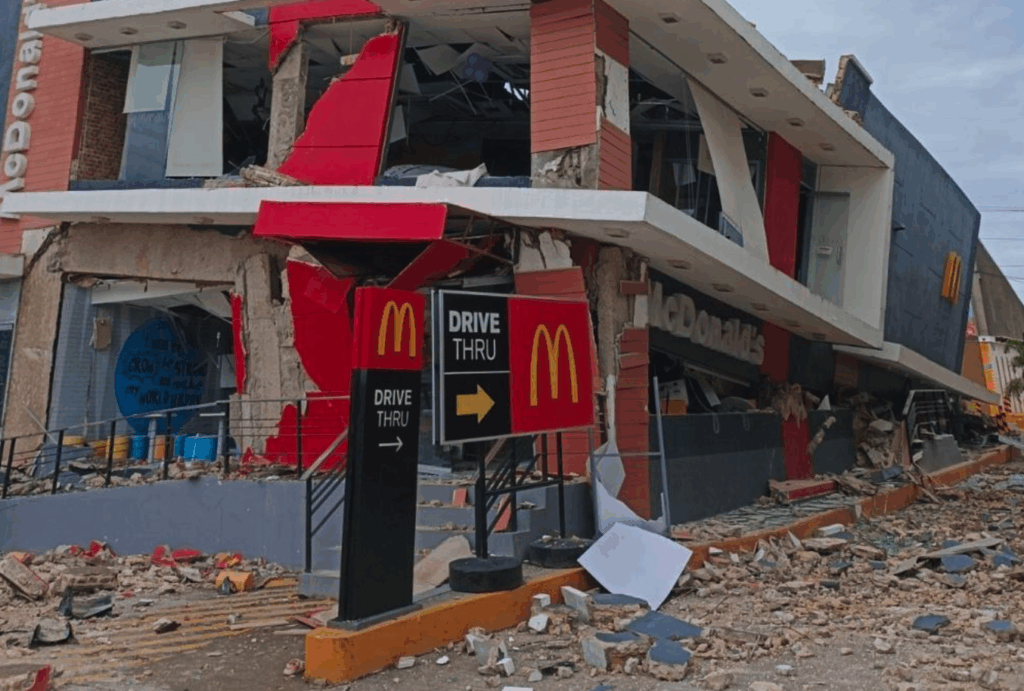
The most extensive damage was concentrated in the northern Cebu area, encompassing Bogo and its adjacent towns. Reports indicate that about 14 of the confirmed fatalities are from Bogo City, with additional deaths reported in the nearby municipalities of Medellin and San Remigio.
One of the most tragic incidents occurred in San Remigio, where a sports complex roof collapsed during a basketball game at the time of the quake. Five individuals were killed in this collapse, including three coast guard personnel, a firefighter, and a child. More deaths were reported in Bogo from houses and buildings that tumbled down.
New Zealand Prime Minister Christopher Luxon extended his deepest condolences regarding the tragedy, promising that New Zealand would provide all possible support.
Damage to Infrastructure
The earthquake inflicted severe damage on critical infrastructure, hampering rescue efforts:
- Power Outages: Widespread power blackouts occurred across Cebu and several neighboring central islands after transmission lines tripped. The National Grid Corporation of the Philippines (NGCP) reported that the earthquake disconnected parts of Leyte, Samar, and Bohol from the main power grid.
- Transportation Obstacles: Major roads and six bridges in Cebu province were reported as damaged or impassable, severely disrupting traffic flow. The Department of Public Works and Highways (DPWH) is currently assessing the damage and working to restore access.
- Historical Damage: Several structures suffered severe damage, including a historic church in the Bogo area that was over 100 years old.
- Water Supply: Officials in San Remigio appealed for aid, as the town’s water system was damaged, leading to a scarcity of drinking water.
Government and Disaster Management Response
Philippine President Ferdinand Marcos Jr. immediately ordered relevant agencies to swiftly roll out relief and rehabilitation efforts in Cebu.
- State of Calamity Declared: The Cebu Provincial Governor officially declared the entire province under a ‘State of Calamity,’ which facilitates the rapid mobilization of resources for rescue and relief operations. Bogo City and San Remigio have also made similar declarations.
- Fund Mobilization: The Department of Budget and Management (DBM) instructed first-responder agencies to activate their Quick Response Funds (QRF) and stated that the National Disaster Risk Reduction and Management (NDRRM) Fund is on standby for larger-scale needs.
- Rescue Operations: The Philippine National Police (PNP) and the Office of Civil Defense (OCD) activated their Disaster Incident Management Task Groups. Heavy equipment, such as backhoes, have been rushed to sites like Bogo to assist in removing debris and searching for survivors.
- Suspension of Services: Classes and non-essential government work in several major cities in Cebu were suspended to allow for structural integrity assessments and to focus efforts on treating the injured.
Impact on a Recovering Region
The powerful earthquake struck the Visayas region just days after it was battered by a Tropical Storm that killed at least 27 people, causing widespread power outages and major flooding.
As the Philippines is situated on the “Pacific Ring of Fire,” earthquakes and volcanic activity are common. Geologists suspect the latest quake was caused by movement along a local fault line, highlighting the continued seismic hazard in the country. The event has drawn renewed attention to public safety, similar to the strong quake that hit Bohol in 2013.
Currently, emergency appeals for food, water, medical supplies, and heavy equipment are being made, with international support expected. Rescue teams continue to work around the clock, tirelessly searching for survivors beneath the rubble.