New Zealand’s Economic Struggles: Real Income Growth Among the Weakest Globally
By Lion’s Roar Economic Journalist
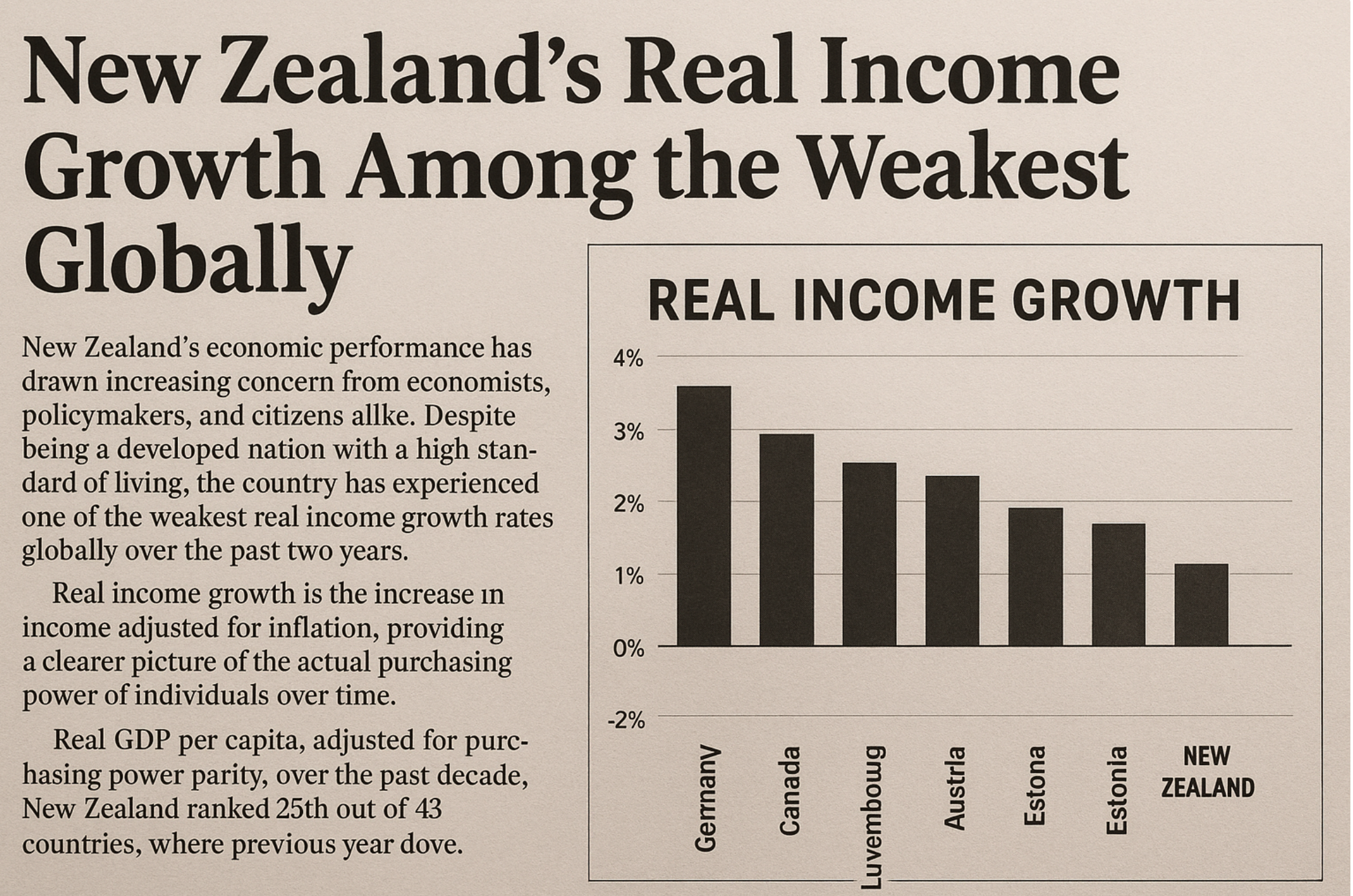
In recent years, New Zealand’s economic performance has drawn increasing concern from economists, policymakers, and citizens alike. Despite being a developed nation with a high standard of living, the country has experienced one of the weakest real income growth rates globally over the past two years. This trend places New Zealand among the bottom-ranked nations in terms of economic progress, trailing behind countries such as Germany, Canada, Luxembourg, Austria, Ireland, and Estonia.
Understanding Real Income Growth
Real income growth refers to the increase in income adjusted for inflation, providing a clearer picture of the actual purchasing power of individuals over time. When real income growth is sluggish, it indicates that, despite potential nominal wage increases, the cost of living is rising at a faster pace, eroding the economic well-being of the populace.
In New Zealand’s case, real GDP per capita, adjusted for purchasing power parity, has been a critical metric in assessing the nation’s economic health. Over the past decade, New Zealand ranked 25th out of 43 countries in this regard. However, this position has deteriorated significantly in the last two years, with the country now ranking 37th globally. This decline underscores a concerning trend of diminishing economic prosperity for the average New Zealander.
Contributing Factors to Economic Decline
Several interrelated factors have contributed to New Zealand’s economic downturn:
- Post-COVID Economic Adjustments: The aftermath of the COVID-19 pandemic has left many economies grappling with the consequences of stimulus measures and disrupted global supply chains. New Zealand is no exception, facing challenges in adjusting to the post-pandemic economic landscape. RNZ
- Productivity Challenges: New Zealand has long struggled with low productivity growth. Between 1993 and 2013, productivity averaged 1.4% per annum. However, this figure has plummeted to just 0.2% annually over the past decade. This stagnation in productivity hampers economic growth and income advancement.
- Global Economic Pressures: External factors, such as global economic slowdowns and trade disruptions, have adversely affected New Zealand’s export-driven economy. These challenges have led to reduced demand for key exports, impacting national income levels.
- Inflationary Pressures: Rising inflation has outpaced wage growth, diminishing the purchasing power of households. Despite efforts to control inflation, the cost of living continues to rise, further straining economic conditions.
- High Interest Rates: The Reserve Bank of New Zealand’s decision to maintain high interest rates to curb inflation has had the side effect of slowing economic activity. While necessary to control inflation, these rates have also dampened consumer spending and investment.
Economic Indicators Reflecting Decline
Several key economic indicators highlight the challenges facing New Zealand:
- GDP Contraction: In the year ending December 2024, New Zealand’s GDP contracted by 0.5% compared to the previous year.
- Global Comparison: New Zealand’s real GDP growth rate was -0.13% in 2024, significantly below the world average of 3.20%.
- Wage Growth: Wage growth has remained stagnant, failing to keep pace with inflation, leading to a decline in real income for many workers.
Implications for Households
The ramifications of these economic trends are felt most acutely by households:
- Erosion of Purchasing Power: With wages failing to outpace inflation, families find their purchasing power eroded, making it more challenging to afford everyday necessities.
- Increased Cost of Living: Rising costs in housing, utilities, and food have placed additional financial strain on households, particularly those with fixed or low incomes.
- Diminished Savings: As living costs rise, households have less disposable income to save, impacting long-term financial security and retirement planning.
Government Response and Future Outlook
The New Zealand government has acknowledged the economic challenges and is exploring various measures to stimulate growth:
- Investment in Key Sectors: The government is focusing on sectors such as space, biomedical engineering, farming, fishing, and tourism to drive economic growth.
- Infrastructure Development: Plans are underway to invest in infrastructure projects to create jobs and stimulate economic activity.
- Policy Adjustments: The Reserve Bank of New Zealand is closely monitoring economic indicators to adjust monetary policies as needed to support economic stability.
Conclusion
New Zealand’s position among the weakest in global real income growth is a stark reminder of the multifaceted challenges facing the nation’s economy. Addressing these issues requires a comprehensive approach, including boosting productivity, managing inflation, and fostering economic diversification. As the government implements strategies to navigate these challenges, the resilience and adaptability of New Zealand’s economy will be tested in the coming years.