Sri Lanka’s New Anti-Terrorism Act Sparks Debate Over Rights vs. Security
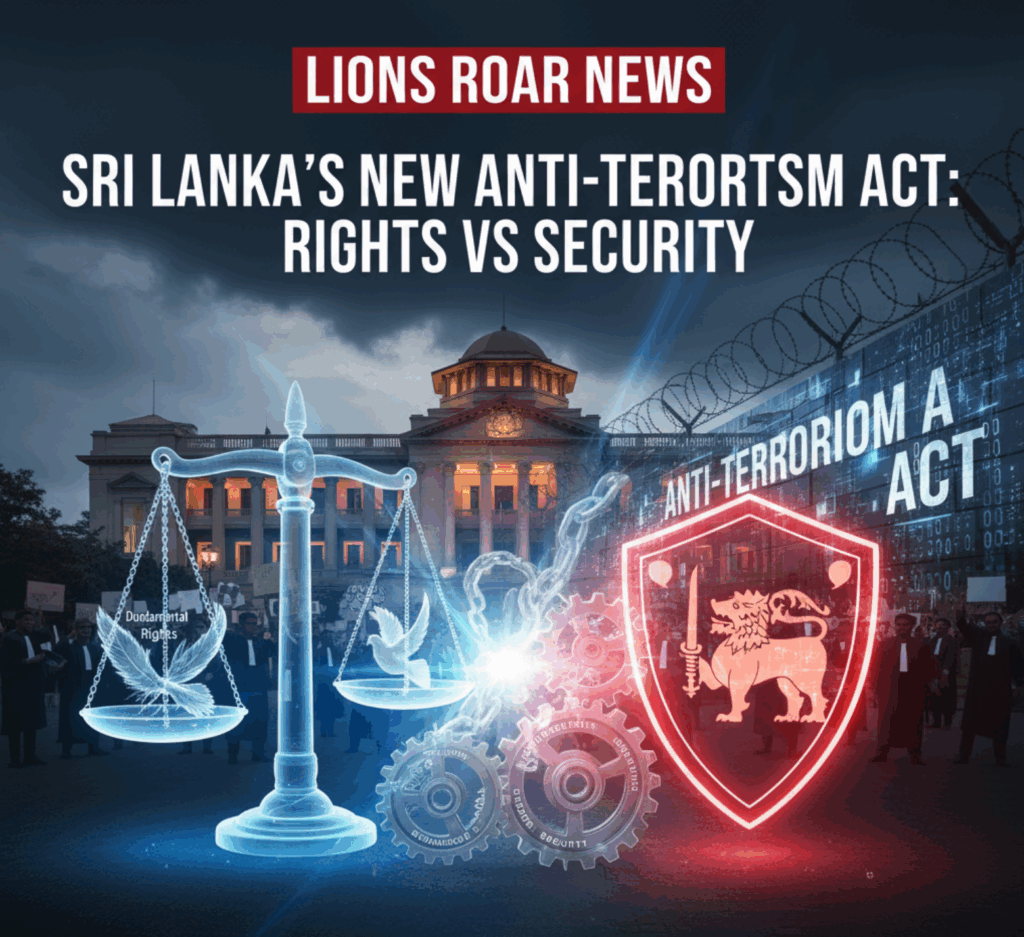
COLOMBO – Sri Lanka is on the verge of a significant legal overhaul, as the government prepares to finalize and present its new Anti-Terrorism Act (ATA) to Parliament. The proposed law is intended to replace the country’s draconian Prevention of Terrorism Act (PTA), a piece of legislation that has drawn international criticism for decades due to its broad powers and alleged use to suppress dissent. However, while the new act is being promoted as a step toward modernizing national security laws, it has already ignited a fierce debate among human rights advocates and civil society organizations who argue that it still poses a threat to fundamental rights.
A Shift from the PTA
For years, the PTA has been a major point of contention in Sri Lanka’s legal landscape. Passed in 1979 as a temporary measure, it became a permanent fixture, granting security forces sweeping powers of arrest and detention without charge. This has been a key reason for Sri Lanka’s low ranking on various international human rights indices.
The new ATA is a direct response to both domestic and international pressure to reform these laws. The government, fresh from a political mandate that promised systemic reform, sees the ATA as a means to balance national security with due process. It hopes the new legislation will help to regain international confidence, particularly from the UN and the European Union, which have long been critical of the PTA’s provisions.
Concerns Over ‘Vague’ and ‘Draconian’ Clauses
Despite the government’s assurances, critics are far from convinced. A coalition of lawyers, human rights groups, and opposition parties has scrutinized the draft, raising alarm over what they describe as “vague and overly broad” clauses. One of the primary concerns is the act’s definition of “terrorism” and “terrorist acts,” which some fear could be interpreted to include legitimate acts of protest, public assembly, and freedom of expression.
For example, a clause that criminalizes “causing damage to public property” or “disrupting essential services” could be used to prosecute peaceful protesters, effectively silencing dissent under the guise of national security. Critics also point to provisions that allow for long periods of detention without charge and the use of confessions obtained under duress. While the government says these powers are necessary to combat modern terrorism, human rights groups argue they are a direct continuation of the very abuses for which the PTA was notorious.
The Road Ahead
The bill is expected to be presented to Parliament in the coming weeks. Its passage is by no means guaranteed, as it requires a significant majority and faces potential legal challenges from both within and outside Parliament. The government will need to navigate a difficult political landscape to get the bill passed, balancing the need for strong national security with the demand for greater protection of civil liberties.
The outcome of this legislative battle will have profound implications for Sri Lanka’s future. It will not only determine the country’s approach to national security but also serve as a crucial test of the new government’s commitment to genuine democratic reform. For many Sri Lankans, the question remains: will the new ATA be a genuine step forward, or will it be a new name for an old problem?