Sri Lanka Opposes UNHRC Intervention, Cites Domestic Progress
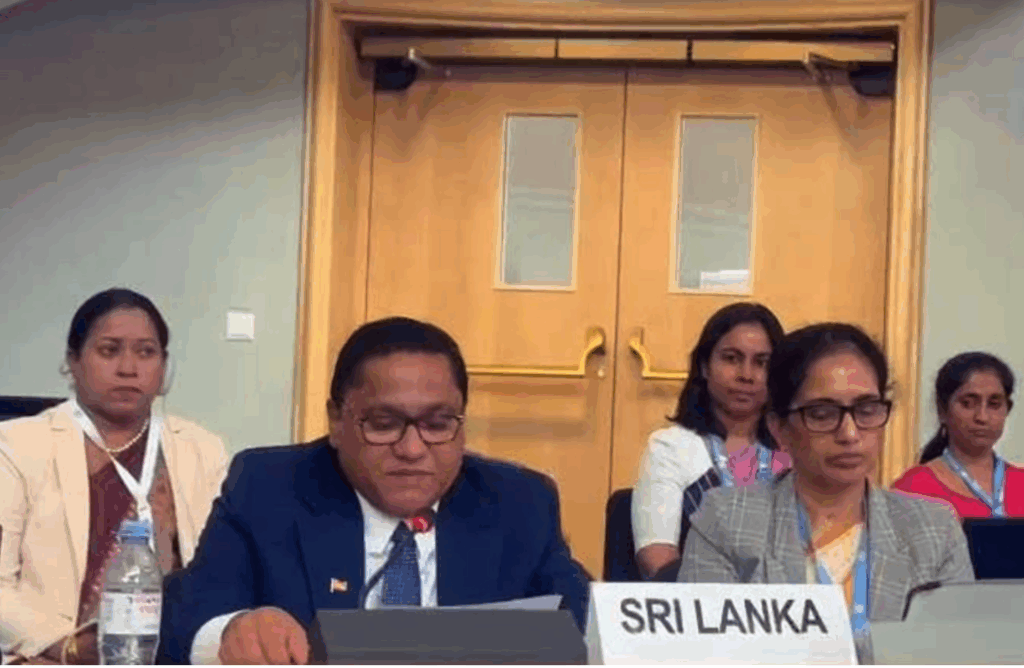
GENEVA – In a forceful address to the UN Human Rights Council’s 60th session, Sri Lanka’s Minister of Foreign Affairs, Foreign Employment, and Tourism, Vijitha Herath, reaffirmed the government’s stance against international intervention, arguing that external mechanisms would only hinder domestic efforts at reconciliation and justice. The minister’s statement, delivered from the new administration, marked a clear break from past engagement with UN-led inquiries and emphasized a commitment to “transformational change” through homegrown solutions.
A New Era of Homegrown Accountability?
Herath told the council that Sri Lanka is on a “historic journey” focused on democratic governance, human rights, and national unity. He highlighted a number of initiatives undertaken by the new government to demonstrate its commitment to these values. The minister specifically mentioned the strengthening of domestic reconciliation mechanisms such as the Office on Missing Persons (OMP) and the Office for Reparations. He also pointed to a renewed focus on anti-corruption efforts, which have already led to several landmark convictions, and the government’s promise to return land to its rightful owners.
Herath argued that Sri Lanka’s dedication to human rights is based on principles and a deep-seated understanding of the suffering caused by past conflicts, stating that his political movement was among the first to call for a Truth and Reconciliation Commission after the civil war ended in 2009. He rejected the UNHRC’s external evidence-gathering mechanism, stating that it undermines the country’s sovereignty and will only serve to “polarise the population.”
Calls for Fairer Dialogue
The minister appealed to the UNHRC to adopt a more balanced, non-selective approach to human rights issues. He urged member states to support Sri Lanka’s domestic processes, stating that the nation is a credible partner for dialogue and that it looks forward to seizing the opportunity for positive change. The minister’s address signals a strong shift in Sri Lanka’s diplomatic strategy, moving from an attitude of engagement with UN resolutions to a more defiant stance that champions national sovereignty and domestic solutions.