Patient Care at a Standstill: Auckland Nurses Strike for Safe Staffing and Pay
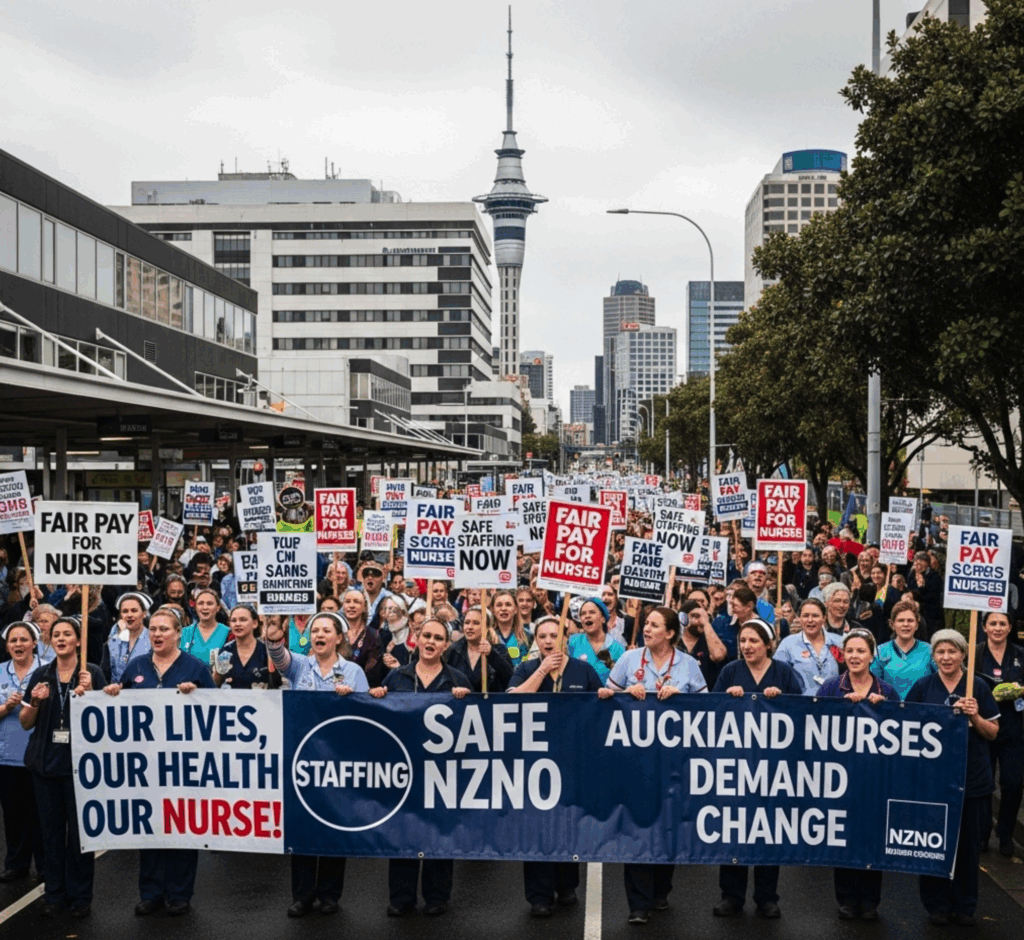
AUCKLAND, NZ – Thousands of nurses across Auckland have walked off the job today in a two-day strike, causing widespread disruption and forcing the cancellation of thousands of medical procedures. The industrial action, which is the culmination of nearly a year of stalled negotiations, is a powerful protest against what the New Zealand Nurses Organisation (NZNO) calls a failure to address critical issues of pay, staffing, and working conditions. The strike is a last resort for nurses who say their goodwill has been exhausted and patient safety is at risk every day due to chronic understaffing.
The Heart of the Dispute
The core of the dispute is the nurses’ demand for a collective agreement that not only provides a pay rise commensurate with the cost of living but also includes concrete commitments to safe staffing levels. Nurses argue that understaffing is not just a matter of inconvenience; it is a direct threat to patient care. They say they are often stretched too thin, which can lead to delays in critical treatments, an increase in medication errors, and a general decline in the quality of care. The NZNO has highlighted that a government-commissioned report recently found that more than a third of hospital shifts were understaffed, a finding that validates the nurses’ concerns.
A Clash of Priorities
While nurses and their union emphasize patient safety, Te Whatu Ora (Health New Zealand) and the government are focused on the financial implications of the demands. Health Minister Simeon Brown has publicly stated that the strike is a choice by the union to “put politics ahead of patients” and that it will only cause further delays for a public already facing long waitlists. Health New Zealand estimates that the two-day strike will lead to the postponement of over 2,250 planned surgeries and more than 11,000 specialist appointments and follow-up consultations. They argue that their current offer is fair and that the union’s demands are not financially viable.
Disruption and Community Support
Hospitals across Auckland have been forced to cancel most planned procedures and non-urgent appointments. While life-preserving services, such as emergency departments and intensive care units, remain operational, they are running on a skeleton staff under a special agreement with the union. The strike has had a ripple effect, impacting not just patients but also their families, many of whom have had to rearrange their lives to accommodate the unexpected delays. Despite the inconvenience, many members of the public have shown their support for the striking nurses, with community members joining picket lines and bringing food and drinks to those on the front lines.
The Path Forward
With both sides seemingly at a stalemate, there is no immediate end in sight for the industrial action. The NZNO has stated that they will not return to the bargaining table unless Health New Zealand brings a new offer that addresses their core demands on safe staffing. Health New Zealand, meanwhile, maintains that the union has been unclear about its specific demands and that further negotiation is the only path to a resolution. The coming days will be a crucial test of will, as thousands of nurses hold firm on their commitment to a health system that is safe for both patients and the professionals who care for them.