Sri Lanka’s Former President Ranil Wickremesinghe Granted Bail Amid Corruption Allegations and Protests
1. A Historic Arrest and Courtroom Drama
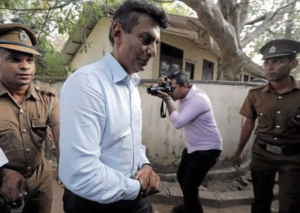
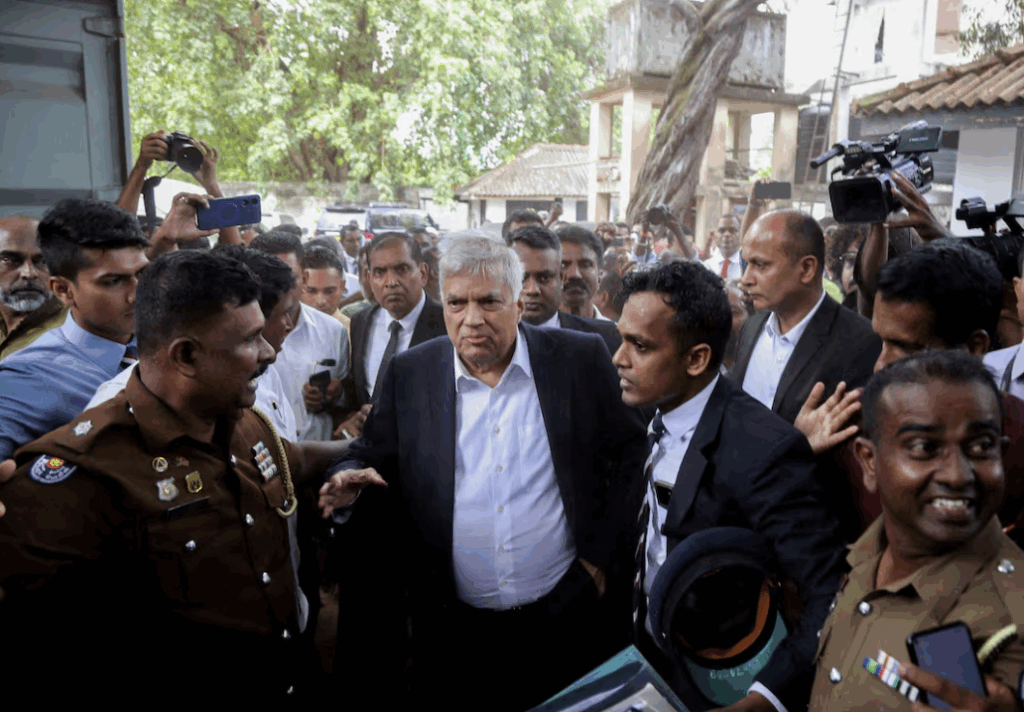
In a landmark legal proceeding, former Sri Lankan President Ranil Wickremesinghe—who led the country during a critical economic crisis from 2022 to 2024—was granted bail by the Colombo Fort Magistrate’s Court on August 26, 2025, following his arrest on August 22, 2025 over allegations of misusing state funds
Wickremesinghe’s arrest marked a defining moment in the nation’s modern history: he is the first former head of state in Sri Lanka to be arrested on corruption charges The charges stem from accusations that he used public money to attend his wife’s graduation ceremony in London—an event held after an official mission to the U.S. and Cuba in 2023
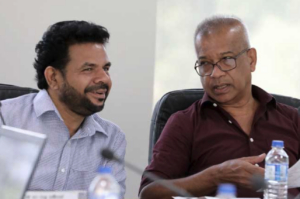
The hearing unfolded under extraordinary circumstances. Wickremesinghe, then hospitalized for dehydration and related health complications, attended the remand hearing remotely via Zoom from Colombo National Hospital. His condition, described as stable by hospital authorities, nevertheless limited his physical participation in the legal process
2. Bail Conditions and Public Sentiment
Magistrate Nilupuli Lankapura granted bail with strict financial conditions: a Rs. 5 million bond (approx. $16,600), following a tense hearing presided over under heightened security
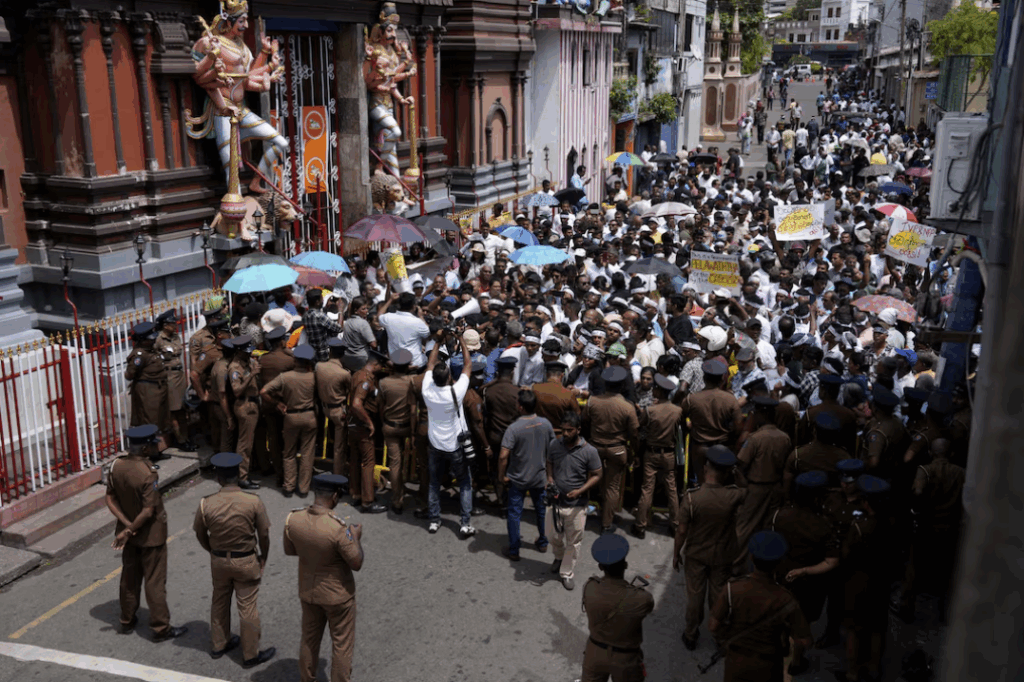
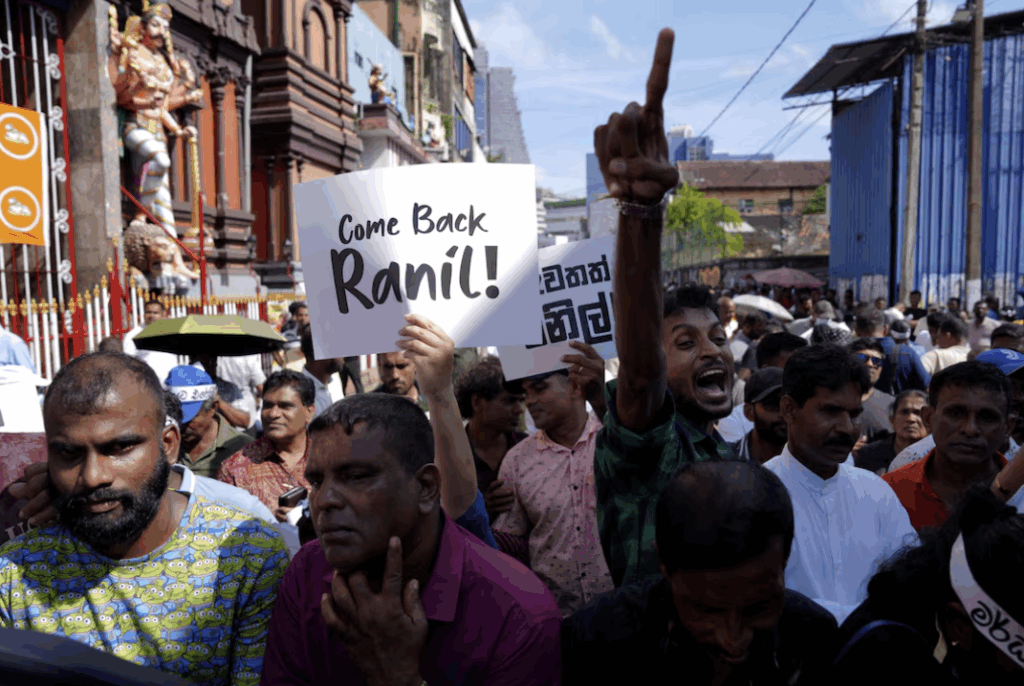
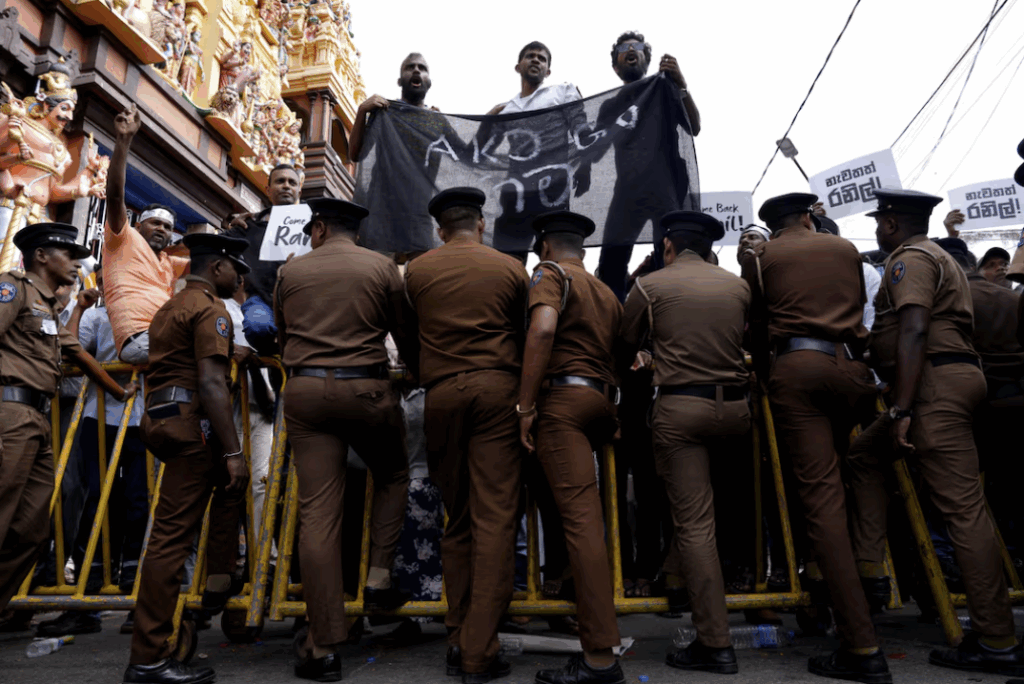
Thousands of supporters gathered outside the court, their demonstrations turning both expressive and defiant. Dressed in black and waving black flags, they chanted slogans against what they termed a political witch hunt by President Anura Kumara Dissanayake’s administration. Among them, Samarasiri Kuruwitaarachchi, aged 69, decried the government’s failure to deliver on election promises and accused it of persecuting political opponents.
Responding to criticisms that the arrest was politically motivated, the United National Party (UNP)—Wickremesinghe’s own party—asserted his innocence. They argued that the charges were politically engineered to undermine democratic norms . Akila Viraj Kariyawasam, UNP’s deputy secretary, framed the mass protest as evidence of judicial independence and insisted the party “has no objection to measures to fight corruption” so long as due process is preserved .
On the other side, the government, led by President Dissanayake, maintained that the legal proceedings were legitimate. Transport Minister Bimal Rathnayake asserted that the arrest was conducted under proper legal protocols and was part of the administration’s broader anti-corruption campaign .
3. Wickremesinghe’s Political Legacy and Economic Context
Ranil Wickremesinghe, a veteran politician and lawyer, served as Sri Lanka’s Prime Minister six times before ascending to the presidency in 2022 amid a crippling economic collapse
During his presidency from 2022 to 2024, his administration secured a $2.9 billion bailout from the IMF in early 2023. This agreement initiated a wave of economic reforms and opened doors to additional funding from the World Bank and the Asian Development Bank
To meet IMF conditionalities, tough austerity measures were enforced—drastically cutting subsidies and raising taxes and utility charges. While these steps helped stabilize the economy—curbing inflation, boosting foreign reserves, and easing shortages—they also triggered widespread public discontent
By late 2024, the economy began to rebound. Growth was projected at approximately 4.4%, inflation had fallen dramatically, and the IMF approved further reviews under the bailout program . However, the newfound economic stability did little to soften Wickremesinghe’s standing with voters; his austerity policies remained deeply unpopular.
4. Anti-Corruption Drive and Political Underpinnings
The current administration, under President Anura Kumara Dissanayake, came to power amid anti-corruption fervour. Sweeping electoral success in both presidential and subsequent parliamentary elections—earning roughly 159 of 225 seats—gave the government a decisive mandate to pursue accountability and reform
The investigation and arrest of Wickremesinghe, along with over a dozen other former officials, reflects a broader anti-graft initiative aimed at tackling entrenched corruption across multiple successive governments.
However, critics argue that the campaign may veer into political targeting. The UNP contends that the strategy is as much about neutralising political opponents as it is about justice. Whether the government can pursue anti-corruption measures equally and transparently, rather than along partisan lines, will be closely watched domestically and internationally.
5. Implications and What Lies Ahead
The bail decision marks the beginning of a protracted legal battle that could shape Sri Lanka’s political and judicial trajectory.
Judicial Process: Should the courts uphold impartiality, the case may affirm Sri Lanka’s judicial integrity. Any perception of bias could erode public trust.
Political Fallout: The UNP may rally behind Wickremesinghe, while Dissanayake’s government might gain credibility if investigations remain fair. The unfolding dynamics might dictate public confidence in both parties and the nation’s institutions.
Economy and Governance: With economic recovery still fragile—despite IMF support and growth gains—Sri Lanka remains vulnerable to both external shocks and internal political instability. The administration’s ability to continue reforms while handling high-profile legal cases will be pivotal.
International Perspective: The global community, especially development partners like the IMF, prioritize governance and anti-corruption in their financial engagements. Sri Lanka’s handling of the case may influence future aid and credit considerations.
Conclusion
The bail of former President Ranil Wickremesinghe is not merely a legal outcome—it is a flashpoint at the intersection of justice, politics, and economic recovery in Sri Lanka. With its unprecedented nature, the case offers a test of the nation’s institutional maturity, its resilience to populism, and its capacity to pursue both accountability and unity.
As legal proceedings unfold, Sri Lanka must navigate a path that sustains economic progress, protects democratic norms, and reinforces public faith in fairness. The world, watching closely, may find in this moment a measure of both the nation’s fragility and its potential for principled transformation.