The Political Landscape: A Hung Parliament on the Horizon?
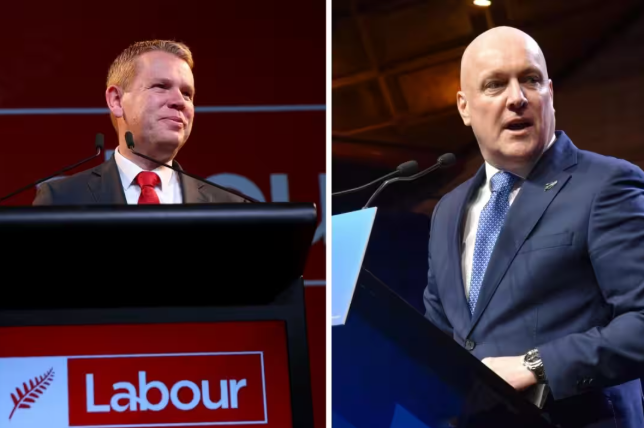
A new political poll suggests New Zealand is heading for a nail-biting election, with the possibility of a hung Parliament now a distinct reality. The latest Taxpayers’ Union-Curia Poll, conducted between August 3 and 5, shows the centre-left and centre-right blocs tied at 61 seats each, a dramatic shift from just two months ago. Labour has overtaken National as the largest party, gaining two points to 33.6%, while National has slipped to 31.8%. This volatility is a clear indicator that voters are increasingly swayed by the government’s handling of the economy and the relentless pressure of the cost of living, which remains the single most important issue for nearly a quarter of the electorate.
The narrowing gap between the major parties is reflected in the preferred Prime Minister ratings. For the first time in his tenure, Christopher Luxon’s ratings have hit a new low, now tied with Labour leader Chris Hipkins at 20.2%. This dead heat signals a lack of a clear leader in the public’s eyes and adds to the sense of political instability. The poll also revealed a decrease in support for the coalition partners, with New Zealand First dropping two points to 7.8% and ACT down to 8.6%. This decline for the government’s allies is a significant factor in the overall tightening of the race and could spell trouble for their ability to form a government after the next election.
For the minor parties, the Greens have seen a small gain, now sitting at 9.8%, while Te Pāti Māori holds steady at 3.2%. The performance of these smaller parties will be crucial in a tight election, as their ability to win electorate seats and clear the 5% threshold could be the deciding factor in which bloc is able to form a government. The potential for a hung Parliament means that coalition negotiations could become even more complex and drawn-out than usual, with minor parties holding a significant amount of power.
These poll results come at a time of heightened public concern over economic issues. The Taxpayers’ Union noted that the cost of living and the economy more generally are the top two issues for voters, a sentiment that has likely been fuelled by recent inflation figures and the ongoing debate over government spending. The public’s focus on these bread-and-butter issues is putting immense pressure on all political parties to demonstrate a credible plan for the country’s financial future. The next few months will be a crucial test for both the government and the opposition to convince voters they have the right answers.
Looking ahead, the political climate is set to become even more heated. With the election race tightening, every policy announcement and public appearance will be under intense scrutiny. The spectre of a hung Parliament means that the political landscape is more unpredictable than it has been in years. The battle for the hearts and minds of undecided voters will be key, and the next political poll could reveal whether this trend towards a hung Parliament is a temporary blip or a new political reality for Aotearoa.