New Zealand’s Climate Conundrum: Funding Framework Under Fire Amidst Rising Waters
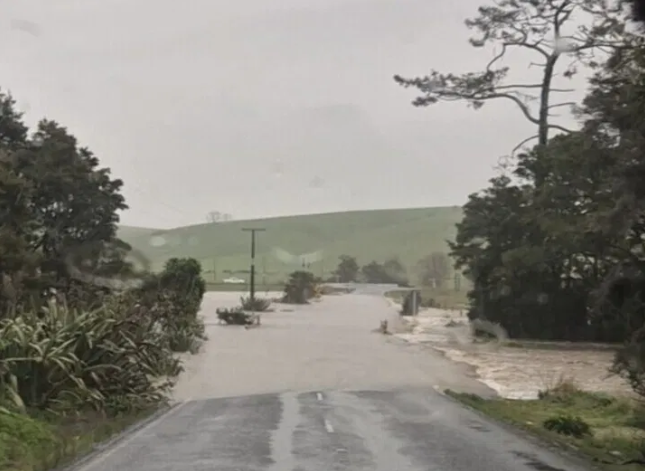
WELLINGTON, NZ – As heavy rain warnings blanket parts of the Tasman district this Tuesday, New Zealand finds itself grappling once again with the thorny issue of climate adaptation funding. Experts and affected communities are intensifying their calls for a comprehensive overhaul of the national framework, arguing that current policies are proving woefully inadequate in the face of increasingly frequent and severe weather events. The looming threat of further flooding in regions still recovering from past disasters highlights the urgent need for clarity on who bears the financial burden of a changing climate.
The debate centers on the proposed “beneficiary pays” model outlined in a draft adaptation framework, which suggests that beyond 2045, central government may not directly fund property buyouts in high-risk areas. This stance has drawn sharp criticism from environmental policy analysts and community groups, who argue it could lead to a form of “climate redlining,” where vulnerable communities, particularly those with lower incomes, are left behind to face the escalating risks alone.
Prime Minister Christopher Luxon has reiterated the government’s principle that “in principle, the government won’t be able to keep bailing out people in this way.” While acknowledging the significant fiscal challenges associated with climate-induced disasters, critics contend that this approach shifts an undue burden onto local councils and individual property owners, many of whom cannot afford the escalating costs of insurance or relocation. The socio-economic consequences of displacement, including disrupted schooling, job losses, and mental health decline, are often overlooked in purely financial calculations.
The real-world impacts are already evident in areas like Te Taone (a fictionalized representation of a real-world vulnerable community), which faced extensive flooding earlier this month. Residents there are challenging local authorities and the government, alleging a failure in their duty of care by allowing homes to be built or inhabited in known risk zones without clear warnings or viable alternatives. This legal and ethical challenge is seen as a potential precedent for future climate-related litigation across the country.
As the nation stares down yet another severe weather event, the call for a national compensation framework with clear eligibility rules and long-term investment in affordable housing beyond hazard-prone areas grows louder. Experts stress that treating climate risk purely as an individual responsibility will ultimately lead to greater social and fiscal liabilities, manifesting in fractured communities and deepening inequality. The decisions made today regarding adaptation funding will profoundly shape New Zealand’s resilience and fairness in the face of an uncertain climate future.