President Calls for Unity to Transform Education System
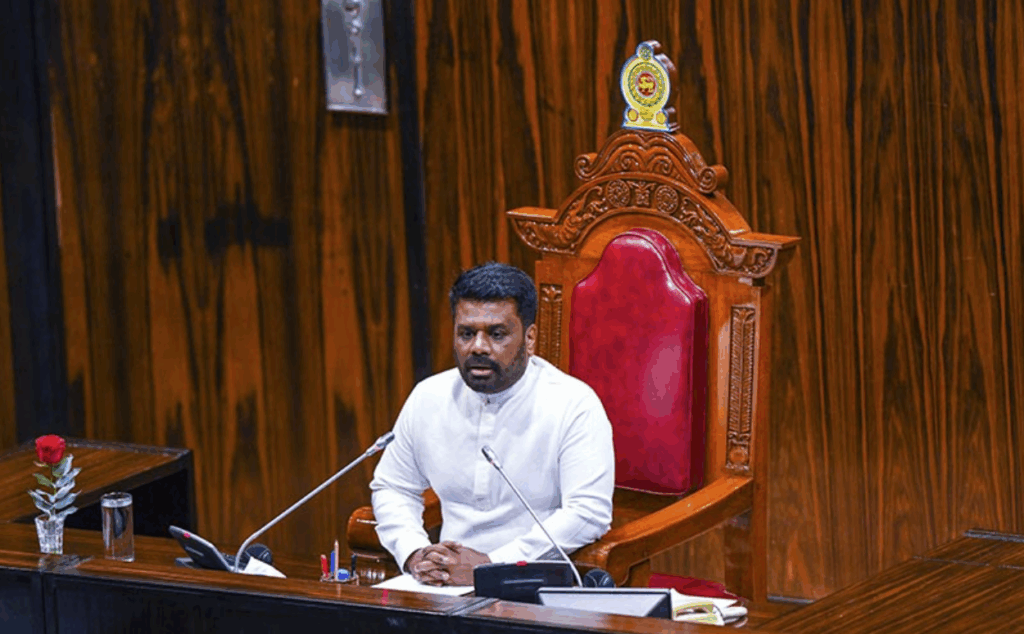
President Anura Kumara Dissanayake today called for a unified national effort to implement comprehensive education reforms, emphasizing their pivotal role in uplifting the entire social and economic fabric of Sri Lanka. Speaking during a parliamentary debate on the proposed reforms, the President underscored that the initiative transcends mere curriculum revision, aiming instead for a fundamental transformation of society and the economy. His address highlighted the urgent need for change and the collective responsibility required to achieve a more prosperous and equitable future for the nation.
The President articulated a vision where no child would leave school without completing 13 years of compulsory education, addressing a critical issue of premature school leavers that has plagued the system. He cited alarming statistics, noting that tens of thousands of children discontinue their education prematurely each year, contributing to cycles of poverty and limited opportunities. The proposed reforms include mechanisms to track student attendance and intervene when children are absent, ensuring that every child remains within the educational system for the full duration.
Furthermore, President Dissanayake stressed that while discussions often focus on higher education, the primary challenges lie within the school education system itself. He pointed to issues such as underutilized human resources, with a favorable teacher-to-student ratio nationally masking significant shortages in many districts. The reforms aim to optimize resource allocation, potentially involving the amalgamation of some schools, the establishment of new ones in underserved areas, and a rethinking of the entire school structure to provide new experiences and opportunities for every child.
The President also linked education directly to poverty eradication and crime reduction, stating that if one person from a family receives an education, the entire family prospers. He highlighted that a significant majority of those imprisoned in Sri Lanka have not passed the GCE Ordinary Level examination, underscoring the correlation between education and social well-being. The reforms, therefore, are positioned not just as an academic overhaul but as a powerful tool for social mobility and national development, aiming to break cycles of disadvantage.
In his appeal for unity, President Dissanayake framed the education reforms as a social objective rather than a political one, urging all political parties and stakeholders to set aside differences for the greater good of the nation’s children. The comprehensive nature of the reforms, encompassing curriculum revision, teaching methods, and a balanced life for students, signifies a long-term commitment to building a more educated, skilled, and productive citizenry. The success of this ambitious undertaking will depend heavily on sustained political will and broad societal cooperation.