Heatwaves Intensified by Climate Change Lead to Thousands of Deaths in Europe
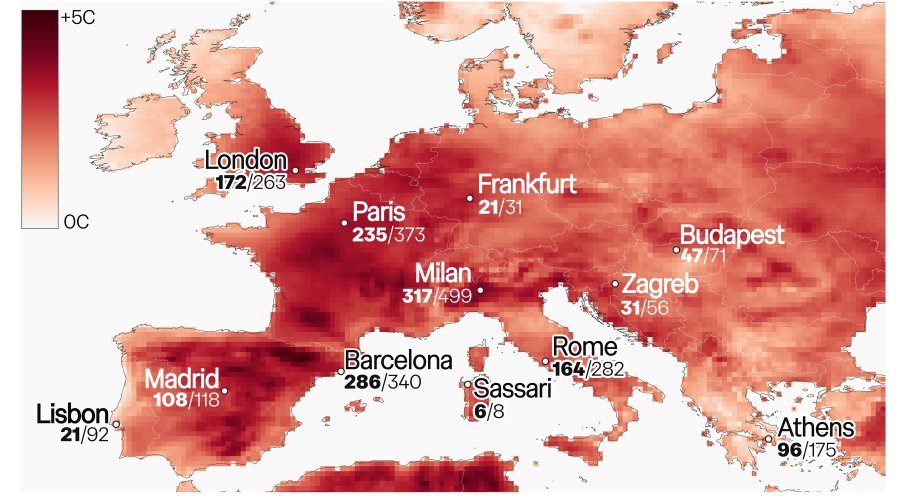
A recent, harrowing heatwave that swept across Europe between June 23 and July 2, 2025, has been definitively linked to human-induced climate change, with a rapid analysis suggesting that global warming may have tripled the number of heat-related deaths during this period. Temperatures soared well above 40°C in several countries, leaving a devastating impact on public health and underscoring the urgent need for robust climate adaptation strategies. This analysis provides a stark reminder of the accelerating and tangible consequences of a warming planet.
Researchers conducting the rapid assessment found that human-induced climate change intensified the heatwave, making temperatures between 1 and 4°C hotter than they would have been without anthropogenic influence. By comparing actual recorded temperatures with expected heat-related deaths under cooler, pre-industrial climate conditions, the study estimated that approximately 2,300 people may have died as a result of the extreme temperatures across the 12 European cities analyzed. This figure is roughly three times higher than the estimated 800 deaths that would have occurred without the impact of human-induced climate change, indicating that about 65% of the deaths were directly attributable to global warming.
The findings highlight the disproportionate impact of extreme heat on vulnerable populations and the unpreparedness of many urban environments for such intense conditions. While a handful of deaths were initially reported in countries like Spain, France, and Italy, the broader analysis suggests a much more widespread and severe toll. Experts emphasize that these estimates are irrespective of underlying health conditions, focusing purely on the heat’s direct contribution to mortality.
The scientific community continues to stress that at the current rate of global warming, heatwaves are not an anomaly but a recurring and intensifying phenomenon. The 1.5°C Paris Agreement aim is consistent with summer days becoming 3°C hotter, and with current policies, this could mean up to 6°C hotter summer days by the end of the century. This grim forecast necessitates immediate action.
Public health officials and urban planners are now under increased pressure to implement effective adaptation measures. These include planting more trees to provide shade, reducing reliance on cars to lower urban heat island effects, and establishing robust care systems for the most vulnerable members of society during heat events. The European heatwave of 2025 serves as a potent and tragic example of the critical need to accelerate both climate mitigation efforts and adaptive strategies to protect human lives.